










Early Greek Philosophy
Early Greek Philosophy Author: Михaїл-А-Булгáкoв☦️ Reviewer: Nancy Early Greek philosophy belonged to Greek culture as a whole, not just to city-states such as Athens and Sparta. Its thinkers used ancient Greek to think, write, and debate. Together, they helped shift explanations of the world away from the gods who had dominated earlier civilizations and toward a human-centered outlook concerned with education and cultivation. In doing so, they challenged divine authority whether it came from Babylon, Assyria, Egypt, or Greece's own Olympus. The Stoics received early Greek philosophy through the selective interpretations of Socrates, Plato, and especially Aristotle. Greek and Latin Church Fathers later intertwined it with Neoplatonism and incorporated it into Ch ...

Basic Mineral Descriptions: How to Read a Rock
Basic Mineral Descriptions: How to Read a Rock Author: 约翰史密斯 Hello, everyone. This article introduces some common terms for describing mineral properties. Why learn to describe minerals in the first place? The Earth contains an enormous variety of mineral deposits. Specimens that look completely different may be the same mineral, while specimens that look almost identical may have entirely different compositions. Judging a specimen by appearance alone can easily lead us astray. Take the famous “fool’s gold,” for example: It may glitter like gold, but it is simply pyrite and has nothing to do with gold itself. Even the broad category of iron ore includes hematite, magnetite, limonite, and many other minerals. Describing a specimen systemat ...

How to Get Color Right
How to Get Color Right Author: Shiguang How do you get color right? Did that question send your mind somewhere naughty? No—this is a perfectly respectable science article. So let me show you a picture with some color in it. Entirely innocent, see? The cute little object below is a color wheel. It will be the star of this article, so take a moment to remember its shape. We will cover the basics of color, followed by several common approaches to building a palette. Color Theory and Color Schemes How Do Humans See Color? In nature, light leaves a source and strikes an object's surface. Most objects absorb some of that light and reflect the rest into our eyes; the reflected portion is the color we see. An object that absorbs none of the light falling o ...

The Degeneracy of the Genetic Code
The Degeneracy of the Genetic Code Author: Shenzhou Reviewed by: Shenzhou During translation, the genetic code maps a nucleotide sequence to an amino acid sequence, while tRNAs physically carry out that mapping. The code is therefore the essential link between nucleic acids and proteins. Early mathematical analyses led scientists to conclude that codons had to contain three bases to encode all 20 amino acids. Crick later inserted or deleted different numbers of bases in bacteriophages and compared the resulting phenotypes. His experiments supported the hypothesis that the genetic code is read in nucleotide triplets. At about the same time, Nirenberg and Matthaei used synthetic mRNA and an in vitro translation system to match several simple codons, in ...

The Cambrian Explosion and Early Life
The Cambrian Explosion and Early Life Author: John Smith Reviewed by: Dongda Before we begin Paleontology, as its name suggests, studies life from its earliest origins to the recent past. Geologists divide Earth's history into units based on the sequence of rock layers and the fossils found in them. Just as biology classifies organisms by kingdom, phylum, class, order, family, genus, and species, the geologic time scale is divided into eons, eras, periods, epochs, ages, and chrons. Each smaller unit belongs to a larger one. The relationship resembles that of the Zhìdé era name (583–587), which belongs to the Chen dynasty, itself part of the Northern and Southern Dynasties. Units larger than a period cover too much time for our purposes, while smaller units are more detailed ...

Culture and Consumer Society, Part 1: I'll Take the Milk Tea and the Sneakers
Culture and Consumer Society, Part 1: I’ll Take the Milk Tea and the Sneakers Author: 涛声 Reviewer: 观复·钧天 A few days ago, Taotao's WeChat Moments and Qzone feeds were flooded with posts about “the first cup of milk tea in autumn”: Fine. Taotao wasn't jealous at all. Not one bit. QAQ. One post did catch his attention, though: Interesting.jpg. After mulling it over, Taotao realized that “Is the ‘first cup of milk tea in autumn’ a capitalist scam?” was not such an easy question to answer. But the question does point to something important: our purchases are shaped not only by our empty wallets and less-than-careful budgeting, but also by culture and ideas. Examples are everywhere in a consumer society. Whether we buy sneakers, anime merchan ...
Russia's Space Dream: A Glorious Past, an Uncertain Future
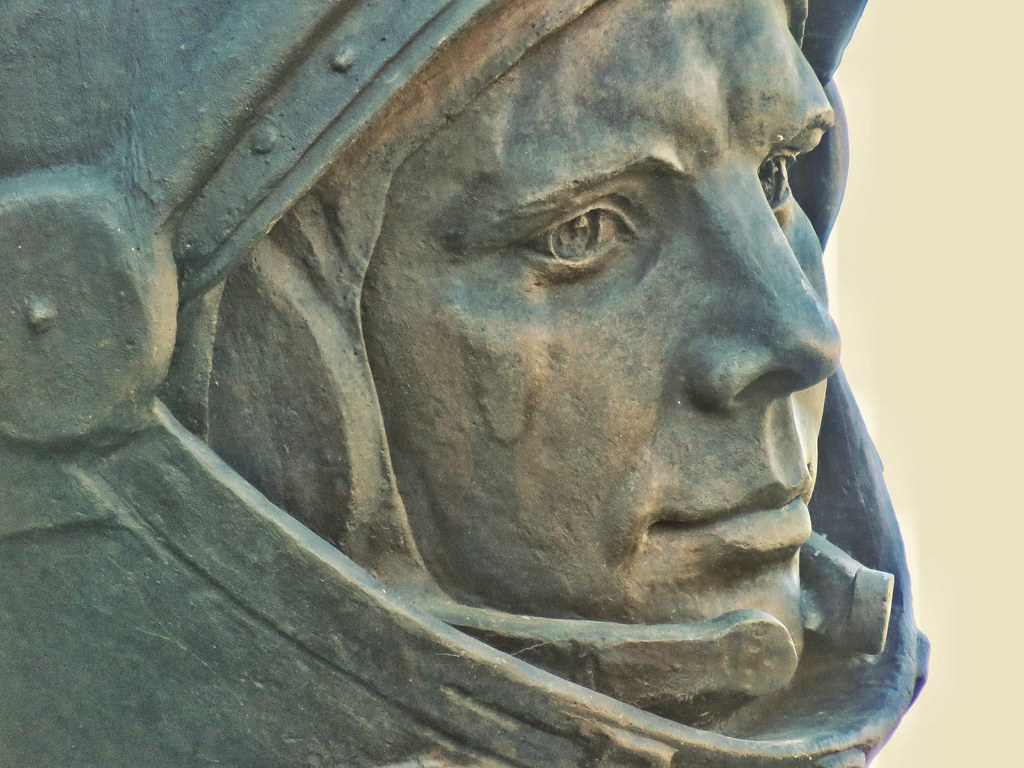
Author: Abaiter Reviewer: Shiguang Few countries have a spaceflight history as dramatic as Russia's. Tracing that history over time, this article offers a brief account and assessment of the Soviet and post-Soviet Russian space programs through two main threads: theory and engineering. For each theory, we will introduce the underlying mechanics and its engineering applications from a quantitative perspective. For each mission, we will gather as much information as possible about its scientific objectives, payload specifications, and instruments. For each space transportation system, we will present figures such as payload capacity to different orbits and specific impulse. Together, these details will let us see how Soviet and Russian spaceflight rose and declined before we tu ...

Protein Translation
Protein Translation Author: Shenzhou Reviewed by: Shenzhou and Myelin Proteins are the main functional molecules that sustain the activities of life, and the process by which cells synthesize them is called translation. During translation, mRNA serves as the template. With the help of the ribosome, tRNA interprets the nucleotide sequence in the mRNA as an amino acid sequence, producing a polypeptide chain. The principal participants are tRNA, rRNA, and mRNA. tRNA carries amino acids to the ribosome. rRNA joins with several ribosomal proteins to form the ribosome, the site of polypeptide synthesis. mRNA carries the codons that provide the template for translation. mRNA Jacob and Monod proposed the concept of messenger RNA in 1961. Because proteins are synthesized ...
Spatiotemporal Trajectories in Memory
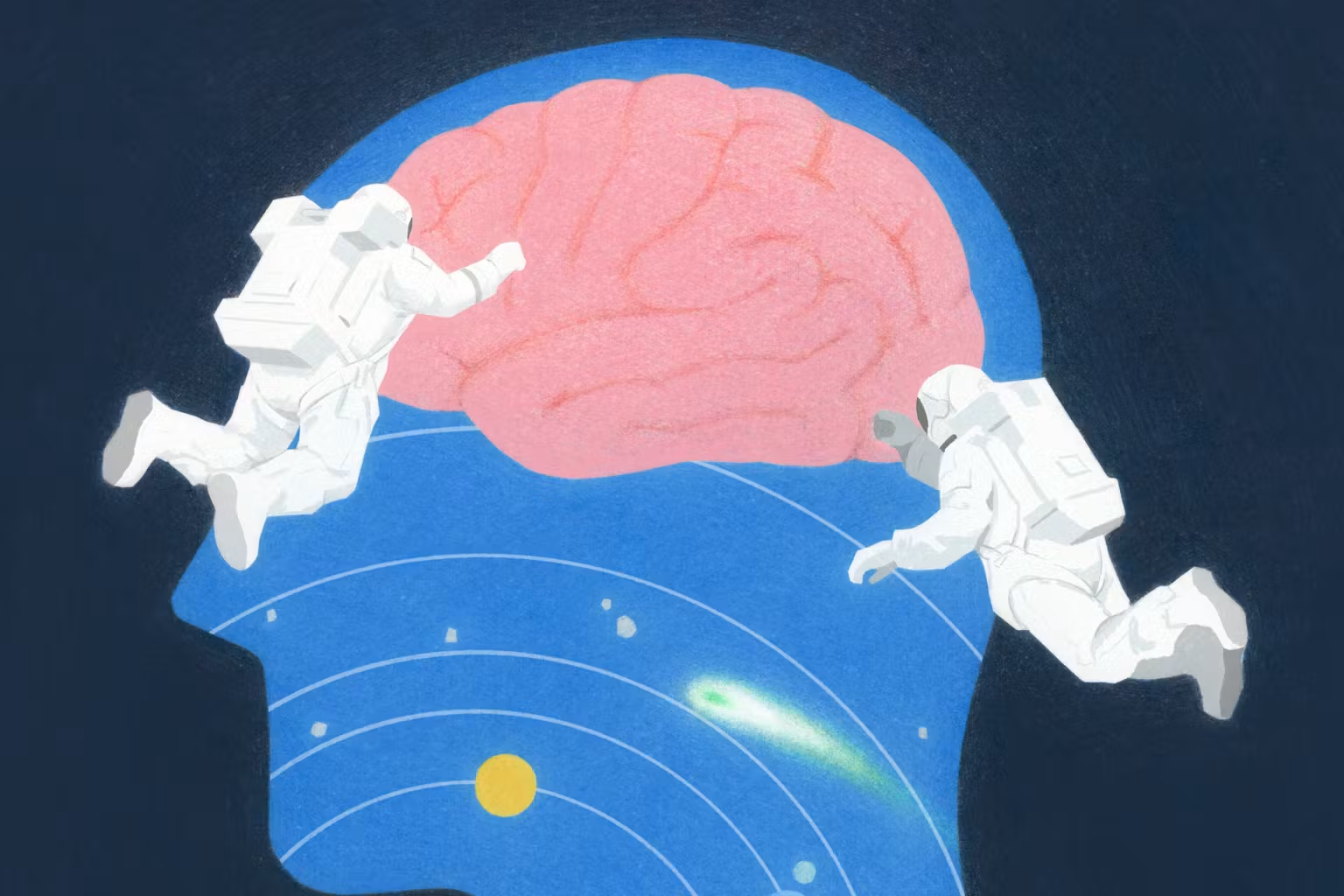
Spatiotemporal Trajectories in Memory Author: Myelin Reviewed by: 食野 Episodic memory is a form of long-term memory: memory for events that occurred at a particular time and place. It is inseparable from personal experience, and its defining quality is its narrative, event-based character—for example, remembering an activity you attended or a place you once visited. [1] In daily life, we usually imagine space and time as separate dimensions of experience, yet we often bring them together when describing episodic memories. If I ask what you did this morning, you may mentally retrace the entire morning as its events unfolded across different times and places. This reflects a widely held view: episodic memory embeds our records of events in a unified representation o ...
What Makes an Argument Valid?
Author: Taosheng A friendly warning: you may need to read this article carefully, one section at a time, and go through it more than once. Brace yourself. Section 1: Introduction; Section 2: Propositions; Section 3: The Four Types of Categorical Propositions; Section 4: Syllogisms; Section 5: Conclusion. Feel free to jump to whichever section best matches your level. Section 1: Introduction As we happily surf the internet, we run into all kinds of views: some incisive, some warm and resolute, and some elaborate comic bits. We tend to accept certain views and reject others. Doing so can deepen our understanding of an issue and help us form views of our own, while also giving us emotional support. From this perspective, a view has value simply by existing, no matter ho ...
Recent Post