
Early Greek Philosophy
Early Greek Philosophy
Author: Михaїл-А-Булгáкoв☦️
Reviewer: Nancy
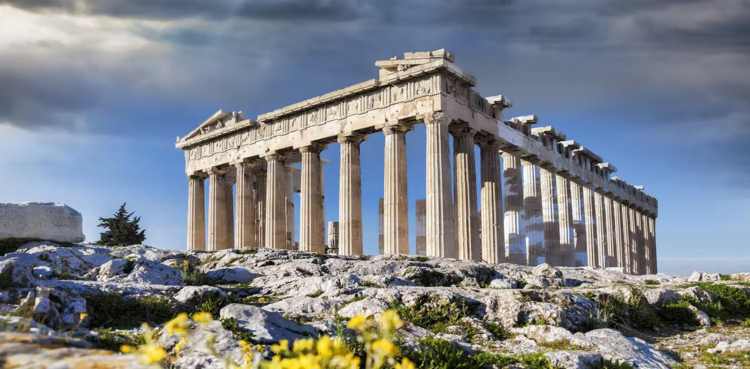 Early Greek philosophy belonged to Greek culture as a whole, not just to city-states such as Athens and Sparta. Its thinkers used ancient Greek to think, write, and debate. Together, they helped shift explanations of the world away from the gods who had dominated earlier civilizations and toward a human-centered outlook concerned with education and cultivation. In doing so, they challenged divine authority whether it came from Babylon, Assyria, Egypt, or Greece's own Olympus.
The Stoics received early Greek philosophy through the selective interpretations of Socrates, Plato, and especially Aristotle. Greek and Latin Church Fathers later intertwined it with Neoplatonism and incorporated it into Christian teaching. Heraclitus's *logos*, for example, appears at the opening of the Gospel of John. Because the word can encompass reason, truth, speech, and the way, it also became a basic concept in theology. Yet early Greek philosophy as a whole, like most of Aristotle's writings, remained largely unknown in medieval Europe. It returned to Western scholarship only in the later Middle Ages and the Renaissance, when Greek texts circulated again and Arabic works were translated into Latin.
Early Greek philosophy did not enter modern scholarship in earnest until the late nineteenth century. The German historian of philosophy Eduard Zeller published *A History of Greek Philosophy*, and the British classicist and historian John Burnet published *Early Greek Philosophy*. Meanwhile, after decades of work, the German classical scholar Hermann Diels compiled *Doxographi Graeci* and *The Fragments of the Pre-Socratics*. Scholars at last had collections of early Greek philosophical texts prepared to modern academic standards.
Among the world's early civilizations, the Greeks of the Archaic period were among the first to move away from explaining events and natural processes solely through the supernatural powers of myth and religion. They used reason rather than divine action to examine natural phenomena, disasters, society, and human relationships, looking to nature itself for explanations. This turn led not only to the philosophy of Socrates, Plato, and Aristotle, but also to a dependable system of knowledge: science.
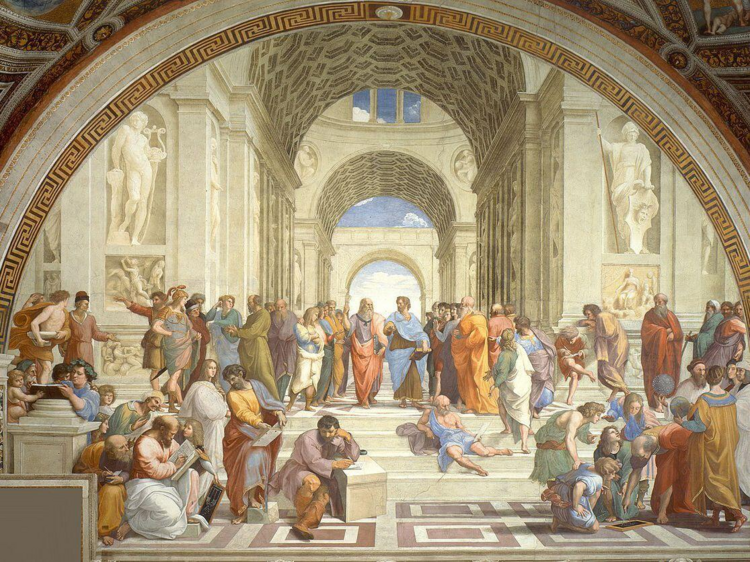 Early Greek thinkers approached nature and its phenomena with an independent, critical seriousness. They asked what everything was made of, how the whole was organized, what laws governed the cosmos and individual action, and what properties and causes lay behind them. In the process, they raised questions that still matter: Did the universe have a beginning? If so, how did it come about? Do matter and change follow knowable laws? Is the world a unified whole? How do we know anything, and what makes knowledge possible?
The relationship between philosophy and science is especially clear in early Greek accounts of the cosmos, which drew on observation. In these accounts, the world came neither from nothing nor from divine creation. Everything arose from a single substance or unified state, combined under natural laws, and followed those laws through generation and decay. Each thinker used a different vocabulary and explanatory scheme, but the ideas could be debated, revised, and developed. They addressed particular natural events while also offering a systematic picture of the world as a whole. From this work emerged an early rational worldview.
The first subject that occupied these thinkers was the reality behind all things: their origin and governing principle. Thales, for example, proposed that “water is the origin of all things.” They also considered change in the cosmos alongside permanence in knowledge, trying through language and thought to reconcile natural reality with human reflection. Heraclitus held that “everything flows,” yet also described the “order and harmony” of *logos*. Starting from “eternal, unchanging truth,” Parmenides was the first to unite being, thought, and language.
From the twin realities of nature and thought, early Greek thinkers went on to examine the human soul and the possibility of knowledge. Heraclitus began with change and Parmenides with changelessness, but both sought an “eternal truth” in knowledge. The atomists studied the material foundations of nature while also considering sensation and experience, explaining the world's regular operation through the relation between nature and mind. Early Greek thought thus opened enduring questions about first principles, cosmic order, being and essence, and the ethical relationship between gods and humans.
Turning to philosophical language, the British scholar Barnes identifies several terms as central to early Greek thought. Cosmos (universe) refers both to the world as a whole and to order itself. Used verbally, it means arranging the origin, movement, and coordination of things according to an order; used as a noun, it means the ordered totality of the world. Physis (nature) contrasts with what is artificial or made by human hands. A natural thing can grow from within itself, an early conceptual distinction between nature and artifice. Within the *cosmos*, *physis* also names the distinctive nature of each thing rather than its accidental features. It marks the many individual natures that exist within the unity of the whole. In that sense, if the world is treated as a single entity, its *physis* is its *cosmos*. This use of *physis* survives in many fields today. Yet early Greek inquiry into *physis* also asked about the origin and governing principle of everything, which leads to a third term. Archē (origin) means both the beginning of the world and its contents and the first principle by which they operate.
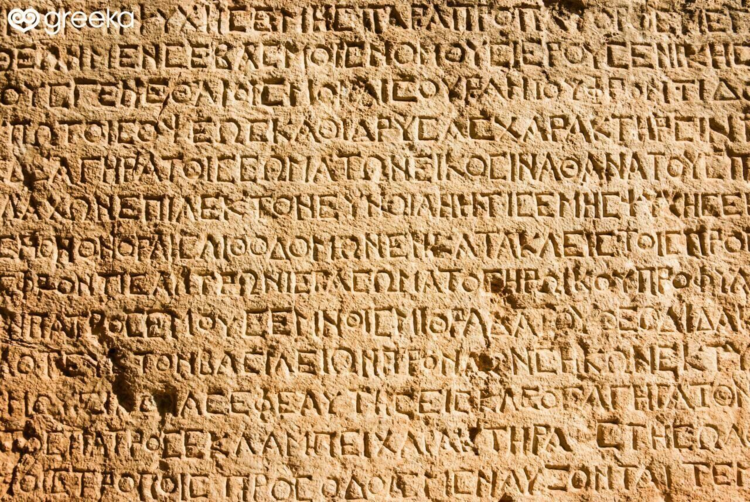 The Greeks believed that anything able to grow according to its own nature, including the world itself, must have both an origin and rules governing its development. *Archē* therefore asks how natural things, and the *cosmos* as a whole, begin and operate. The concept works at several levels: How did the world and its contents begin? What first principle governs their growth and movement? What basic elements make up the world? How do those elements form individual things, their structures, and the whole? These three terms—*cosmos*, *physis*, and *archē*—concern objective knowledge of the external world. Early Greek thinkers also examined knowledge and its expression through *logos*. *Logos* is rational thought and speech, distinct from sensory observation. It marks one of the earliest conceptual distinctions between sensation and reason. By appealing to *logos*, these thinkers emphasized causes, argument, and inference rather than dogma or unsupported assertion.
Early Greek thought laid some of the first foundations of scientific method. Its thinkers coined terms for nature's basic elements, used observation to infer or propose mechanisms for how things arise and work, and reduced the world's bewildering variety to simpler forms of order and principle. Many of their specific conclusions now seem amusing or naïve beside modern science. Their way of producing knowledge, however, already showed essential features of scientific inquiry. Early Greek thought created basic concepts for Western science and philosophy and opened a scientific, or rational, way of viewing the world. It still shapes how we form beliefs about knowledge and conduct research today.
All articles in this blog are licensed under CC BY-NC-SA 4.0 unless stating additionally.
 爱发电(点击图片跳转)