





Bing Wallpaper of the Day, Astronomy Picture of the Day, Wikipedia Picture of the Day, and Daily News
Today in Science and Technology History Bing Wallpaper of the Day Astronomy Picture of the Day Wikipedia Picture of the Day Daily News

Computer hardware explained: CPU (I)
The phones and computers we use every day all depend on a heart—the CPU. How can this tiny electronic component understand instructions, perform calculations, and even run complex games? Let’s take a look at the magic behind the CPU. Author: emmm Reviewed by: silverxz In the introductory installment, we discussed how, whenever you double-click to open a program, calculate the sum of a set of numbers in a spreadsheet, or type a line in a document, the CPU is working behind the scenes, following the steps supplied by the software and executing instructions one after another. But if you zoom in on the inside of a CPU, all you see are densely packed transistors and interconnections. It is hard to tell at a glance which parts perform calculations and which store data. This naturally makes yo ...

Computer hardware explained: Introduction
Is pairing a top-tier CPU with a midrange graphics card like making Lü Bu, the legendary warrior, ride a dog? To answer that, we first need to understand what the CPU, memory, storage drive, and graphics card each do in a computer. From double-clicking to open a program to running a complex game, this article takes you inside a computer to see what determines its performance—and why an expensive configuration does not necessarily make for a better experience. Author: emmm Reviewed by: 赖渊 Double-click a program icon, wait a moment, and a window appears on your screen. You can then type, play a video, or start a game. Those actions seem simple, but have you ever wondered what happens behind the scenes? The CPU, memory, storage drive, and graphics card are names most of us have heard. We a ...
A brief history of the joke “What you fear is what you get”
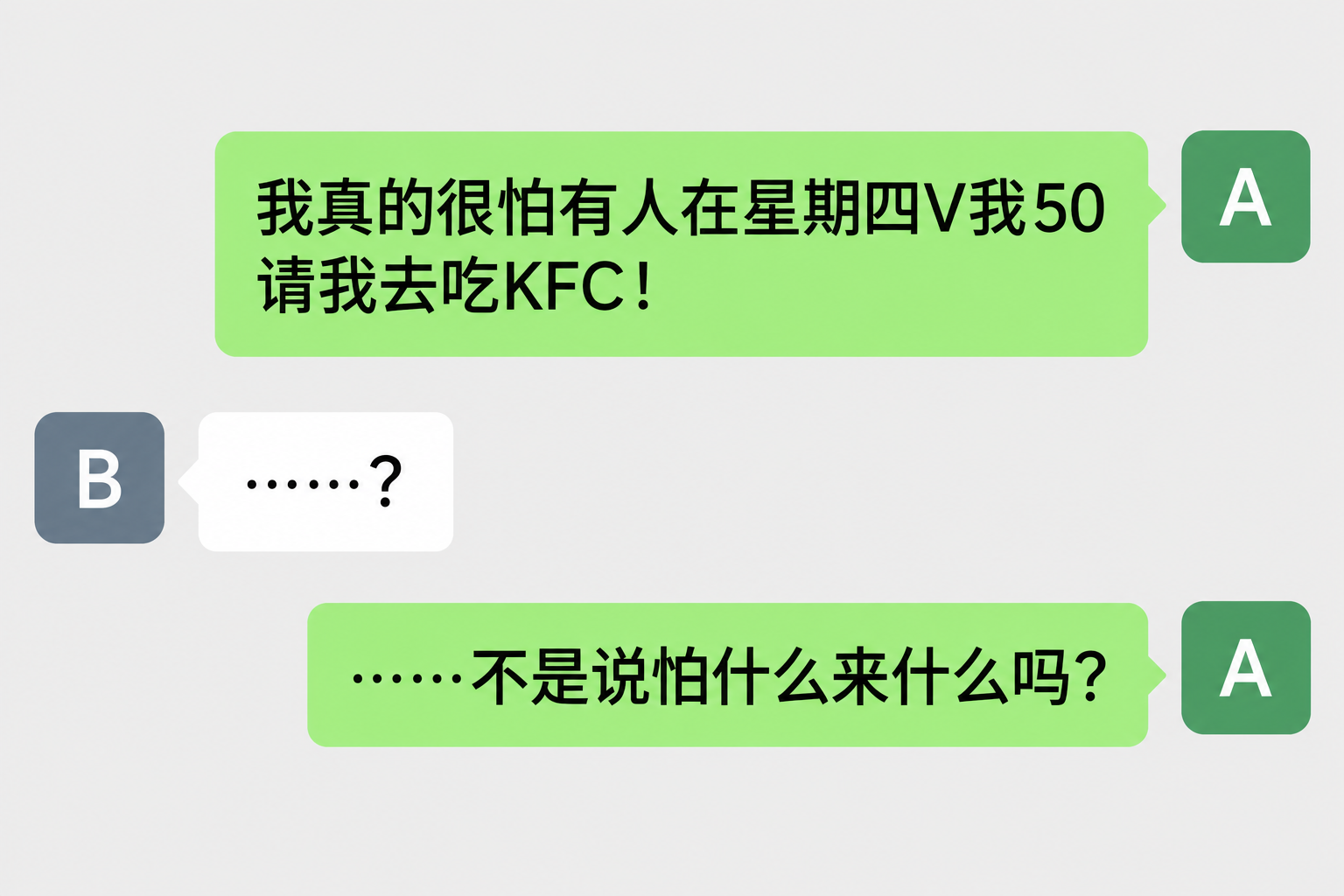
“My greatest fear is someone suddenly sending me 50 yuan!” Think that is just a joke made by today’s internet users? As early as the Song dynasty, someone was pretending to be afraid of steamed buns to get a feast. That is the joke of “What you fear is what you get.” Even more intriguingly, the joke later crossed the sea to Japan and developed into a household classic of rakugo storytelling. How could such a simple joke survive for nearly a thousand years? Join this article in tracing an old joke’s remarkable journey. Author: silverxz Reviewed by: 司徒陌 A: “I’m really afraid someone will send me 50 yuan on a Thursday to treat me to KFC!” B: “…?” A: “…Don’t they say that what you fear is what you get?” You might think that is just a little bit of wordplay, but this particular clever ide ...
How much water could your daily energy use bring to a boil?
How much water could you bring to a boil with the energy a person uses in a day? The answer may surprise you! This article explores human metabolism and the conversion between calories and electrical energy to see how much energy our quietly working bodies use each day. Author: 秋风熙 Reviewed by: 司徒陌 How much water could you bring to a boil in a day? We all know that people need to take in energy to maintain their metabolism, move around, and go about their daily activities. Heating water to its boiling point also requires energy. So, as the title suggests, today’s question is: how much water could we bring to a boil with the energy a person uses in one day? A person’s daily energy use is called total daily energy expenditure, or TDEE. Roughly 60–70% of that energy maintains the body’s m ...
Understanding algorithmic complexity results: An introduction to models of computation
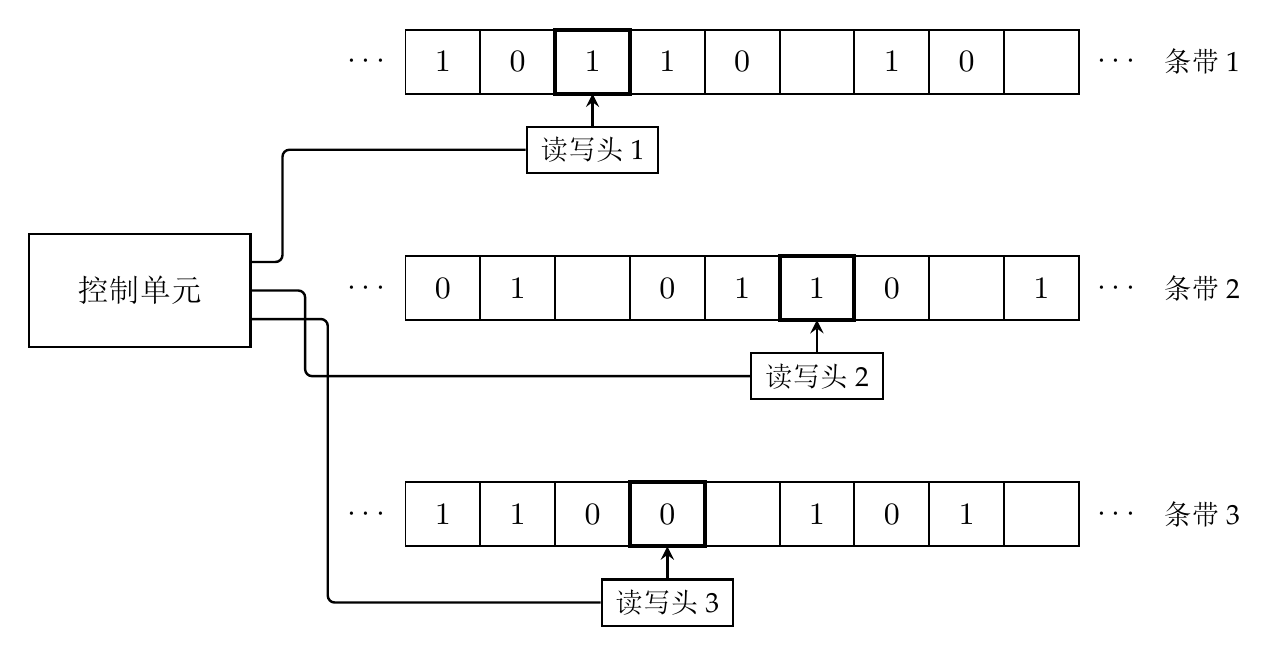
A recent batch of algorithm research results released by OpenAI has attracted attention. One claim is that integer multiplication can beat O(n log n) time. Yet researchers proved back in 1972 that integer multiplication requires at least Ω(n²) computational cost. Who got it wrong? What does algorithmic complexity actually measure? Why can the same problem lead to such different conclusions? Through integer multiplication, matrix multiplication, and the FFT, this article examines the assumptions behind complexity results that are all too easily overlooked. Author: silverxz Reviewed by: emmm On October 6, 2026, OpenAI released drafts of 722 papers, including important results in theoretical computer science—if verified as correct—and particularly some surprising complexity improvements fo ...

Want to squeeze a baby animal? Congratulations, your brain is working normally
Have fluffy kittens or puppies ever made you think, “I want to squeeze it until it bursts,” or even, “I want to sit on it and squash it”? Before you start wondering whether you’re antisocial, this feeling actually has a proper name: cute aggression. Why do cuter things make us more inclined to “bully” them? This article explores how the brain handles “cuteness overload.” Author: Einstein.? Reviewed by: 星海中的蓝玫瑰 When you scroll past videos of adorable “hakimi” cats or “hakiwoof” dogs, do you ever want to squeeze them—or even swallow them in one bite? Then you realize how cruel that sounds and start to panic: “Do I have violent tendencies? Is something psychologically wrong with me?” Don’t worry~ This is actually a very common psychological phenomenon. Psychologists call it cute aggression ...
Why is the Moon full on the sixteenth rather than the fifteenth?
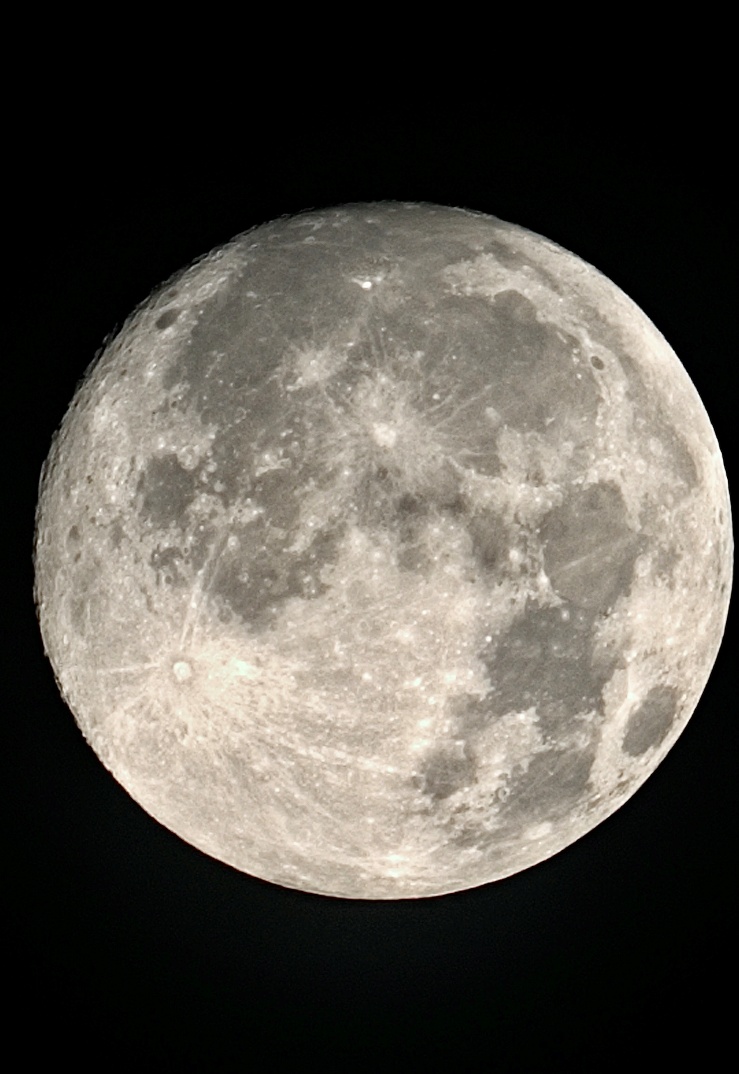
“The Moon of the fifteenth is full on the sixteenth.” Is this really just a catchy old saying? Why does this year’s Mid-Autumn full moon actually fall on the seventeenth? Through the Moon’s orbit, the synodic month, the Chinese calendar, and Mid-Autumn customs, this article explores the astronomy and millennia of calendar-making behind a full moon. Author: Einstein.? Reviewed by: 星海中的蓝玫瑰 Introduction: A question behind an old saying The Mid-Autumn Festival is approaching: a time to gather with family and admire the bright full moon overhead. But wait—is it really a full moon? Looking it up, we find that the Moon on the fifteenth day of the eighth lunar month this year is waxing gibbous, with 98% illumination. It is full on the seventeenth, with 100% illumination. It seems that this yea ...
Are there as many even numbers as natural numbers?
You may have come across a conclusion claiming that “there are as many natural numbers as even numbers.” But is that really so? From Galileo’s paradox to Cantor’s principle, this article takes you into a philosophical debate about infinity. Author: silverxz Reviewer: ΔδDelta\Delta\delta DeltaΔδDelta How should we compare the sizes of infinite sets? For example, are there more natural numbers or more even numbers? You may already have encountered the “conclusion” in many popular accounts: there are as many natural numbers as even numbers. The proof goes like this: consider the map n↦2nn\mapsto 2nn↦2n from the natural numbers to the even numbers. It establishes a one-to-one correspondence between all natural numbers and all even numbers: every natural number corresponds to an even num ...
Mathematics over Coffee: A Glimpse of Erdős's Probabilistic Method
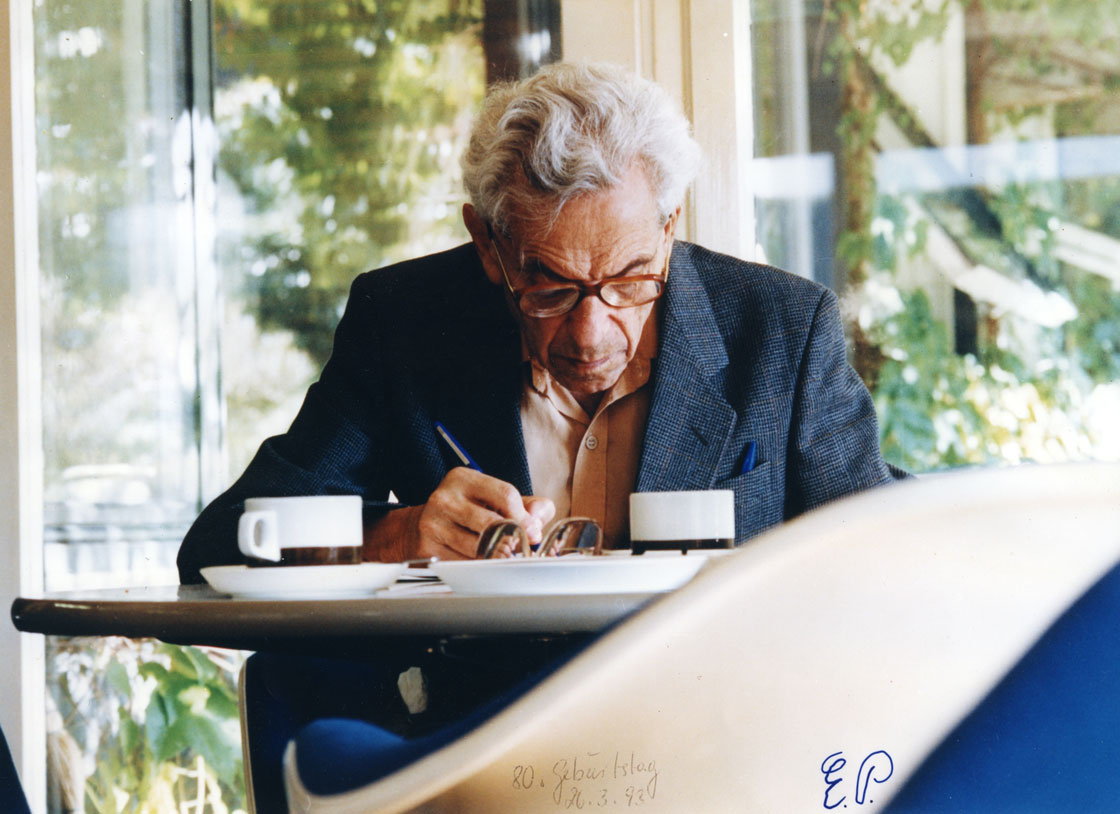
Must a mathematical proof reach its answer step by step? The mathematician Erdős offered a wonderfully indirect idea: if we can prove that “a random choice has some chance of success,” then we have proved that a solution exists. Pour yourself a coffee and enjoy these proofs as works of art. Author: silverxz Reviewed by: phy东西 Paul Erdős Image source: zbMATH Paul Erdős may not be a household name, but nearly everyone in mathematics knows who he was. A prolific and wide-ranging mathematician, he produced remarkable results in number theory, set theory, analysis, geometry, and many other fields. His place in combinatorics is beyond dispute. There is no shortage of stories about Erdős: his unusual way of living and doing mathematics, the many forms his brilliance took, and much more. Y ...
Recent Post