
How much water could your daily energy use bring to a boil?
How much water could you bring to a boil with the energy a person uses in a day? The answer may surprise you!
This article explores human metabolism and the conversion between calories and electrical energy to see how much energy our quietly working bodies use each day.
Author: 秋风熙
Reviewed by: 司徒陌
How much water could you bring to a boil in a day?
We all know that people need to take in energy to maintain their metabolism, move around, and go about their daily activities. Heating water to its boiling point also requires energy. So, as the title suggests, today’s question is: how much water could we bring to a boil with the energy a person uses in one day?
A person’s daily energy use is called total daily energy expenditure, or TDEE. Roughly 60–70% of that energy maintains the body’s most basic functions, including the heartbeat, breathing, blood circulation, and body temperature. This portion is called the basal metabolic rate, or BMR. The remaining energy expenditure goes toward everyday activities such as walking, standing, and digesting food. There are many equations for estimating BMR. Here we will use the Mifflin–St Jeor equation, one of the more accurate methods for estimating basal metabolic rate. Proposed by Mifflin and colleagues in 1990, it predicts resting energy expenditure using four variables: weight, height, age, and sex.
Once we have calculated BMR, we can estimate total daily energy expenditure by multiplying it by a factor corresponding to the person’s daily activity level.
Table 1. Activity factors for the Mifflin–St Jeor equation
| Activity factor | Reference criteria |
|---|---|
| Sedentary (1.2) | Almost no exercise; for example, an office worker who rarely goes out even on weekends. |
| Lightly active (1.375) | Light exercise 1–3 days a week, such as walking or gentle yoga. |
| Moderately active (1.55) | Moderate exercise 3–5 days a week, such as jogging, swimming, or cycling. |
| Very active (1.725) | Vigorous exercise 6–7 days a week, such as high-intensity interval training or fast running. |
| Extremely active (1.9) | Heavy physical labor or professional athletics, with high-intensity training every day. |
Let’s use these equations to calculate a specific person’s daily energy expenditure. A is a brilliant 17-year-old high school girl who is 168 cm tall and weighs 55 kg. She jogs for 45 minutes every day, putting her in the moderately active category. Her estimated daily energy expenditure is:
Now that we know A’s total daily energy expenditure, it is time to calculate how much water that energy could bring to a boil. Notice that the unit we used above is the kilocalorie (kcal). Its origins go back to the early 19th century, when the French scholar Nicolas Clément (Clément Nicolas) first introduced the calorie as a unit of heat while lecturing on heat engines in Paris. He defined it as the heat needed to raise the temperature of 1 kilogram of water by 1°C at a pressure of 1 atmosphere (101.325 kPa). In 1852, the French chemist Pierre Antoine Favre and physicist Johann T. Silbermann used “calorie” for a smaller unit: the heat needed to raise the temperature of 1 gram of water by 1°C. Clément’s calorie thus evolved into what we now commonly call the kilocalorie (kcal), or large calorie. The later unit based on warming 1 gram of water by 1°C—the small calorie—is used more often in physics and chemistry.
The definition of 1 kcal is tied directly to water, which makes our calculation convenient. We will calculate only the energy needed to heat the water to its boiling point, ignoring heat losses during heating and excluding the latent heat of vaporization. At standard atmospheric pressure, the heat required to bring 1 kg of water from 20°C to a boil is:
Combining this with our earlier estimate of total daily energy expenditure gives:
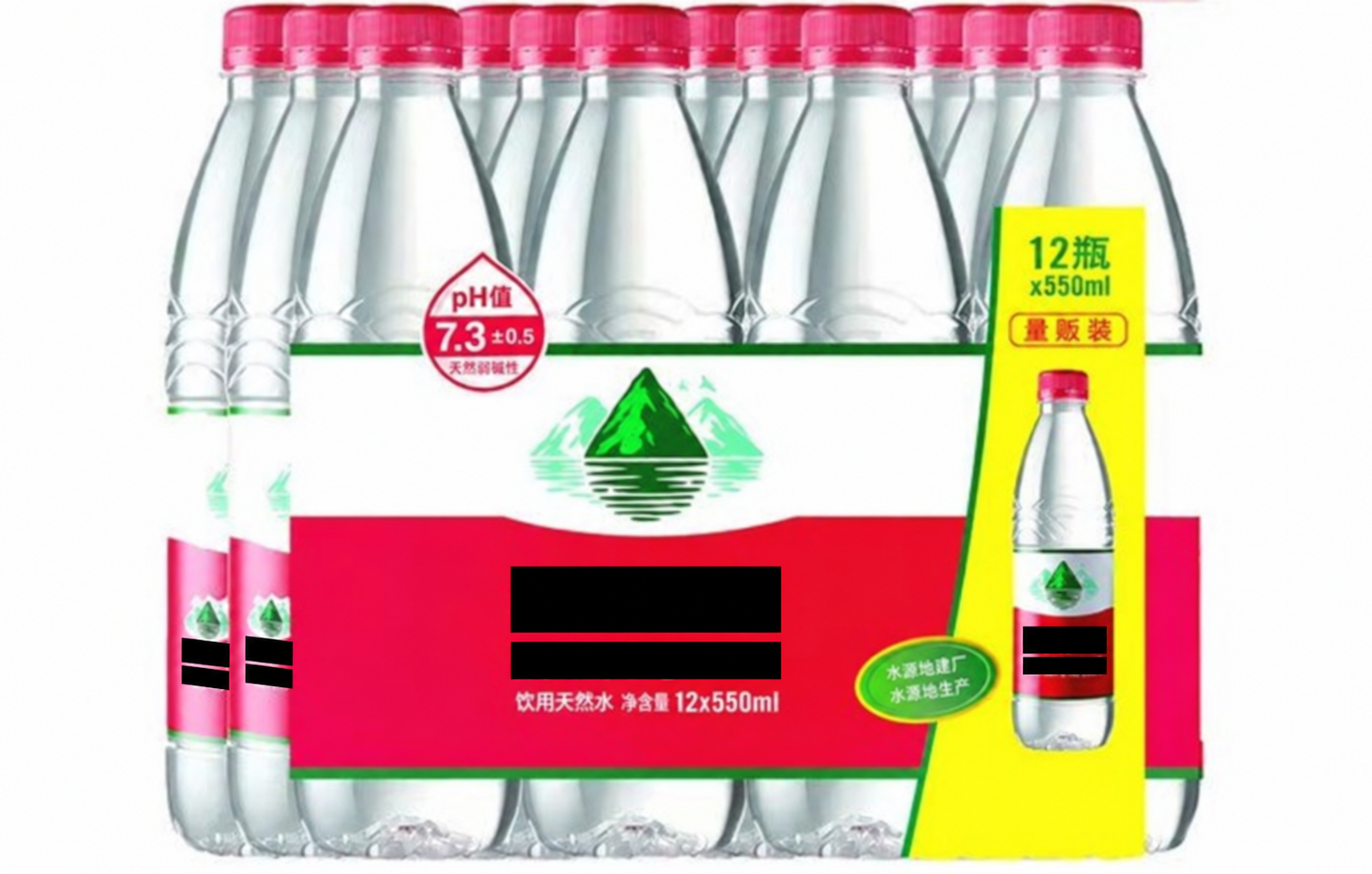
That is a striking figure, but it is still hard to picture. Let’s express 26.24 kg of water in terms of 550 ml bottles of mineral water:
Laid out in front of us, that would look roughly like this:
We have now answered the question in the title, and the conclusion is striking enough: the human body is a machine with a substantial appetite for energy. But we will not stop here. Notice that I just compared the body to a “machine.” That brings us to our next question:
How many kilowatt-hours power your day?
One unit of electricity (1 kW·h), or one kilowatt-hour, is also a unit of energy. It is defined as the electrical energy consumed by a 1-kilowatt appliance running for 1 hour. Calories and kilowatt-hours are entirely different units, so to convert between them, we need a common unit. And so, in an article about energy, the energy unit defined by the International System of Units finally makes its grand entrance: the joule (J). But a joule is a little too small for our purposes, so from here on we will meet it in the form of kilojoules (kJ). First, let’s convert kilowatt-hours to kilojoules. Since 1 kW = 1000 W and 1 h = 3600 s, we get:
Now it is the calorie’s turn, and that conversion is also straightforward. Back in 1840, when Joule himself was still alive and his name had not yet become a unit of energy, he conducted a series of experiments to measure the fixed relationship between work done and heat generated: the mechanical equivalent of heat. The best-known was his paddle-wheel experiment. A known mass of water was placed in an insulated container fitted with rotating paddles. Weights were connected to the paddles by cords and pulleys; as the weights fell, they turned the paddles. The paddles stirred the water, and friction raised its temperature. Measuring the weights’ mass and the distance they fell gave the mechanical work, while measuring the water’s mass and temperature rise gave the corresponding quantity of heat. Joule found that the same amount of external work on the system produced the same temperature rise, and that this ratio did not depend on how the work was done. His measured value was very close to the one used today:
A’s total daily energy expenditure is therefore equivalent to:
In other words, about two and a half kilowatt-hours would be enough to power A for a day. Now let’s compare that with some actual machines:
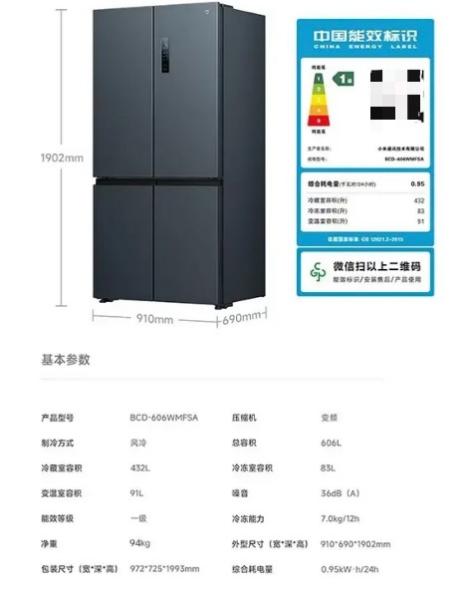
This is a four-door refrigerator. Its specifications list daily electricity consumption as 0.95 kWh, meaning that A could power it for roughly two and a half days. (Hey, what are you doing?)

This is my electricity bill for January 2026. Under Zhejiang Province’s tiered electricity pricing, the first 2760 kWh of annual use costs 0.5380 yuan per kWh. A bill of 43.58 yuan corresponds to about 81 kWh. Divided by January’s 31 days, that averages approximately 2.61 kWh per day, slightly above A’s roughly 2.44 kWh per day.
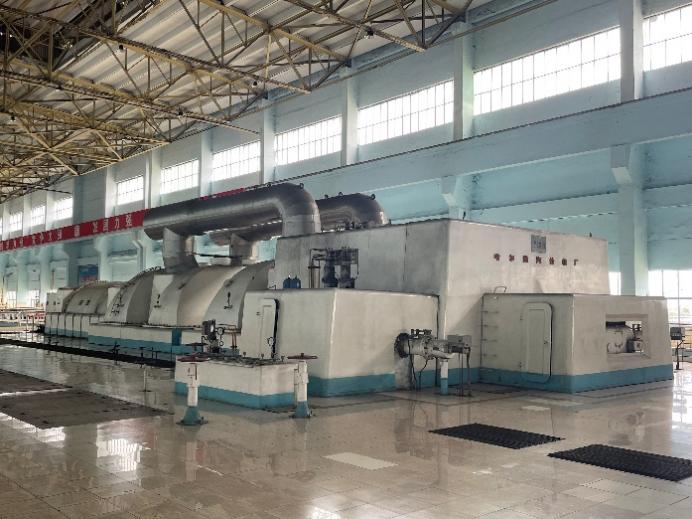
This is a retired 400 MW condensing steam turbine-generator unit. At full load, it takes just 0.022 seconds to generate 2.44 kWh.
Using A as our example, the energy a person uses in one day could bring about 26 kilograms of water to a boil, and is equivalent to roughly 2.44 kWh of electricity. There is nothing exaggerated about that figure. The food we eat each day maintains our heartbeat, breathing, and body temperature. It also powers walking, thinking, running, and even sitting quietly. Our bodies are complex, silent machines. They display no power reading and send no bills, yet they keep running day after day. So the next time you feel that you “did nothing today,” try looking at it another way: you have already used more than two kilowatt-hours of energy, brought nearly four packs of bottled water to a boil, and completed an energy project that nobody saw. What really matters is not treating your body as a device that must minimize every bit of energy use, but learning how to keep it running steadily.
References
[1] Mifflin MD, Jeor ST, Hill LA, et al. A new predictive equation for resting energy expenditure in healthy individuals[J]. Am J Clin Nutr, 1990, 51(2): 241-247.
[2] Zhu Danian, Wang Tinghuai, et al. Physiology[M]. 9th ed. Beijing: People’s Medical Publishing House, 2018.
[3] General Editorial Committee of the Encyclopedia of China. Encyclopedia of China: Physics[M]. 2nd ed. Beijing: Encyclopedia of China Publishing House, 2009: 650.
[4] Zhao Kaihua, Luo Weiyin. New Concepts in Physics: Thermal Physics[M]. 2nd ed. Beijing: Higher Education Press, 2003: 28-32
 爱发电(点击图片跳转)