Spatiotemporal Trajectories in Memory
Author: Myelin
Reviewed by: 食野
Episodic memory is a form of long-term memory: memory for events that occurred at a particular time and place. It is inseparable from personal experience, and its defining quality is its narrative, event-based character—for example, remembering an activity you attended or a place you once visited. [1]
In daily life, we usually imagine space and time as separate dimensions of experience, yet we often bring them together when describing episodic memories. If I ask what you did this morning, you may mentally retrace the entire morning as its events unfolded across different times and places. This reflects a widely held view: episodic memory embeds our records of events in a unified representation of their spatial and temporal context. [2]
In applied physics and cosmology, moreover, “time” is treated directly as the fourth dimension. Most famously, a key part of Einstein's special theory of relativity is that time dilates with velocity across different frames of reference. This observation underlies our modern concept of “spacetime”: the unification of spatial and temporal dimensions. [3]
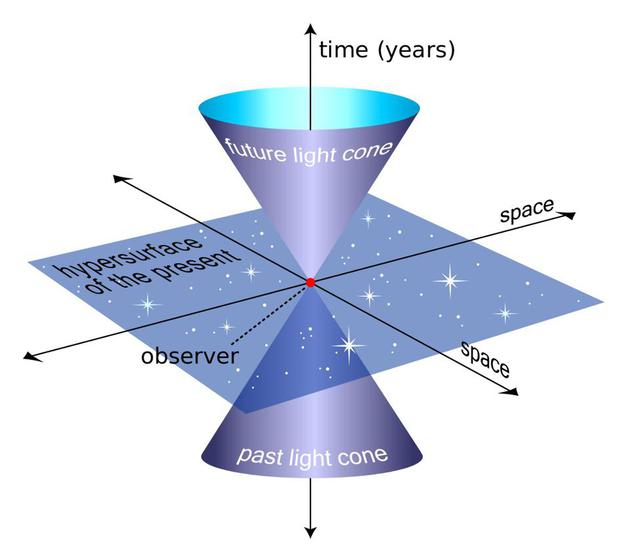 [Fig. 1. Spacetime. Image source: http://www.thephysicsmill.com/2012/12/02/ftl-part-3-general-relativity-shortcuts/]
 This article, however, is mainly about how the brain processes space and time. Do the neural pathways and mechanisms involved reflect separate spatial and temporal codes? Or do they reveal a unified representation of spacetime in which memories themselves are located?
“Space”
The hippocampus has long been recognized as crucial both to memory and to the brain's representations of space and time. One possible link among these functions is the way the hippocampus organizes memories in space. Pioneering research distinguishing the “what” and “where” streams of visual processing identified a specialized pathway for spatial cognition and action, separate from pathways that support particular visual properties such as color and brightness.
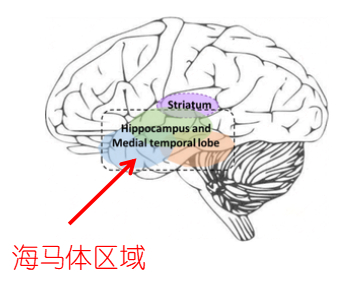
Research over recent decades has mapped the “where” pathway in detail. Spatial memory is encoded across a succession of cortical regions extending from the cortex to the parahippocampal cortex—called the postrhinal cortex in rodents—and the medial entorhinal cortex. [4]
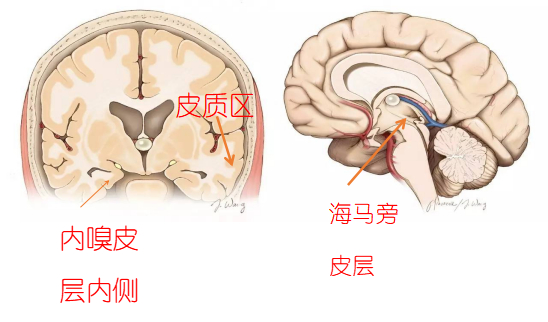 [Figs. 2, 3, and 4. The hippocampus, cortical regions, and spatial memory. Image source: https://www.researchgate.net/profile/Neil-Burgess-2/publication/5580634/figure/fig1/AS:267308312559622@1440742676688/The-hippocampus-and-its-connectionsa-The-hippocampus-lies-in-the-medial-temporal_Q320.jpg]
 Many functional-imaging studies have found selective activation in the parahippocampal cortex and medial entorhinal cortex when participants recall the setting in which they studied a particular object. These findings have allowed researchers to identify the regions as representing the spatial elements of memory. [5]
In 2005, May-Britt and Edvard Moser discovered grid cells, which map our surroundings at different scales by dividing space into hexagonal units. In 2014, the Mosers shared the Nobel Prize in Physiology or Medicine with their University College London colleague and mentor, John O'Keefe, for discovering cells that constitute a positioning system in the brain.
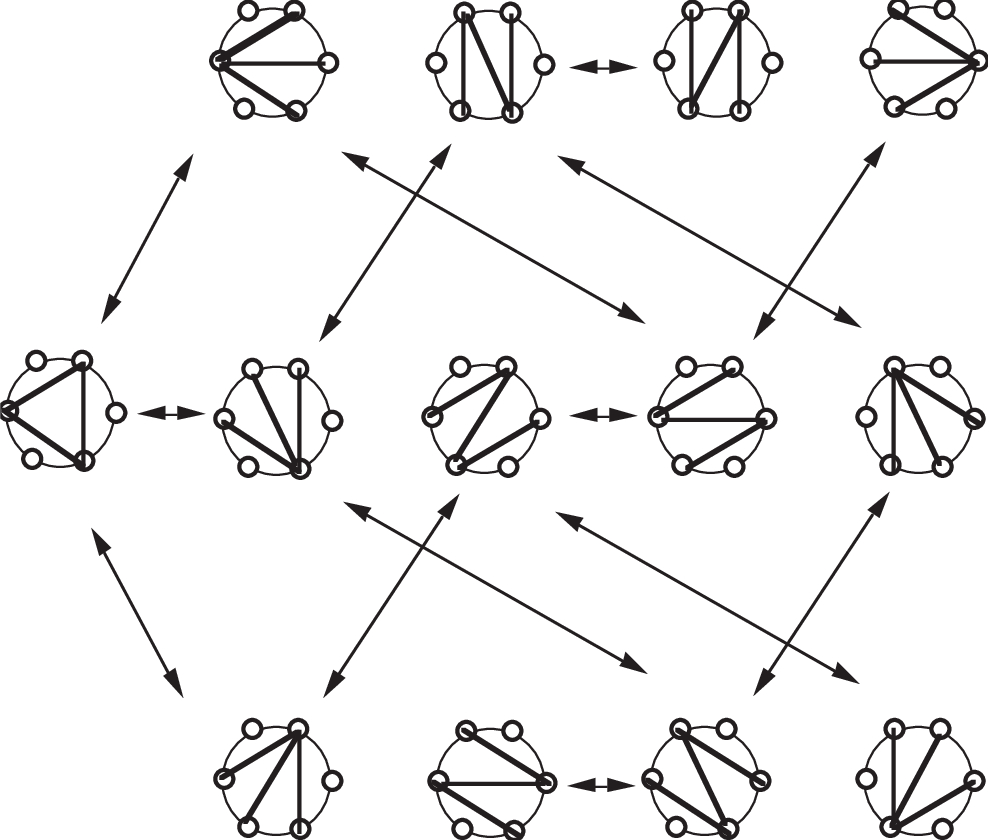 [Fig. 5. Take our campus as an example! The “space” occupied by a classroom can be represented by one hexagon, with each side corresponding to a direction; the cafeteria can be represented by another. Then, while your mind wanders in class, you can plan the route you will dash along when the bell rings. That “route” is the arrow connecting the hexagons in this diagram.]
 Inspired by the Mosers' discovery of spatially encoding grid cells, Albert Tsao—then a doctoral student at the Kavli Institute—set out in 2007 to decipher what was happening in the enigmatic lateral entorhinal cortex (LEC). This region lies immediately beside the medial entorhinal cortex (MEC), where his supervisors, the Mosers, had discovered grid cells.
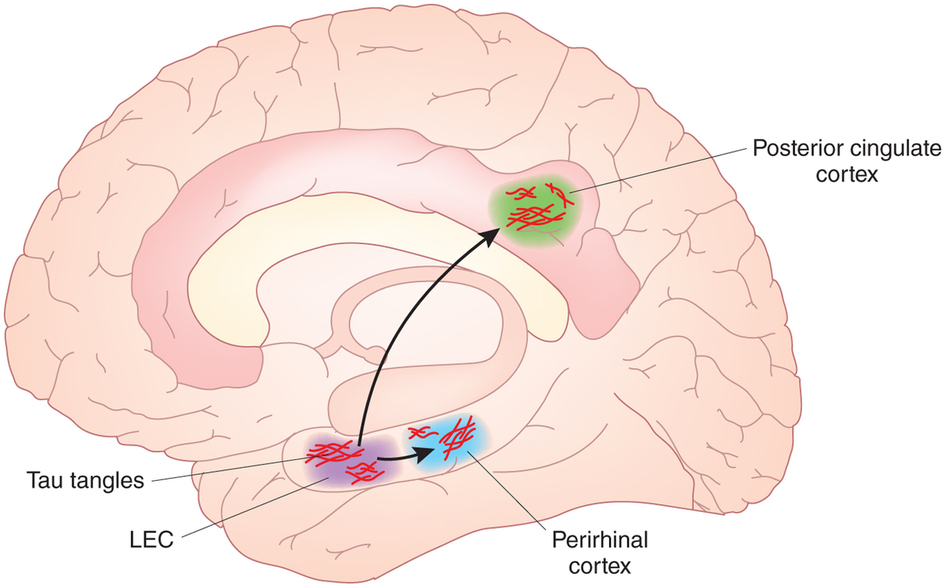 [Fig. 6. LEC. Image source: https://i1.wp.com/www.lec.guru/wp-content/uploads/2017/12/Decoding-the-brain.jpg?resize=300%2C227&ssl=1]
 Today, we have a fairly good understanding of how the brain processes space, but our understanding of time is less coherent. Time is a non-equilibrium process: always unique, always changing. If this network truly encodes time, its signal must change over time so that experiences can be recorded as distinct memories. [6]
“Time”
Researchers at Norway's Kavli Institute for Systems Neuroscience have discovered a network of brain cells that represents our sense of time in experience and memory. This neural clock works by organizing the flow of experience into an ordered sequence of events. Its activity creates the brain's clock for subjective time. Experience—and the sequence of events within it—is therefore the raw material from which the brain produces and measures subjective time.
We coordinate our activities by clock time, for example. Your brain, however, does not perceive duration in the standardized minutes and hours shown on your watch. Time as it appears in experience and memory belongs to an entirely different kind of temporality. [7]
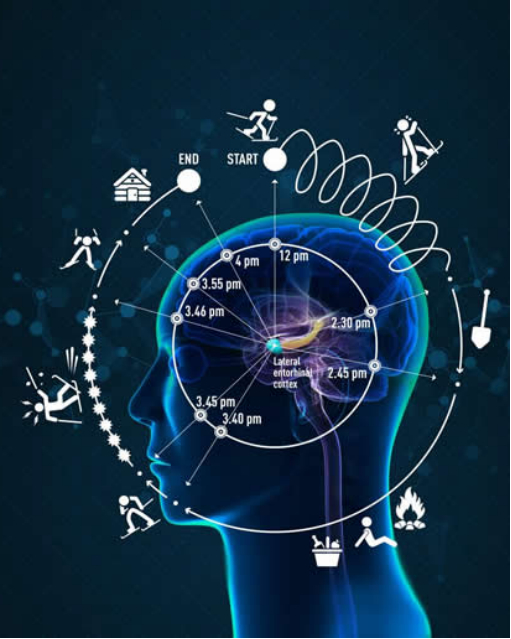 [Fig. 7. Time and the brain—https://norwegianscitechnews.com/wp-content/uploads/2018/08/illustration-1_a-neural-clock-for-timesmall.jpg]
 Over the course of evolution, organisms—including humans—have developed several biological clocks to help keep track of time. The brain's timers differ not only in the timescales they measure, but also in the phenomena to which they are tuned. Some are set by external processes. The circadian clock, for instance, is tuned to the waxing and waning of daylight and helps organisms adapt to the daily cycle. [8]
Other forms of timing are set by internal processes. Time cells in the hippocampus, for example, form a domino-like chain of signals that precisely tracks intervals of up to ten seconds. Yet few known mechanisms operate on the timescales the brain uses to record experiences and memories, which may last from seconds to minutes or hours. [7]
In 2016, doctoral student Jørgen Sugar joined Norway's Kavli project and conducted a new series of experiments to test the hypothesis that the LEC network encodes episodic time. In one experiment, a rat encountered a broad sequence of experiences and choices. As it visited a series of open environments, it was free to run around, explore, and chase pieces of chocolate.
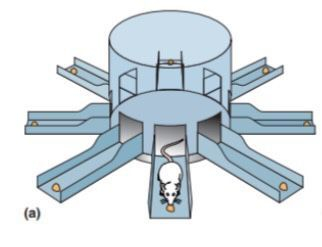 [Fig. 8(a). K. Jeffery, University College London, Topics in Neurobiology]
 The unique temporal signal in this experiment showed that over its two-hour duration, the rat kept a very good record of time and of the order of events—for instance, when and where it found chocolate, and whether it remembered where to go and when for its next treat. Using signals from the time-coding network, the researchers could accurately track when the various events in the experiment occurred.
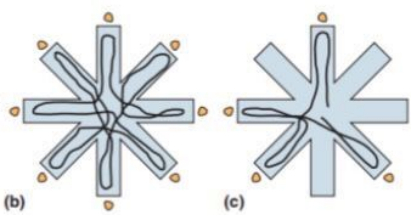 [Figs. 8(b) and 8(c)]]
 In the second experiment, the task was more structured and offered a narrower range of experiences and choices. The rat was trained to chase pieces of chocolate by turning left or right in a maze [Figs. 8(b) and 8(c)]. During this activity, the time-coding signal shifted from a unique temporal sequence to a repeating, partly overlapping pattern.
In a repetitive task, on the other hand, the temporal signal became more precise and predictable. The data showed that the rat had a finely resolved sense of time within each lap, but a poor sense of time from one lap to the next and across the experiment as a whole.
Professor Moser believes this research shows that by changing the activity and content of an experience, a person can change the progression of the temporal signal in the LEC—and thereby change how time is perceived. [6, 8]
The structure of time has long been debated by philosophers and physicists. What can the brain's newly discovered mechanism for episodic time tell us about our perception of time? Is that perception linear, like a flowing river, or cyclical, like a wheel or a spiral? Data from O'Keefe's research suggest that both are true, and that signals in the time-coding network can take many forms depending on the experience.
Space and time are initially processed by overlapping brain networks and encoded at different scales. Their signals are then integrated in the hippocampus, forming a spatiotemporal framework for organizing memory. Although movement through space and time is intrinsically coupled, under some behavioral demands spatial and temporal codes can be observed separately in the hippocampus; alternatively, neurons encoding the two dimensions may combine to form an integrated population representation.
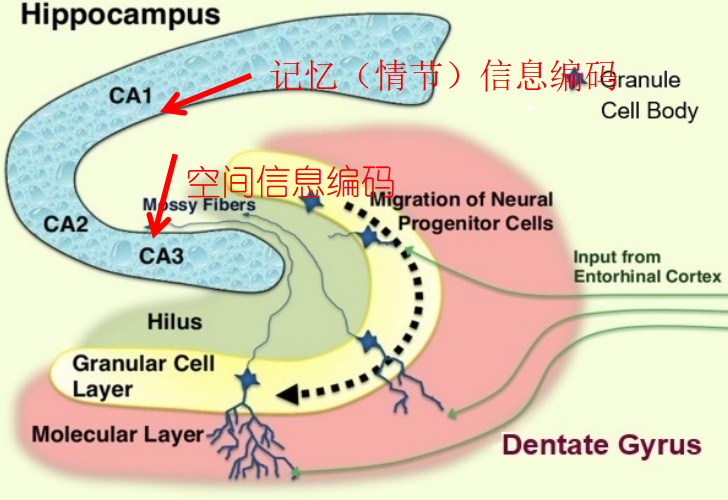 [Fig. 9. The CA1 and CA3 regions of the hippocampus and their functions. Image source: https://www.geon.us/Memory/images/DentateGyrus.jpg]
 The hippocampus can be a little willful, though—just kidding. Rather than using a unified spatiotemporal coordinate system, the hippocampal network mixes separately encoded space and time, selectively reusing their representations. In other words, spatial and temporal memories can occasionally become confused.
The hippocampal network also maps a wide range of other continuous dimensions of experience, organizing knowledge through the mixed selectivity of neurons within the same population. Temporal-context models applied to hippocampal networks with broad mixed selectivity for different inputs point to a simple mechanism for associating adjacent events that together integrate space, time, and other dimensions.
And there you have it: those dimensions are the features of an abstract relational space.
Citations
Literature
[1] Buzsáki, G. Time, space and memory. Nature 497, 568–569 (2013). https://doi.org/10.1038/497568a
[2] Sarah DuBrow, Lila Davachi, Temporal binding within and across events, Neurobiology of Learning and Memory, Volume 134, Part A , Pages 107-114(2016), https://doi.org/10.1016/j.nlm.2016.07.011.
[3] Brunetti, Romeo, Franceschini, Lorenzo & Moretti, Valter, 2009. Topological features of massive bosons on two-dimensional einstein space-time. Annales Henri Poincaré, 10(6), pp.1027–1073.
[4] Robert E. Clark, Larry R. Squire, Animal model of human memory impairment, Proceedings of the National Academy of Sciences Jun 2013, 110 (Supplement 2) 10365-10370
[5] ALEXANDRA O. CONSTANTINESCU, JILL X. O’REILLY, TIMOTHY E. J. BEHRENS, Organizing conceptual knowledge in humans with a gridlike code, SCIENCE17 JUN 2016 : 1464-1468
[6] Edvard I. Moser, Emilio Kropff and May-Britt Moser ., Place Cells, Grid Cells, and the Brain’s Spatial Representation System
Annual Review of Neuroscience.(2008) , Vol. 31:69-89
[7]O’Keefe, J., and Nadel, L. (1978). The Hippocampus as a Cognitive Map(Oxford University Press).
[8]Roberts, B.M., Hsieh, L.-T., and Ranganath, C. (2013). Oscillatory activityduring maintenance of spatial and temporal information in working memory.Neuropsychologia51, 349–357.
Images
Fig. 1: Spacetime, http://www.thephysicsmill.com/2012/12/02/ftl-part-3-general-relativity-shortcuts/
Fig. 2, Fig.3, Fig.4: The hippocampus, cortical regions, and spatial memory https://www.researchgate.net/profile/Neil-Burgess-2/publication/5580634/figure/fig1/AS:267308312559622@1440742676688/The-hippocampus-and-its-connectionsa-The-hippocampus-lies-in-the-medial-temporal_Q320.jpg
Fig. 6: https://i1.wp.com/www.lec.guru/wp-content/uploads/2017/12/Decoding-the-brain.jpg?resize=300%2C227&ssl=1
Fig. 7: https://norwegianscitechnews.com/wp-content/uploads/2018/08/illustration-1_a-neural-clock-for-timesmall.jpg
Fig.8 (a) (b) © : K.Jeffery. University College London, Topics in Neurobiology
Fig. 9: https://www.geon.us/Memory/images/DentateGyrus.jpg

 爱发电(点击图片跳转)