











The 2022 Nobel Prize in Physiology or Medicine
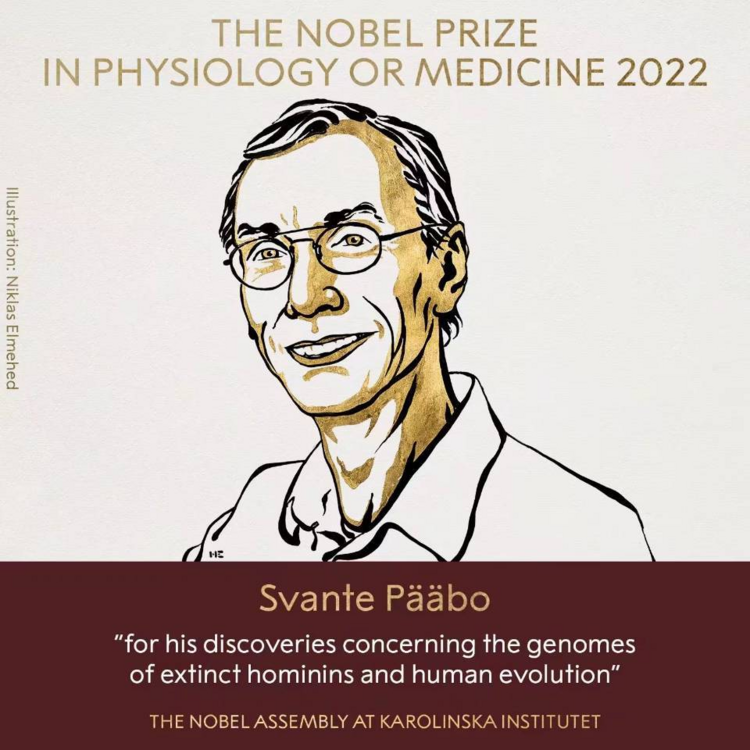
Introduction Humans have always wondered about their origins: Where do we come from? How are we, Homo sapiens, related to the other human groups that came before us? What sets Homo sapiens apart from them? Through pioneering research, Professor Svante Pääbo accomplished what had seemed impossible: he sequenced the genome of an extinct human relative, the Neanderthal. He also discovered a previously unknown human group, the Denisovans. Just as importantly, Pääbo found that genes from these now-extinct groups entered the Homo sapiens gene pool after our ancestors left Africa about 70,000 years ago. This ancient genetic legacy still matters physiologically today, affecting, for example, how our immune systems respond to infection. Pääbo’s work gave rise to a new discipline: paleogenomics. By ...
Variational Inference and Generative Models
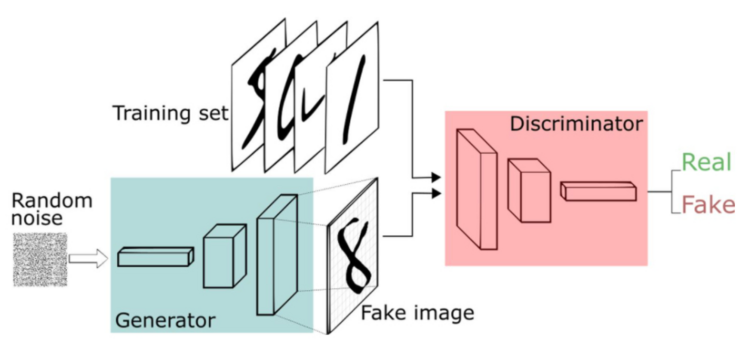
Author: I Am Zhang Yixian Author’s Zhihu profile: Thinker Variational Inference The basic idea is simple: probabilistic models often require us to approximate distributions that are difficult to compute. Inference about any unknown quantity can be viewed as inference about a posterior probability because Bayes’ theorem allows us to construct one: p(x)=∑p(x∣z)p(z)p(x) = \sum p(x|z)p(z) p(x)=∑p(x∣z)p(z) For large datasets, Markov chain Monte Carlo methods are too slow, which is where variational inference comes in. Two kinds of variables appear repeatedly: the observed data, xxx, and the latent variable, zzz. The resulting inference problem is to determine the posterior conditional distribution p(z∣x)p(z|x)p(z∣x) for the input data. Using the ELBO, we seek a tractable distribution q(z) ...

Paradox Interactive: Game Worlds, Politics, and Social Simulation
Author: Enthusiastic A-Jiang Reviewer: Saito Shin Everyone has played a “Paradox” game, right? (Figure 1 shows the company’s official logo.) Anyone who enjoys historical strategy or simulation games will know the name. Headquartered in Stockholm, Sweden, Paradox has created many classic series. Its games go on sale every year from April to May, so if you have not tried one yet, now is the time. You may find something you like. (Figure 1: Paradox logo) Why is Paradox so famous? Its players are said to be the most inhuman people in gaming history. Search for “Paradox players,” and descriptions such as “demons” and “perverts” will appear. But what makes them so inhuman? Take Stellaris. Ordinary players fly spaceships through the galaxy, befriend aliens, and discover unfamiliar civiliza ...

Traditional Chinese Philosophy: A Brief Lecture
Author: Silicon-Based Reviewer: Xian’e I drafted this lecture while my school was locked down during the pandemic. I had already reached the library’s borrowing limit, and all the books I had annotated were at my home far away in southern China. I wrote almost entirely from my not especially reliable memory, so this account of traditional Chinese philosophy is bound to contain substantial omissions and mistakes. Please approach it cautiously and critically. By traditional Chinese philosophy, I generally mean the systems of Chinese thought, sometimes grouped under “Eastern philosophy,” that dominated the intellectual life of East Asia from the Hundred Schools of Thought in pre-Qin China until Marxism entered the country. Compared with its counterpart, “Western philosophy,” traditional ...
The ‘Fixed’ Stars Aren't Fixed: How Their Positions Change
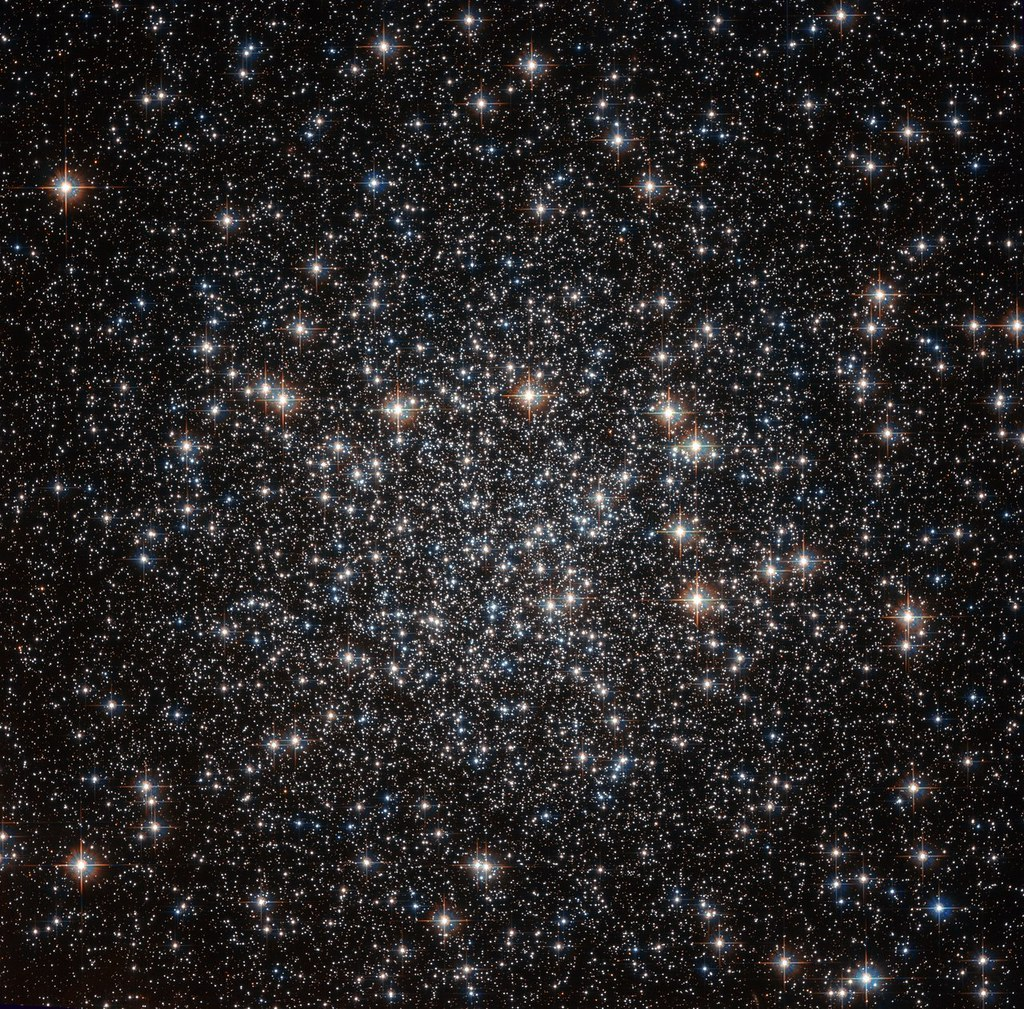
Author: Congyu Reviewer: Baiyan With excellent eyesight, you might pick out more than 2,500 stars on a clear, dark night. Across the entire celestial sphere, nearly 6,000 are visible to the naked eye. Ancient observers noticed that, unlike the five planets Mercury, Venus, Mars, Jupiter, and Saturn, most celestial objects seemed to keep the same positions forever. That apparent permanence gave us the Chinese word for star, which literally means “constant star.” We now know that stars only look fixed: they are so distant that their motion across the celestial sphere is hard to detect. This article introduces three ways their positions shift against the celestial background: Parallax Proper motion Aberration of light Parallax Hold up a finger and look at it first through one eye, the ...

Automotive Styling and Aerodynamics
Author: 未名 Reviewer: 未名 Introduction In 1886, Karl Benz built the world’s first three-wheeled automobile powered by an internal-combustion engine. What chiefly distinguished it from a horse-drawn carriage was its powertrain; the basic form of the modern four-wheeled car came from Daimler. Over the next century and more, vehicle bodies evolved along with the demand for greater mobility and changing aesthetic tastes. From the Beetle to the ponton body and then the wedge shape, designers have pursued forms that reduce drag without sacrificing visual appeal. This article briefly examines the relationship between automotive styling and aerodynamics. Automotive Styling and Aerodynamic Drag At constant speed on a level road under normal atmospheric pressure, a car's aerodynamic ...
The Philosophy and Theology of Saint Augustine
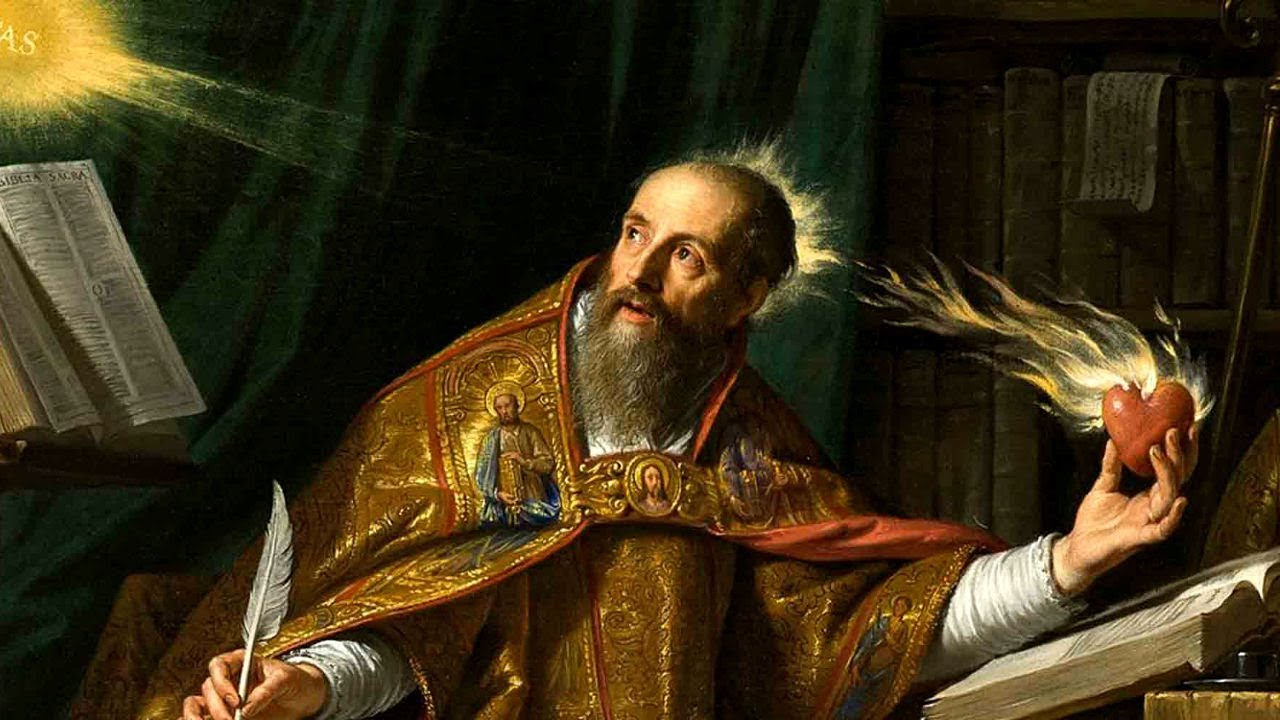
The Philosophy and Theology of Saint Augustine Author: Михaїл-А-Булгáкoв☦️ Reviewed by: 观复·钧天 Saint Augustine was an extraordinarily prolific writer whose works dealt mainly with questions of theology. His polemical writings addressed the issues of his day and, once they had served their purpose, generally lost all significance. Some of them, however, especially those concerning the Pelagians, have continued to exert a real influence into modern times. I do not intend to cover everything he wrote. Instead, I will examine the works and arguments that seem to me important in themselves or in their historical influence: First, his pure philosophy, especially his theory of time Second, the philosophy of history presented in The City of God Third, the theory of salvation develop ...

Procedural Art: Drawing a Black-and-White Checkerboard with Code
Author: Shiguang Reviewed by: Dongda Many readers probably first encountered “procedural art” in an elementary-school information technology class, when a textbook introduced the fascinating program Turtle Graphics. Think back: how did we make the little turtle move? The answer was code. In 1996, Seymour Papert and Wally Feurzeig invented Logo, a language designed to teach children programming, and we used it to direct a turtle around the screen as it drew. As technology has evolved, however, Logo has gradually faded from view, and mainstream approaches to drawing have changed as well. This article shows how to use a shader language—called simply Shader below—to draw a 3*3 checkerboard. I use UE4 for the demonstration. If you are interested, try the algorithm pres ...

Fluorescent Proteins: A Brief History and How They Work
Fluorescent Proteins: A Brief History and How They Work Author: Polar Glacier Reviewed by: Weiming Abstract Green fluorescent protein (GFP), discovered and isolated from the jellyfish Aequorea victoria in 1962, and the red fluorescent protein drFP583, discovered in 1999 in corals of the genus Discosoma, have become widely used tools throughout biological research. They are nontoxic, emit strong fluorescence when excited by specific wavelengths of light, have low molecular weights, are easy to incorporate into vectors, and can be expressed in many organisms. These properties have made fluorescent proteins useful across a broad range of fields, and researchers now have many varieties to choose from. History of Fluorescent-Protein Research Green fluorescent protei ...
The Phases of Earth as Seen from the Moon
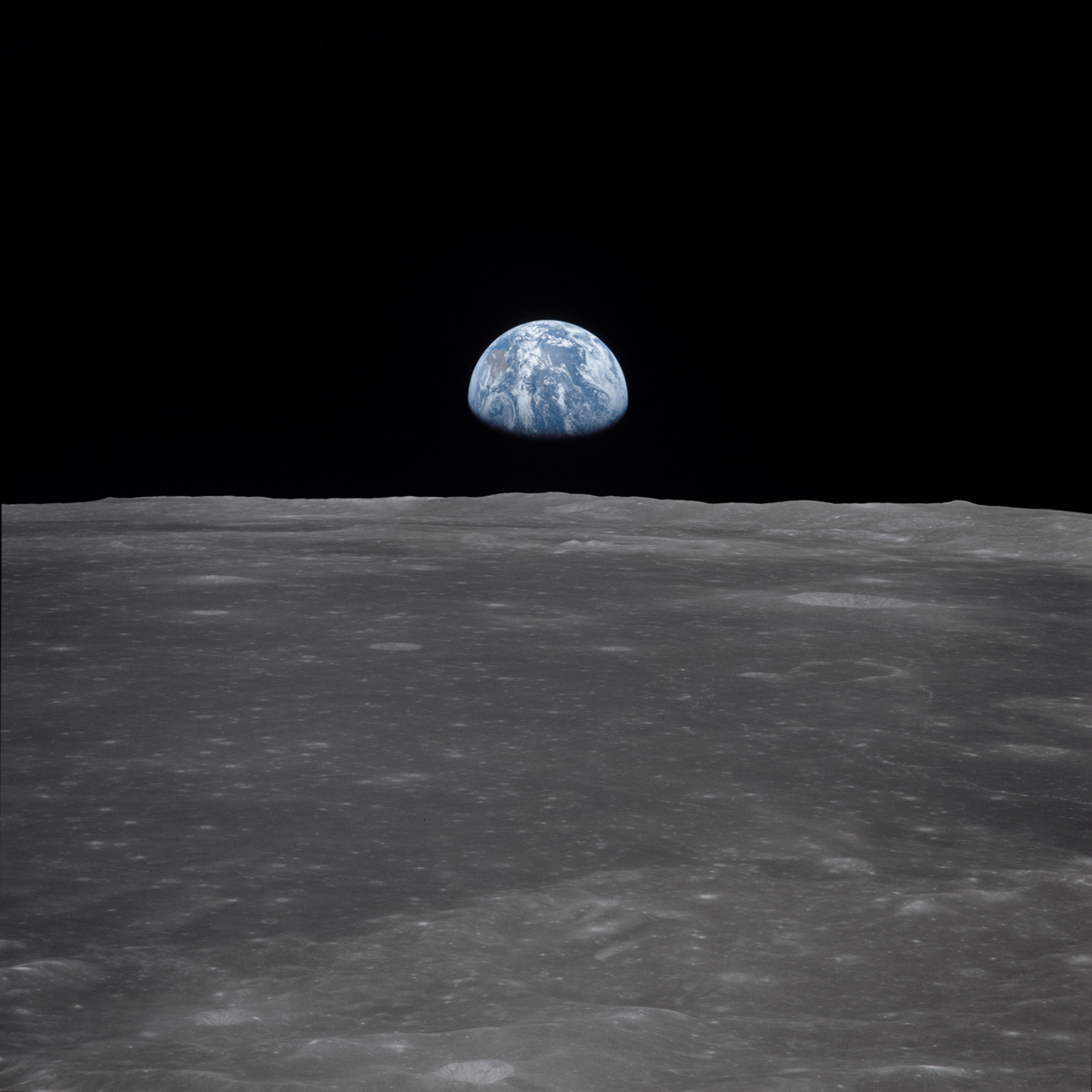
The Phases of Earth as Seen from the Moon Author: Congyu Reviewed by: Yuandao and Shiguang What does Earth look like from the Moon? If you know a little about the Earth–Moon system and lunar phases, you may already sense that something is wrong with this image. It comes from Horizon Lunar Colony, a map in the game Overwatch. Setting artistic license aside, the screenshot gives us a useful starting point for exploring the phases of celestial bodies. Figure 1: Screenshot from Overwatch. The image greatly exaggerates Earth's apparent size. From the Moon, Earth has an apparent diameter of about 1.9 degrees, only 3.6 times that of the Sun. A celestial body's phase depends on the relative positions of the Sun, the body, and the observer. It tells us how much of the su ...
Recent Post