
The Philosophy and Theology of Saint Augustine
The Philosophy and Theology of Saint Augustine
Author: Михaїл-А-Булгáкoв☦️
Reviewed by: 观复·钧天
Saint Augustine was an extraordinarily prolific writer whose works dealt mainly with questions of theology. His polemical writings addressed the issues of his day and, once they had served their purpose, generally lost all significance. Some of them, however, especially those concerning the Pelagians, have continued to exert a real influence into modern times. I do not intend to cover everything he wrote. Instead, I will examine the works and arguments that seem to me important in themselves or in their historical influence:
- First, his pure philosophy, especially his theory of time
- Second, the philosophy of history presented in The City of God
- Third, the theory of salvation developed in opposition to Pelagianism
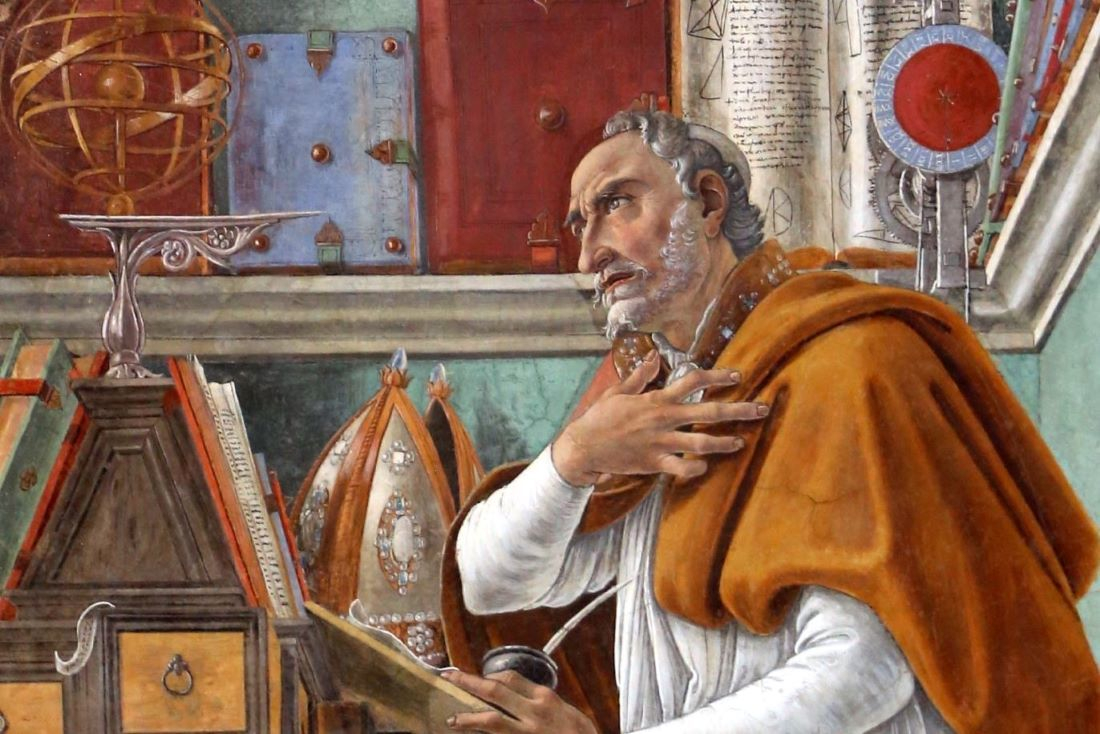
Pure Philosophy
Saint Augustine did not, in general, devote himself single-mindedly to pure philosophy, but when he did engage with it, he displayed exceptional ability. Many thinkers throughout history have allowed the demands of scriptural conformity to shape their speculative views, and Augustine stands at the head of that long line. This was not yet true of early Christian philosophers such as Origen. In Origen's writings, Christianity and Platonism coexist without penetrating each other. In Augustine's work, by contrast, original philosophical thought was stimulated by the tension between Platonism and *Genesis*.
Among Saint Augustine's writings, Book XI of Confessions is his finest work of pure philosophy. Some popular editions of *Confessions* contain only ten books, since the material after Book X is considered dull. It is dull precisely because it is no longer autobiographical and instead contains a great deal of philosophy. Book XI addresses this question: if creation occurred as described in the first chapter of *Genesis*, as Augustine maintained against the Manichaeans, why did it not happen sooner? He imagines an opponent raising this objection and develops his argument in response.
To understand this discussion, one must first recognize that the Old Testament idea of creation out of nothing was wholly foreign to Greek philosophy. When Plato spoke of creation, he imagined God giving form to primordial matter; Aristotle held a similar view. Their God was less a creator than a designer or architect. They believed matter to be eternal and uncreated, with only its form arising from the will of God. Against this view, Saint Augustine maintained, as every orthodox Christian had to, that the world was created not from any preexisting matter but out of nothing. God created matter itself; he did not merely order and arrange it.
The Greek conviction that nothing could be created from nothing resurfaced intermittently during the Christian era and gave rise to pantheism. Pantheism holds that God and the world cannot be distinguished and that everything in the world is part of God. This view was fully developed in the writings of Spinoza and appealed to almost every mystic. Throughout the Christian centuries, mystics had difficulty remaining orthodox because they found it hard to believe that the world existed outside God. Augustine had no difficulty on this point. *Genesis* was perfectly clear, and that was enough for him. His position had important consequences for his theory of time.
Why was the world not created sooner? Because there was no “sooner.” Time was created along with the world. God is eternal in the sense of existing outside time: in God there is no before and after, only an eternal present. God's eternity is independent of temporal relations; for God, all time is present. He did not precede the time he created, for that would mean that he himself existed in time. Instead, God stands eternally outside the stream of time. This led Augustine to formulate a highly admirable theory of the relativity of time.

“What, then, is time?” he asked. “If no one asks me, I know; if I wish to explain it to someone who asks, I do not know.” Several difficulties perplexed him. What really exists, he said, is neither the past nor the future, but only the present. Yet the present is merely an instant, while time can be measured only as it passes. Even so, past and future time plainly do exist, leaving us with an apparent contradiction. Augustine found only one way around it: the past and future can be conceived only as present. The “past” must be identified with memory, and the “future” with expectation; memory and expectation are both facts that exist now. He said there are three times: “a present of things past, a present of things present, and a present of things future.” “The present of things past is memory; the present of things present is sight; the present of things future is expectation.” (To speak simply of three times—past, present, and future—is merely a loose expression.)
He also understood that this theory did not solve every problem. “My mind longs to understand this most intricate riddle,” he wrote. He prayed that God would enlighten him and assured God that his concern did not arise from idle curiosity. “Lord, I confess to you that I still do not know what time is.” The central point of his answer, however, is that time is subjective: “Time exists in the mind that expects, attends, and remembers.”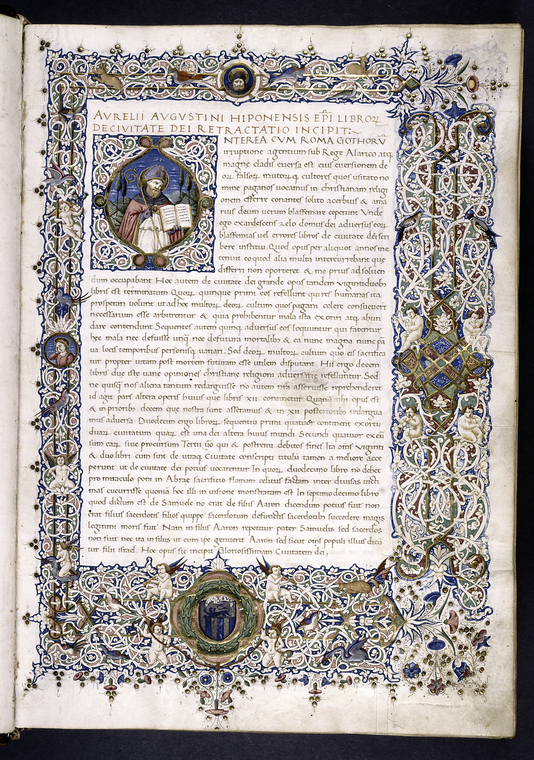
The first page of a manuscript of *The City of God*, written in 1470 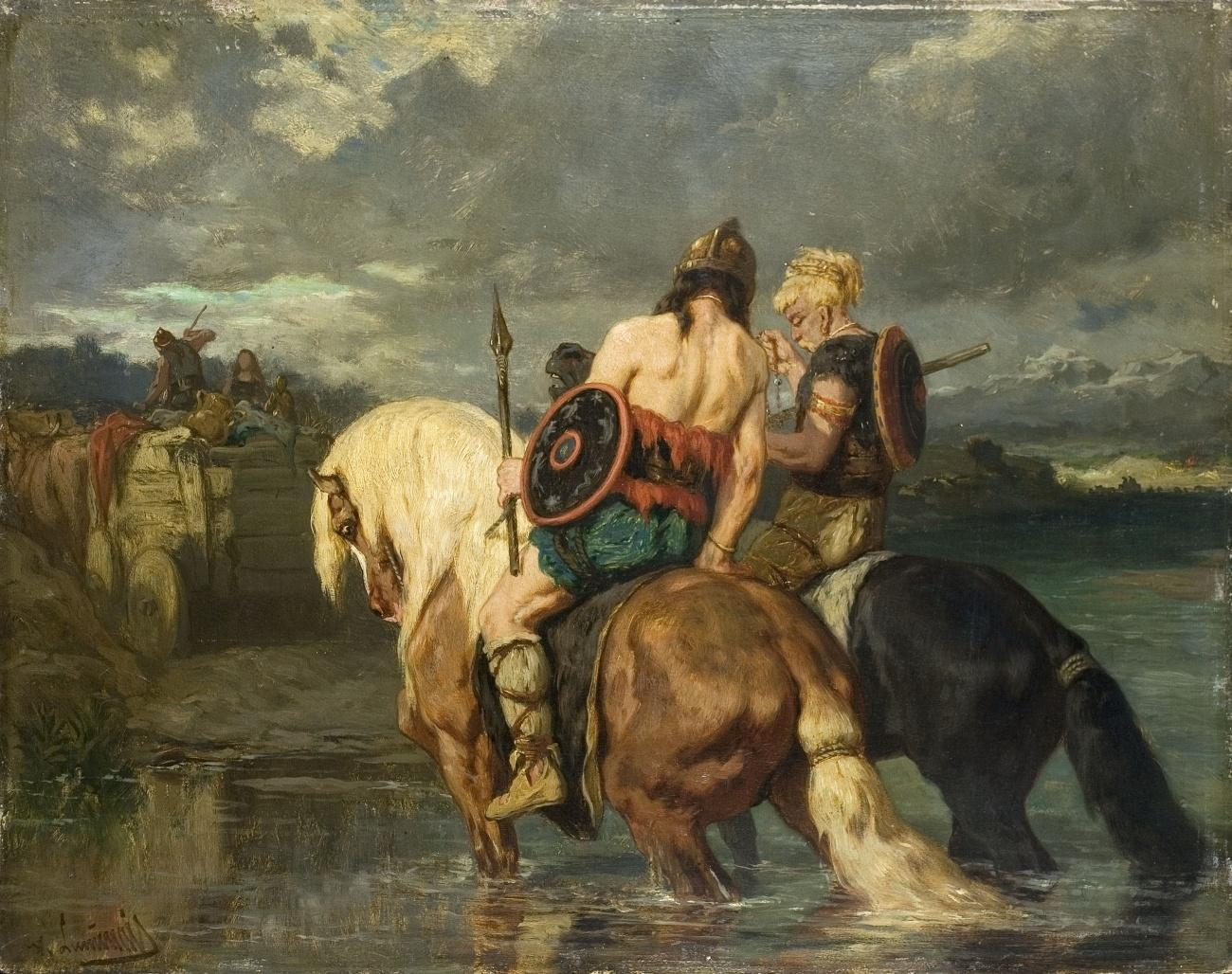
Two Gothic soldiers 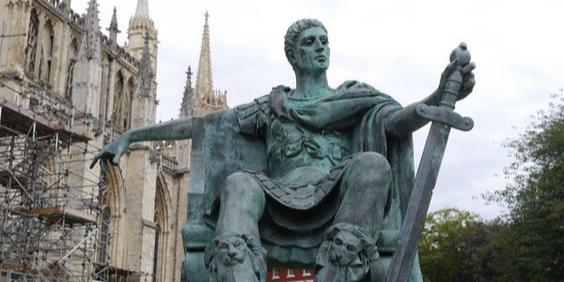
Statue of Constantine the Great 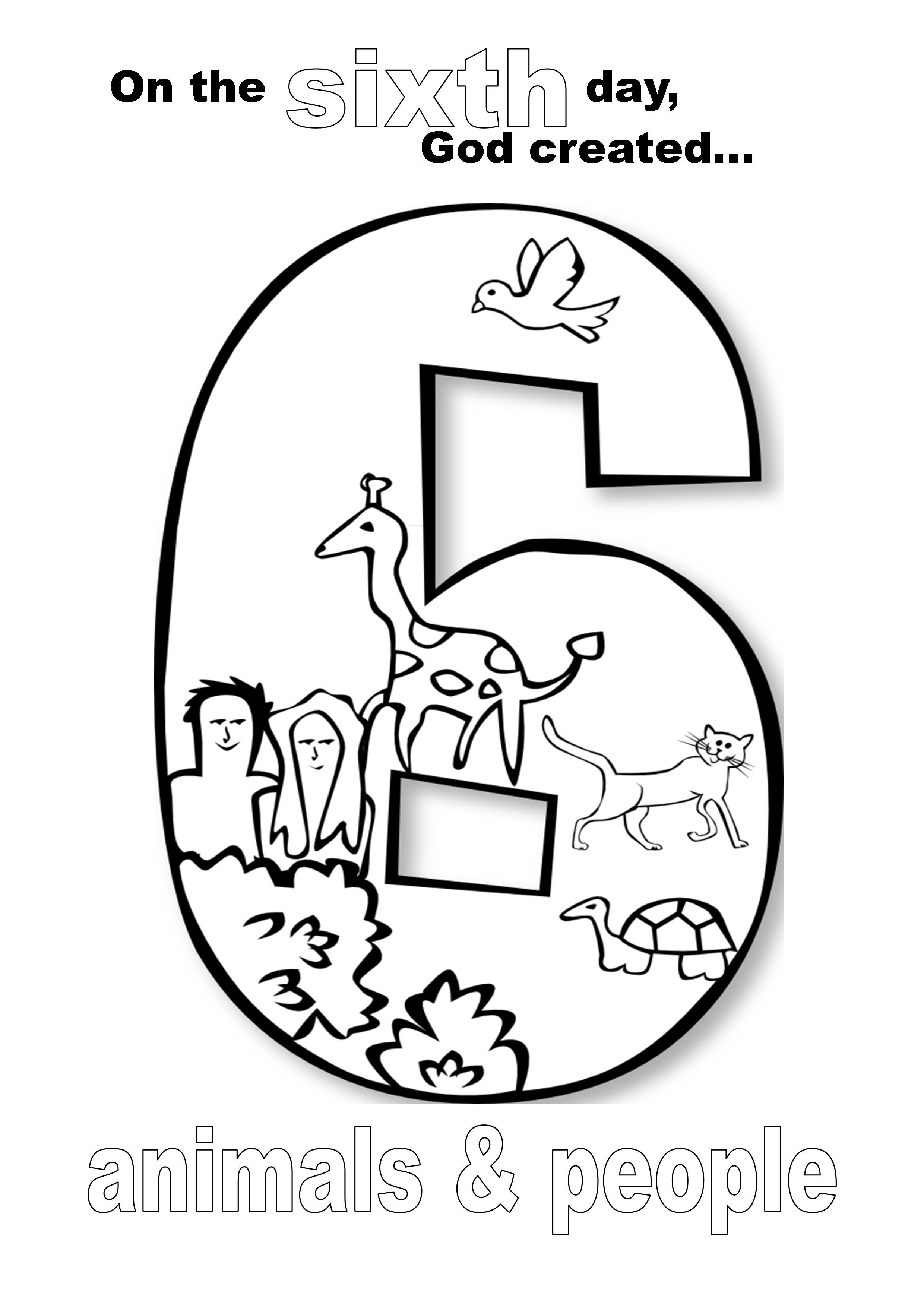
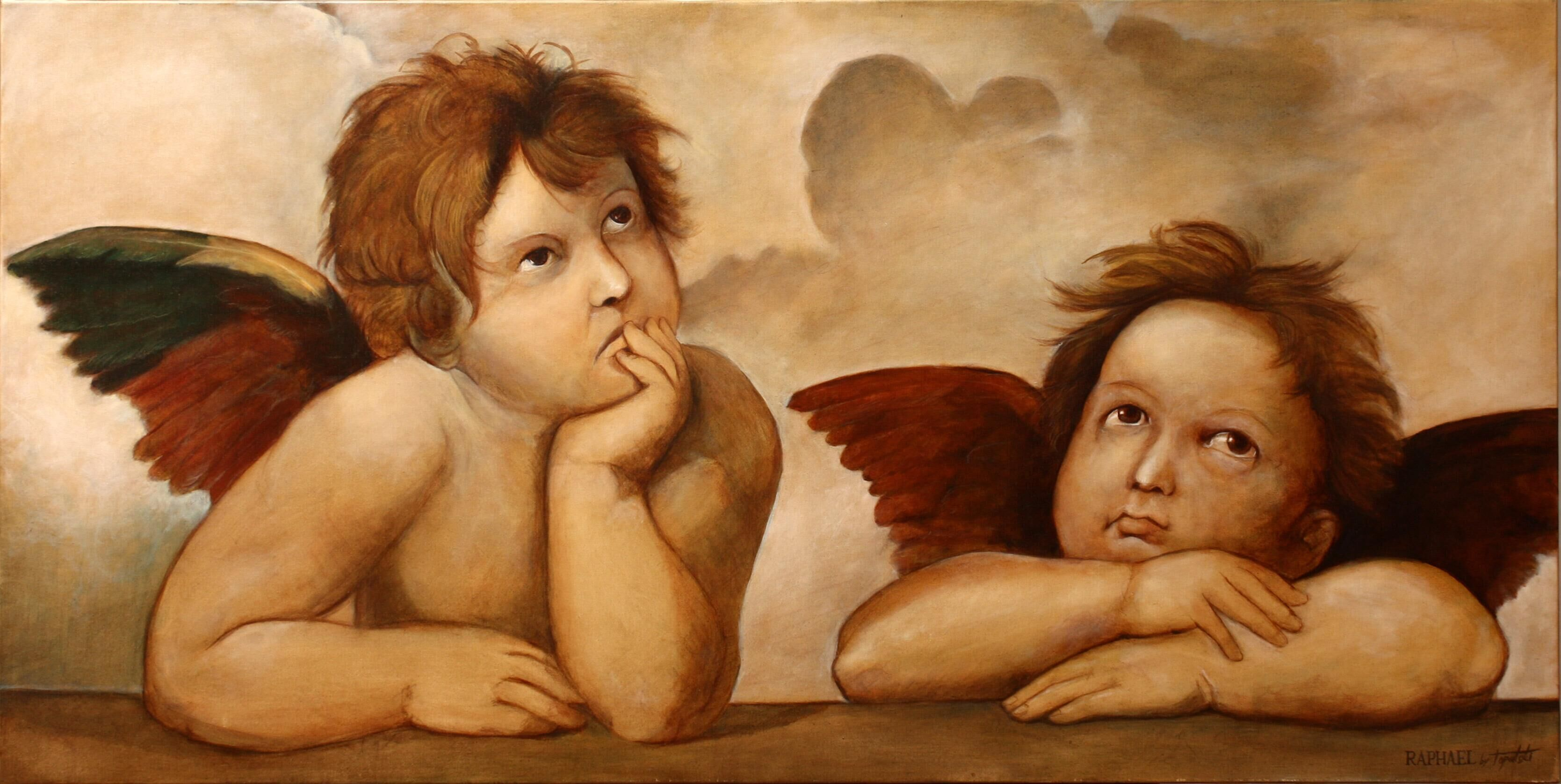
Thus, if there were no created beings, there could be no time; it is therefore meaningless to speak of time before creation.
I do not agree with this theory, which makes time a product of the mind. It is nevertheless plainly remarkable and deserves serious consideration. I would go further: it is a great advance on any theory of time found in Greek philosophy. Its account is also more complete and explicit than Kant's subjective theory of time, a theory widely accepted by philosophers since Kant.
The view that time is merely an aspect of thought is an extreme form of subjectivism. As we have seen, subjectivism had grown gradually in antiquity since the age of Protagoras and Socrates. Its emotional side was an obsession with sin, though this developed later than its intellectual side. Saint Augustine advanced two forms of subjectivism that made him a precursor not only of Kant's theory of time, but also of Descartes' “I think” (cogito). In his Soliloquies, Augustine wrote: “You who wish to know—do you know that you exist? I know it. Where do you come from? I do not know. Do you think yourself simple or composite? I do not know. Do you think that you move? I do not know. Do you know that you think? I know it.” This passage contains not only Descartes' cogito, but also Gassendi's reply, “I walk, therefore I am” (ambuloergosum). Augustine accordingly deserves a high place as a philosopher.
The City of God
When Rome was sacked by the Goths in 410 CE, pagans naturally blamed the disaster on the abandonment of the ancient gods. Rome had remained powerful, they said, while it worshiped Jupiter. Now that the emperors no longer worshiped him, he no longer protected the Romans. This pagan argument demanded an answer. The City of God, written in stages between 412 and 427, was Saint Augustine's response. As the work progressed, however, its scope expanded until it became a complete Christian account of past, present, and future history. It exerted enormous influence throughout the Middle Ages, particularly in the Church's struggles against secular rulers. Like some other great works, it leaves a better impression in the reader's memory than it does upon rereading. Much of its content is unacceptable to any modern reader, and its central thesis is obscured by matters of little importance today. Yet the broad contrast between the earthly city and the City of God has continued to inspire many people, so much so that it can still be restated in non-theological terms.
Any introduction to this work that omits the details and concentrates on its central idea will praise it too highly. An account that concentrates on the details, however, will inevitably miss its finest and most important features. I will try to avoid both errors by first describing some of those details and then discussing its general ideas in the order of their historical development.
The book begins with reflections prompted by the sack of Rome and tries to show that even worse events had occurred before the Christian era. Pagans often blamed disasters on Christianity, the saint says, yet many of them sought refuge in churches during the sack. The Gothic invaders were Christians and respected those churches. When Troy was sacked, by contrast, Juno's temple failed to shelter the people, and the gods did not protect the city from destruction. The Romans had never spared the temples of conquered cities, yet Rome received comparatively lenient treatment when it was sacked, and Christianity was responsible for that leniency.
For several reasons, the Christians who suffered during the sack had no right to complain. Wicked Goths might enrich themselves at the Christians' expense, but they would suffer in the next life. If every sin were punished on earth, there would be no need for the Last Judgment. If the Christians were virtuous, their suffering must strengthen their virtue. To a saint, losing worldly possessions means losing nothing of value. Even if their bodies received no burial, it did not matter, for ravenous beasts could not prevent the resurrection of the flesh.
He then turns to the rape of devout virgins during the sack. Some evidently believed that these women had lost the crown of virginity through no fault of their own. Saint Augustine rejected this view very sensibly. “Away with the thought! Another person's lust cannot defile you.” Chastity is a virtue of the mind and cannot be lost through rape; a sinful intention, even if never carried out, can cause its loss. He suggests that God permitted these rapes because the victims had been excessively proud of their continence. Suicide to escape rape is sinful. This leads to a long discussion of Lucretia, who, in his view, should not have killed herself, since suicide is always a sin.
His defense of virtuous women who have been raped includes one reservation: they must not have enjoyed it, or they are guilty.
He next discusses the wickedness of the pagan gods. “Those stage plays of yours, those displays of filth, those licentious pagan deities, were not first introduced into Rome by human corruption; they arose by the direct command of your gods.” Worshiping a virtuous man such as Scipio would be more edifying than worshiping these immoral gods. Christians need not be troubled by the sack of Rome, because they have a refuge in “God's pilgrim city.”
In this world, the two cities, the earthly city and the heavenly city, are intermingled. In the next world, God's predestined elect will be separated from the reprobate. In the present life, we cannot know who, even among those who appear to be our enemies, will ultimately prove to be one of the elect.
He tells us that the most difficult part of the book is its refutation of the philosophers, since Christians and certain eminent philosophers agree to a considerable extent, for example on the immortality of the soul and the doctrine that God created the world.
The philosophers did not renounce belief in the pagan gods, but since those gods were wicked, their moral teaching was worthless. The book does not suggest that the pagan gods were merely fictions. Saint Augustine believed they existed, but that they were all demons. They wished to harm humankind and were therefore willing to spread obscene stories about themselves. For most pagans, Jupiter's deeds were more influential than Plato's principles or Cato's opinions. “Plato excluded poets from a well-governed city; this shows that he himself was worthier than the gods who wished to be honored with stage plays.”
He says that Rome had been thoroughly wicked ever since the Romans raped the Sabine women. Augustine devotes several chapters to the grave sins of Roman imperialism. The claim that Rome never suffered before becoming Christian is false: its sufferings during the Gallic invasion and the civil wars equaled or exceeded those inflicted by the Goths. Astrology is not merely wicked but false, as shown by the different fates of twins born at the same moment. The Stoic view of fate, which is connected with astrology, is wrong because angels and human beings possess free will. God foreknows our sins, but we do not sin because he foreknows them. The idea that virtue brings misfortune, even in this world, is likewise false. Virtuous Christian emperors are happy even when they encounter adversity; Constantine and Theodosius were both quite fortunate. Moreover, the Jewish kingdom endured for as long as the Jews remained faithful to religious truth.
The book contains a passage highly sympathetic to Plato, whom Augustine ranks above every other philosopher. All philosophers, he thinks, should yield to Plato: “Let Thales depart with his water, Anaximenes with the air, the Stoics with fire, and Epicurus with his atoms.” All these thinkers were materialists; Plato was not. Plato held that God is not a corporeal thing, but that all things derive their being from God and from something constant and immutable. He was right that perception is not the source of truth. The Platonists excelled in logic and ethics and came closest to Christianity. “Plotinus, who lived not long ago, is said to have understood Plato best.” Aristotle, though inferior to Plato, stood far above the other philosophers. Yet both Plato and Aristotle said that all the gods were good and deserved worship. The Platonists were right about God but wrong about the other gods, and they were also wrong not to acknowledge the Incarnation.
Saint Augustine opposed the Stoic condemnation of every passion. A Christian's passions, he held, might become causes of virtue; anger and pity should not be condemned in themselves. We must examine what causes them.
The book includes a lengthy discussion of angels and demons connected with the Neoplatonists. Angels may be good or evil, but demons are always evil. For angels, knowledge of worldly things, though they possess such knowledge, is base. Both Saint Augustine and Plato considered the sensible world inferior to the eternal world.
Book XI begins its account of the nature of the City of God, the society of the elect. Knowledge of God can be obtained only through Christ. Some things, as certain philosophers demonstrate, can be discovered by reason, but for all further religious knowledge we must rely on Scripture. We must never try to understand the time and space before the world was created: there was no time before creation and no space where there was no world. Everything blessed is eternal, but not everything eternal is blessed; hell and Satan, for example, are eternal. God foresaw the sins of the demons, but also their role in improving the universe as a whole, rather like an antithesis in rhetoric.
Origen was wrong to think that bodies were given to souls as punishment. If that were so, evil souls would have evil bodies. Yet demons, including the most wicked demons, have ethereal bodies, which are superior to our own.
God created the world in six days because six is a perfect number—that is, it equals the sum of its proper divisors.
There are good angels and bad angels, but even bad angels have no nature contrary to God. They are God's enemies not by nature but by will. An evil will has no efficient cause, only a deficient cause; it is not an effect but a defect.
Fewer than six thousand years have passed since creation. History is not cyclical, as philosophers suppose: “Christ died for our sins only once.”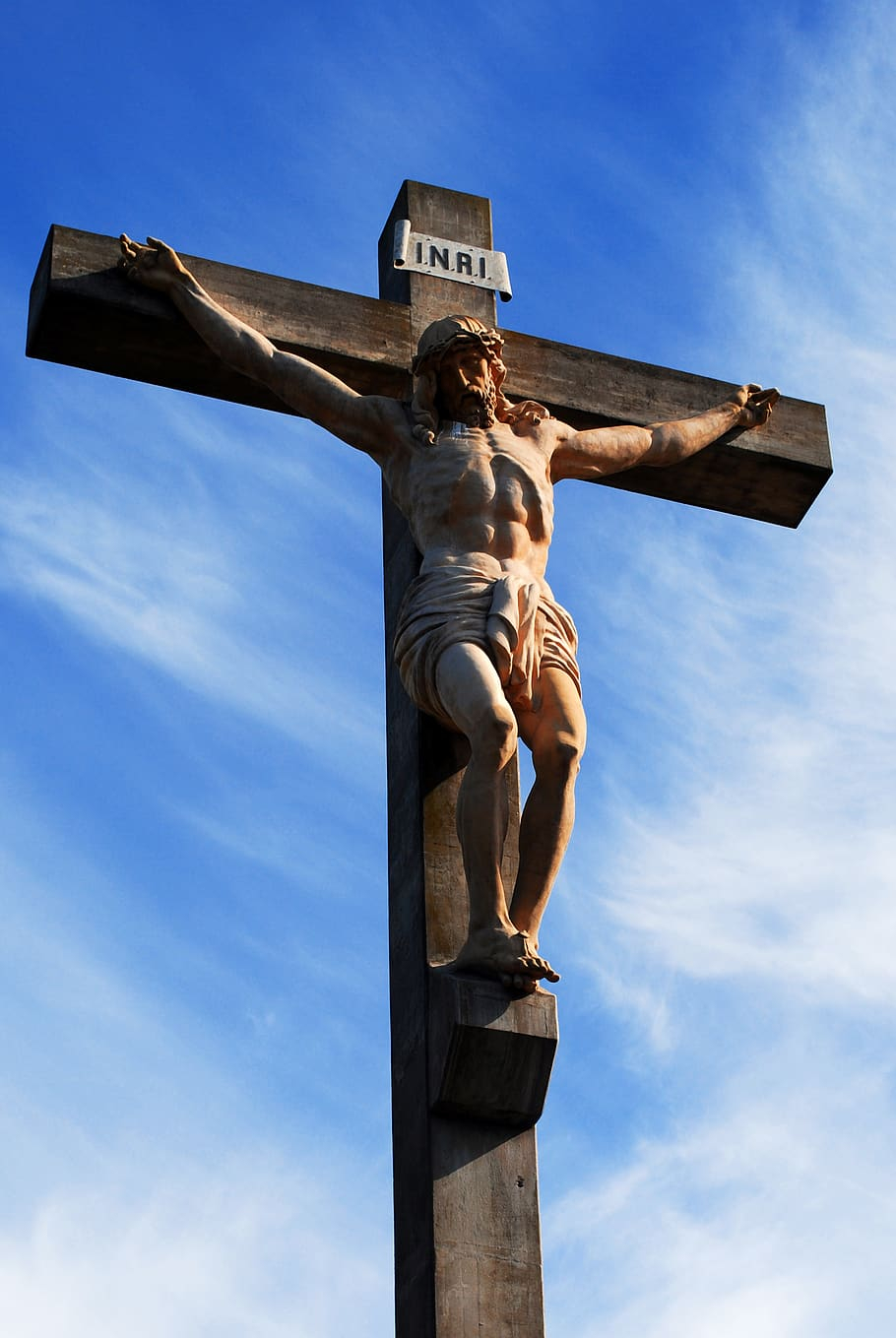
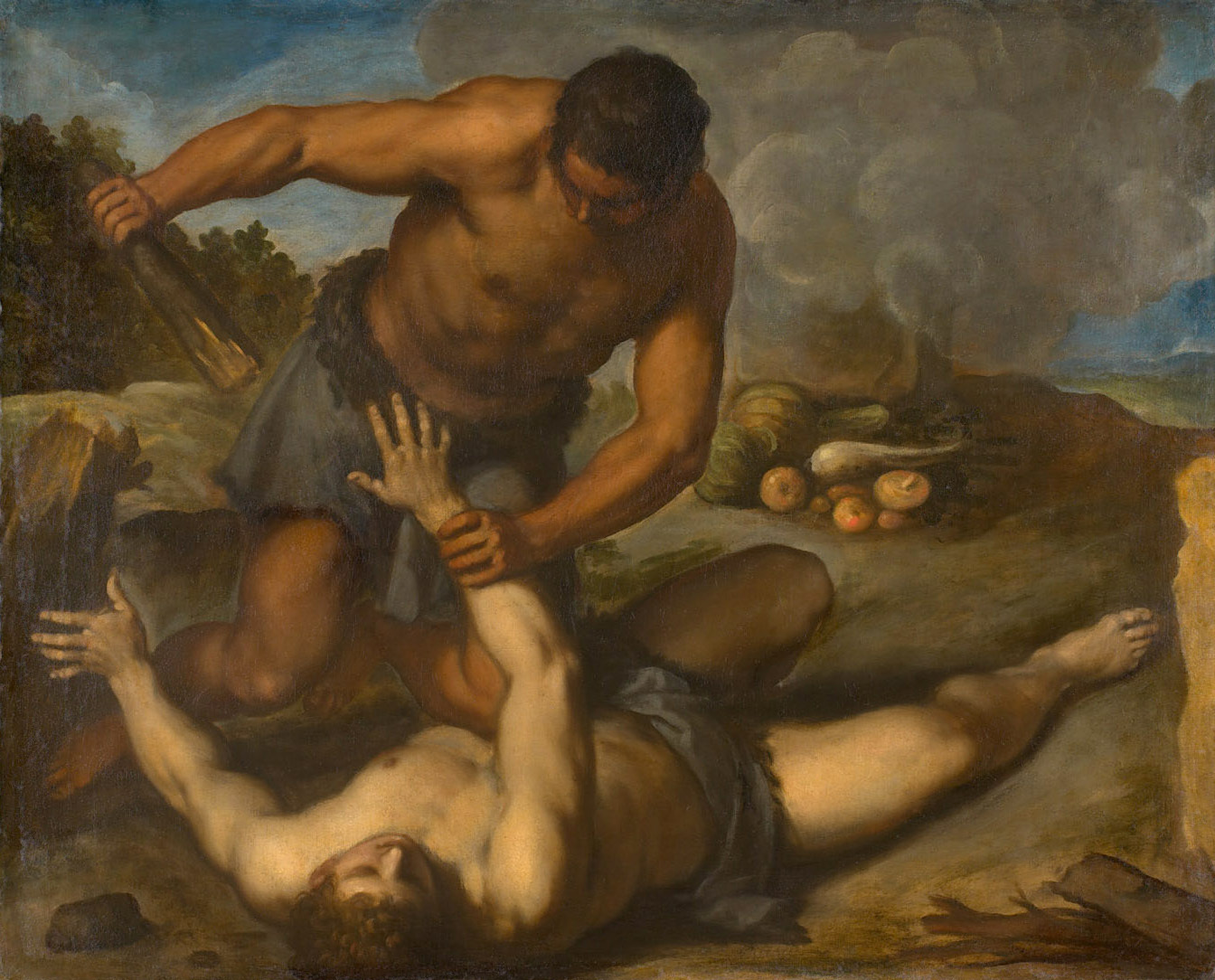
Palma il Giovane — Cain and Abel 
Modern artistic cover of The City of God 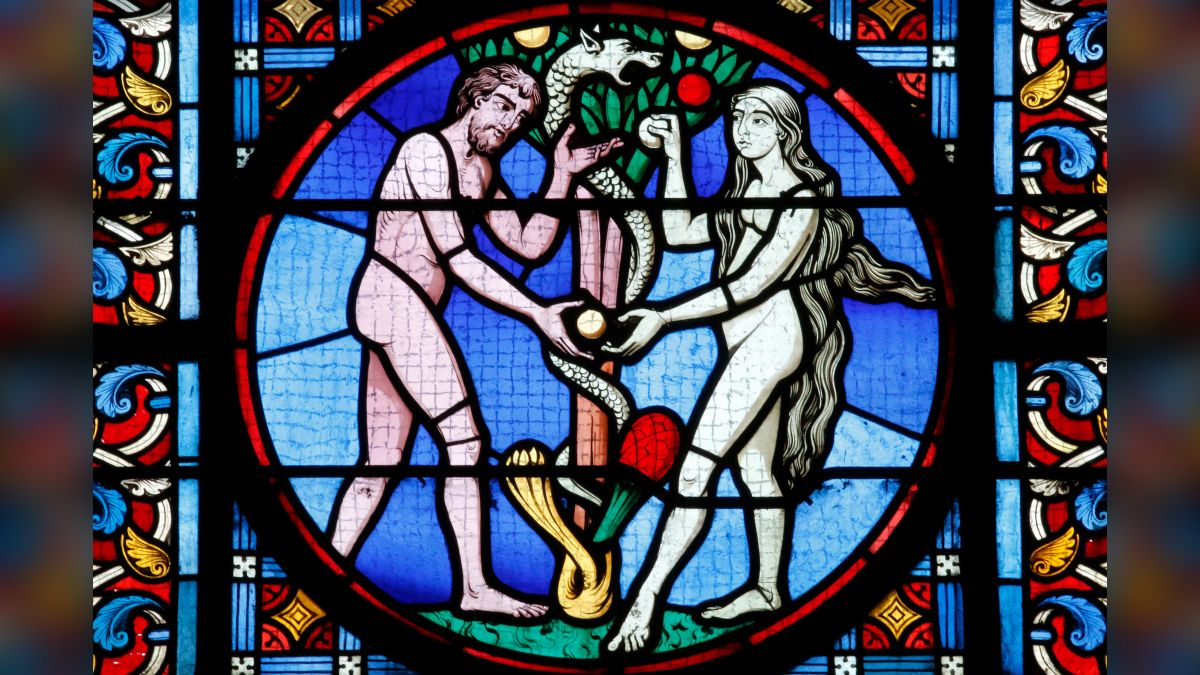
Adam and Eve eating the forbidden fruit
If our first parents had not sinned, they would not have died. Because they did sin, all their descendants must die. Eating the apple brought not only natural death but also eternal death, that is, everlasting punishment. Porphyry was wrong to believe that the saints in heaven have no bodies. The saints will have bodies better than Adam's before the Fall. Their bodies will be spiritual, but not spirits, and will have no weight. Men will have male bodies and women female bodies; those who died in infancy will be resurrected with adult bodies.
Adam's sin brought eternal death—everlasting punishment—to almost all humankind, but God's grace rescues many from it. Sin comes from the soul, not the body. The Platonists and the Manichaeans were both wrong to blame sin on bodily nature, though the Platonists' error was less grave than that of the Manichaeans. The punishment imposed on all humanity for Adam's sin was just, because that offense reduced beings who might have possessed spiritual bodies to minds ruled by carnal desire.
This question leads to a long and tedious discussion of sexual desire. According to Augustine, our subjection to lust forms part of the punishment for Adam's sin. The discussion is important for what it reveals about ascetic psychology, so it must be summarized. Although Saint Augustine himself admits that the subject is absurd, we must discuss it for the same reason. His doctrine is as follows. Sexual intercourse within marriage must be considered innocent when undertaken to produce children. Yet even within marriage, a virtuous person cannot manage it without lust. The fact that people wish to conceal intercourse shows that they consider it shameful even in marriage, because “this lawful act of nature has, since our first parents, been accompanied by the shame of sin.” The Cynics believed that no one ought to feel shame. Diogenes wished to free himself from shame completely and behave like a dog in every respect, but after trying once, even he abandoned such extreme shamelessness in practice. Lust is shameful because it is not subject to the will. Before the Fall, Adam and Eve might have had intercourse without lust, though in fact they did not. Craftsmen feel no lust when moving their arms to perform their work; likewise, had Adam stayed away from the apple tree, he might have performed the sexual act without the emotions now required. The sexual organs might have obeyed the will like every other part of the body. The need for lust in intercourse is one punishment for Adam's sin. Otherwise, sexual desire and pleasure might have gone their separate ways. Apart from certain physiological details, which the English translator of this book judiciously left in the appropriate obscurity of the original Latin, this is Saint Augustine's theory of sexual desire.
The ascetic's aversion to sexual desire plainly arises from its refusal to obey the will. Morality requires the will to control the body completely, but such control would make the sexual act impossible. Sexual activity therefore appears incompatible with a morally perfect life.
After Adam's sin, the world was divided into two cities. One would reign eternally with God; the other would suffer everlasting torment with Satan. Cain① belonged to the city of the devil, Abel to the City of God. By divine grace and predestination, Abel was a pilgrim on earth and a citizen of heaven. The twelve patriarchs also belonged to the City of God. A discussion of Methuselah's death led Augustine into the disputed comparison between the Septuagint and the Latin Bible. According to the Septuagint's chronology, Methuselah must have lived for fourteen years after the Flood. That was impossible, since he had not entered Noah's Ark. The Latin Bible, following the original Hebrew, records that Methuselah died in the year of the Flood. Saint Augustine concluded that Saint Jerome and the Hebrew text must be right on this point. Some claimed that hostility toward Christians had led the Jews to falsify the Hebrew Bible deliberately, but Augustine rejected this hypothesis. On the other hand, the Septuagint must also have been divinely inspired. The only possible conclusion, therefore, was that Ptolemy's copyists had made an error while copying it. Discussing the various Old Testament translations, Augustine wrote: “The Church has accepted the Septuagint as though no other translation existed, just as many Greek Christians know only this version and do not know whether there is another. Our Latin version was likewise translated from the Septuagint. Yet a learned monk and great linguist, Jerome, translated this Bible directly from Hebrew into Latin. Although the Jews confirmed the accuracy of his accomplished translation and said that the Septuagint contained many errors, the churches of Christ judged that no single man should be preferred to those many translators, especially since the high priest had chosen them for this task.” He accepted the story that the seventy translators worked separately yet arrived at a miraculous agreement, regarding this as evidence that the Septuagint was inspired by the Holy Spirit. But the Hebrew Bible was equally inspired. That conclusion left the authority of Jerome's version unresolved. Augustine might have sided more decisively with Jerome had the two saints not quarreled over Saint Peter's tendency toward duplicity.
Augustine compared the chronologies of sacred and secular history. By his account, Aeneas arrived in Italy while Othniel was judge in Israel. The final persecution would be led by the Antichrist, though its date was unknown.
After an admirable chapter opposing judicial torture, Saint Augustine refuted the New Academics, who believed that everything should be doubted. “Because the Church of Christ possesses the most certain knowledge of the things it understands, it rejects these doubts as madness.” We ought to believe the truth of Scripture. He went on to argue that there can be no true virtue apart from true religion. Pagan virtue is “defiled by the power of obscene demons.” What is virtue in a Christian becomes vice in a pagan. “Some things which she [the soul] regards as virtues and on which she prides herself, if they are not entirely related to God, ought in truth to be called vices rather than virtues.” Those outside this society—the Church—will suffer eternal misery. “In the struggles of our present life, either suffering conquers and death then drives away the capacity to feel it, or nature conquers and drives suffering away. But there, suffering will torment forever and nature will suffer forever. Both will endure an unending punishment.” (Chapter 28).
There are two resurrections: the resurrection of the soul after death and the resurrection of the body at the Last Judgment. After discussing the difficulties surrounding Christ's thousand-year reign and the subsequent actions of Gog and Magog①, Augustine turns to a passage in 2 Thessalonians (Chapter 2, verses 11 and 12): “God shall send them strong delusion, that they should believe a lie: that they all might be damned who believed not the truth, but had pleasure in unrighteousness.” It might seem unjust for an omnipotent God first to deceive them and then punish them for being deceived, but Saint Augustine saw nothing surprising in this. “They are deluded because they have been condemned, and condemned because they have been deluded. Yet their delusion comes from the secret judgment of God, a judgment at once secretly just and justly secret, which he has continued since the creation of the world.” Saint Augustine believed that God divides people arbitrarily into the elect and the reprobate, not according to human merit. Everyone equally deserves eternal punishment, so the reprobate have no grounds for complaint. The passage from Saint Paul quoted above suggests that people are wicked because they are reprobate, rather than reprobate because they are wicked.
It is not surprising that, after the resurrection of the body, the bodies of the condemned will burn without end yet never be consumed; salamanders and Mount Etna provide examples. Demons, though incorporeal, can be burned by corporeal fire. The torments of hell do not purify people and cannot be reduced through the intercession of the saints. Origen was wrong to think that hell was not eternal. Heretics and deeply sinful Catholics will suffer everlasting punishment.
The book ends with Saint Augustine's vision of God in heaven and the eternal happiness of the City of God.
The preceding summary may not yet make the work's importance clear. One influential feature is its separation of Church and State, with the definite implication that a State can form part of the City of God only by submitting to the Church in every religious matter. This claim thereafter remained a principle of the Church. Throughout the Middle Ages, during the gradual rise of papal power and the successive conflicts between popes and emperors, Saint Augustine provided the theoretical basis for the Western Church's policy. The Jewish state was a theocracy both in the legendary period of the Judges and in the historical period after the return from Babylonian captivity. Christian states should imitate it in this respect. The weakness of Roman emperors and most medieval rulers in Western Europe greatly helped the Church realize the ideal of the City of God. No such development occurred in the Eastern Roman Empire, where the emperors were strong and the Eastern Church was far more subordinate to the State than the Western Church.
The Reformation, which revived Saint Augustine's doctrine of salvation, rejected his theocratic theory and moved toward Erastianism, mainly because of the practical demands of its struggle against Catholicism. Protestant Erastianism, however, lacked fervor, and the most religious Protestants remained under Saint Augustine's influence. The Anabaptists, Fifth Monarchy Men, and Quakers inherited part of Augustine's doctrine but placed less emphasis on the Church. Augustine upheld predestination while also maintaining that baptism was necessary for salvation. These two principles do not fit together very well, so some radical Protestants abandoned the latter. Their eschatology nevertheless retained Augustine's principles.//①Erastianism is the doctrine that the Church must submit to the State.
*The City of God* contains very little original theory. Its eschatology came from the Jews and entered Christianity chiefly through the Book of Revelation. Predestination and the doctrine of the elect are Pauline, though Augustine developed them more fully and logically than Saint Paul's epistles had done. The distinction between sacred and secular history is already explicit in the Old Testament. Augustine merely combined these elements and related them to the history of his own time, enabling Christians to adapt to the fall of the Western Roman Empire and the chaotic period that followed without putting their faith through too severe a trial.
The Jewish way of understanding past and future history has always appealed powerfully to the oppressed and unfortunate. Saint Augustine applied it to Christianity; Marx applied it to socialism. To understand Marx psychologically, we should use the following dictionary:
Yahweh = dialectical materialism; Messiah = Marx; the elect = the proletariat; the Church = the Communist Party; the Second Coming = the revolution; hell = punishment of the capitalists; Christ’s thousand-year reign = the communist commonwealth
The terms on the left carry the emotional content of those on the right. This emotional content, long familiar to Christians and Jews, gave Marx's eschatology the value of a faith. A similar dictionary could be drawn up for the Nazis, but their concepts were closer to the Old Testament and less close to Christianity than Marx's. Their Messiah resembled the Maccabees more than Christ.
The Pelagian Controversy
The most influential part of Saint Augustine's theology arose from his attack on the Pelagian heresy. Pelagius was Welsh; his original name was Morgan, meaning “man of the sea,” which is also the meaning of the Greek word “Pelagius.” He was a mild and courteous monk, not a fanatic like many of his contemporaries. He believed in free will, questioned the doctrine of original sin, and held that human virtue resulted from people's own moral effort. If people behaved properly and belonged to the orthodox faith, they would enter heaven as a reward for their virtue. Although these views sound commonplace today, they caused a major upheaval at the time and were declared heretical largely because of Saint Augustine's opposition. For a time, however, they enjoyed considerable success. Augustine had to write to a church elder in Jerusalem, warning him against this cunning founder of a heresy who had persuaded many Eastern theologians to adopt his mistaken views. After Augustine's condemnation, a group known as the Semi-Pelagians advocated Pelagian doctrine in a milder form. Augustine's relatively pure doctrine did not win a complete victory until much later, especially in Gaul, where Semi-Pelagianism was finally condemned as heresy at the Council of Orange in 529 CE.
Saint Augustine taught that Adam possessed free will before the Fall and could have avoided sin. But when he and Eve ate the apple, moral corruption entered them and was inherited by all their descendants. Those descendants could no longer avoid sin through their own power. Only God's grace could make a person virtuous. Because we have all inherited Adam's original sin, we all deserve eternal punishment. Everyone who dies unbaptized, even an infant, goes to hell and suffers endless torment. Since we are all wicked, we have no right to complain. (In *Confessions*, Saint Augustine lists the sins he committed in infancy.) Yet through God's freely given grace, some of the baptized will be admitted to heaven. These are the elect. They do not enter heaven because they are good; all of us are corrupt except insofar as God's grace, granted only to the elect, saves us from corruption. There is no reason why some are saved while the rest are damned. It is simply God's unmotivated choice. Eternal punishment demonstrates God's justice; salvation demonstrates his mercy. Both equally display his goodness.
Arguments supporting this cruel doctrine can be found in the writings of Saint Paul, especially the Epistle to the Romans. The doctrine was revived by Calvin and has since been abandoned by the Catholic Church. Augustine treated these writings as a lawyer treats the law. His interpretation was powerful, and he pressed the text for every possible implication. One is ultimately led to suppose that Saint Paul's faith was not quite what Augustine inferred, though certain passages, taken in isolation, do suggest Augustine's meaning. The claim that the eternal punishment of unbaptized infants, far from being horrifying, comes from a benevolent God may seem preposterous. Yet Augustine was so deeply ruled by a conviction of sin that he genuinely regarded newborn babies as limbs of Satan. Many exceptionally cruel features of the medieval Church can be traced to Augustine's dark sense of universal guilt.
Only one intellectual difficulty truly troubled Saint Augustine. It was not the thought that creating humanity might have been regrettable because most people were destined for eternal torment. What troubled him was this: if original sin, as Saint Paul taught, was inherited from Adam, then the soul, like the body, must be generated by the parents, since sin belongs to the soul rather than the body. He found this doctrine difficult. But because Scripture never addressed the question, he concluded that a correct view of it could not be necessary for salvation and left the matter unresolved.
It is truly strange that the last outstanding intellectuals before the beginning of the Dark Ages, rather than concerning themselves with preserving civilization, expelling the barbarians, or reforming political abuses, enthusiastically preached the value of virginity and the eternal punishment of unbaptized infants. Once we understand that these were among the prejudices the Church passed on to converted barbarians, however, it becomes easy to see why the following age surpassed almost every recorded period in cruelty and superstition.
All articles in this blog are licensed under CC BY-NC-SA 4.0 unless stating additionally.
 爱发电(点击图片跳转)