
Paradox Interactive: Game Worlds, Politics, and Social Simulation
Author: Enthusiastic A-Jiang
Reviewer: Saito Shin
Everyone has played a “Paradox” game, right? (Figure 1 shows the company’s official logo.) Anyone who enjoys historical strategy or simulation games will know the name. Headquartered in Stockholm, Sweden, Paradox has created many classic series. Its games go on sale every year from April to May, so if you have not tried one yet, now is the time. You may find something you like.

Why is Paradox so famous? Its players are said to be the most inhuman people in gaming history. Search for “Paradox players,” and descriptions such as “demons” and “perverts” will appear. But what makes them so inhuman? Take Stellaris. Ordinary players fly spaceships through the galaxy, befriend aliens, and discover unfamiliar civilizations. Paradox players capture aliens for food and purge entire species at the slightest disagreement. Every Paradox player has probably wiped out populations numbering in the hundreds of millions. In Cities: Skylines, meanwhile, they flood the world with sewage. In short, Paradox players strive for perfection—in villainy as in everything else.
The rest of this article focuses on two Paradox series that I think you will find interesting.
I. Stellaris
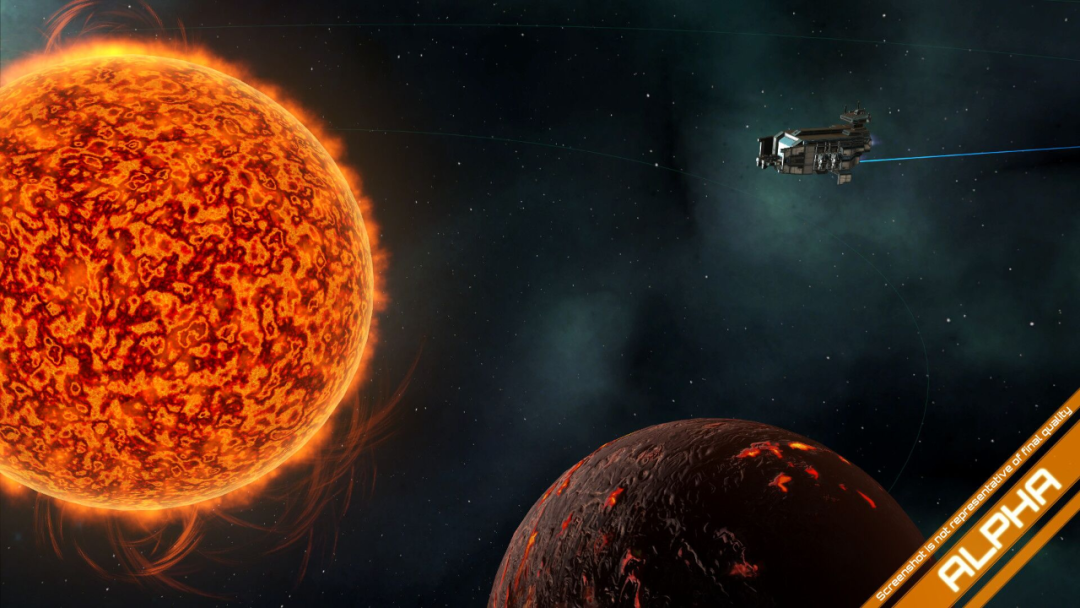
First is Stellaris, a science-fiction epic comparable in scope to The Three-Body Problem and addictive from the very first playthrough. The game is moderately difficult and extremely open-ended. You can develop freely in a galaxy of almost any size. The entire Milky Way serves as the setting, and its vastness contains almost everything. You are not alone: the galaxy is home to other empires with different government types, species, and Ethics. You can expand, declare sovereignty, colonize Earth, develop technology, conduct diplomacy with other empires, sign agreements, wage war, and enslave or exterminate other species. Or you can coexist peacefully, establish a federation with other empires, encounter alien civilizations, and translate their languages. All of this can happen in Stellaris. The most exciting events, however, are the three endgame crises: the Prethoryn Scourge, the Extradimensional Invaders (the Unbidden), and the Contingency.
(Interested readers can look them up on Baidu.)
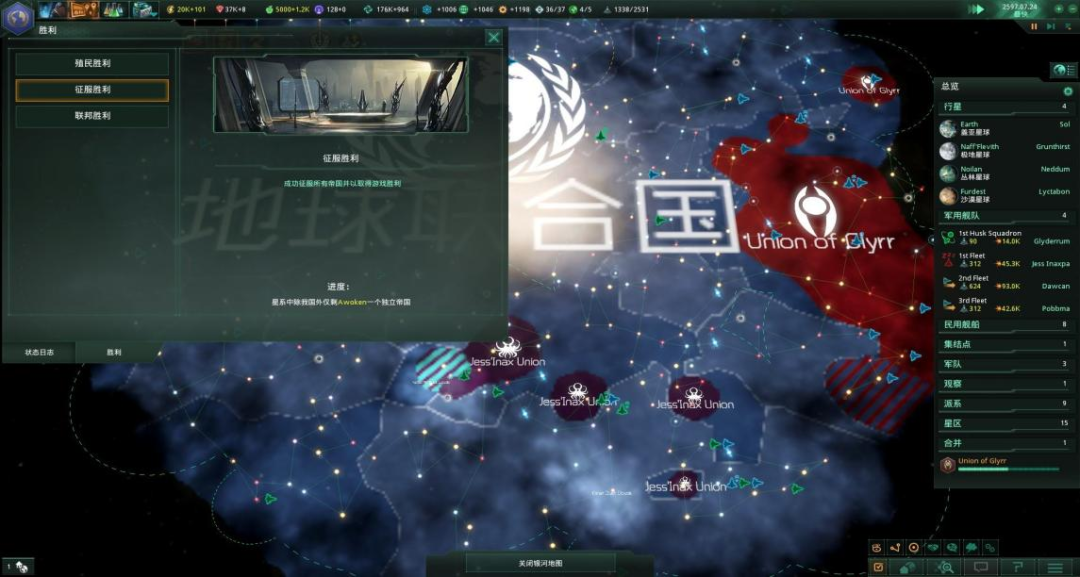
If you are a science-fiction fan with plenty of time, you really, truly should play Stellaris. Even if you have no idea what you are doing, you can still admire the vastness of the universe. Trust me: you will not regret it.
Beginner-level gameplay
Players say that Stellaris is a game about exploration. At the start, you configure the civilization you have imagined. In plain terms, you create its character. The result looks roughly like Figure 3 below (ha ha ha).

Once you finish creating it, your choices define the civilization’s traits and governing model. The most common setup is a Machine Intelligence empire (machine empire): an advanced defense system that continues operating after its original creators’ apocalypse. (This makes the game much smoother, almost like a match-three mobile game: anyone with working hands can do it.) The game then automatically divides the system into sectors, though you can also choose variants such as Skynet, Earthnet, or a planetary defense system.
Take my own game as an example. I had given my defense system the Determined Exterminator civic, committing it to the destruction of every biological (organic) species. But while preparing to eliminate a civilization forsaken by love, I discovered that my system had mastered the Hyperdrive long ago, which meant that I could not exterminate other organisms. A black hole near the home system, however, had a peculiar gravitational field that distorted the hyperlane between the system and the main galaxy. Even with Jump Drive technology, the civilization could not use it normally and remained trapped in its system like a prisoner. Since the system contained many planets, a civilization could begin on only one, then explore space and invade the life-forms on other worlds—the aliens of our real life.
The planet’s two original powers had been at war without end, and centuries of hatred had sunk into their bones. One of them was Li Shanchang. Its hyperspace technology had brought its black-hole and wormhole teleportation systems close to completion, and it was about to leave that godforsaken place for the vast galaxy. In a system dominated by a mechanical civilization, however, hostile powers will destroy your defenses and level everything you have built. It feels like losing all your progress overnight, but the experience is still very nice. Most importantly, the game presents a realistic simulation of the universe. Many scenes from The Three-Body Problem appear in it, making the experience comparable to dozens of American blockbusters.
II. The Victoria series
This is a relatively uncommon kind of economic and social-structure simulation, one in which every social class has different economic and political demands. In Victoria, you cannot enact a Law merely by clicking a button. It is nothing like a single-player-style mobile online game such as Honor of Kings, where you can switch off your brain for an entire session. (I am not talking about Honor of Kings itself, of course, but about a brainless player like this editor. Boo-hoo! Have you ever suffered through nineteen consecutive losses? Do not follow my example and grow accustomed to being reported.) Instead, Laws face support or resistance from different Interest Groups. Those groups may be pursuing private gain, or the livelihoods of a million grain-transport workers may depend on the issue.
Interest Groups on either side bring their Clout to bear and compete with one another. The stronger the opposition, the more likely a reform is to become mired in argument and stagnation. For example, if the Qing Scholar-Officials have too much Clout, changing the education system so that private academies focus primarily on science becomes very difficult. Workers may want an eight-hour day while capitalists demand a twelve-hour one. Amid this endless exploitation, capital in the game rivals capital in real life.
(Here are a few examples everyone will recognize. At Foxconn, national regulations prescribe an eight-hour workday and treat anything beyond it as overtime. Yet the company uses twelve-hour shifts that rotate between night and day. I experienced this firsthand during the winter break of my first year at university. It was hell on earth and a miniature version of the game. Having looked at the bottom tier, consider the middle: Huawei, nicknamed the “Chrysanthemum Factory,” should be familiar to everyone. I had the chance to intern there in my second year. “996” may be only a label; more than two-thirds of the time, the schedule was 9 a.m. to 11 p.m., a full fourteen hours. Yes, really. Some people will say the pay is high, and it certainly is… But that is not our focus. The point is to introduce the appeal of the game. I think students of politics, management, and finance will enjoy the Victoria series.)
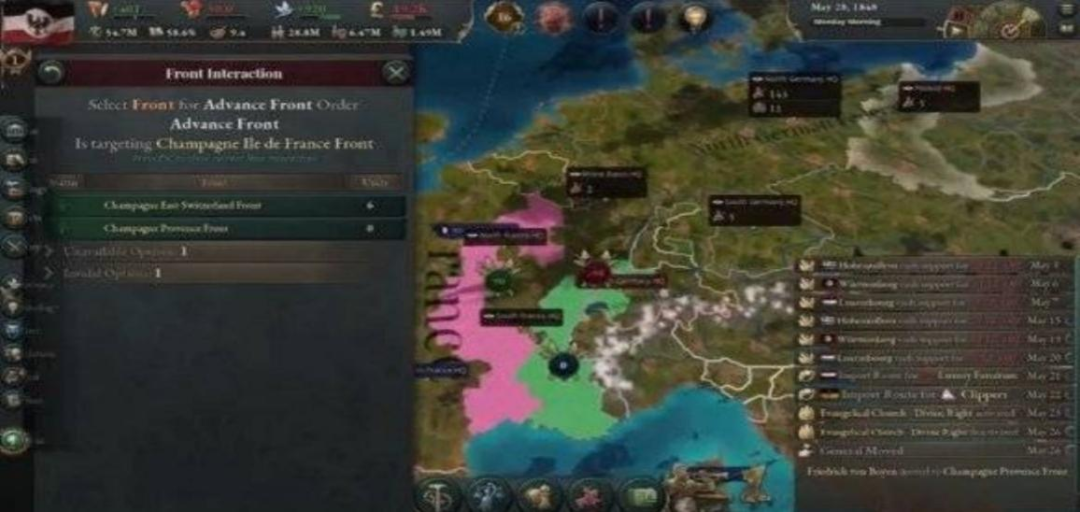
In the game, the player acts as the ruler, holding supreme power but also bearing the greatest responsibility and mission: serving the people, promoting labor laws, and enabling people to live in peace. Because wealthy capitalist interest groups wield excessive influence, however, labor laws can be difficult to pass. The game lets players experience the enormous efforts that historically late-industrializing countries made to protect their domestic industries during the early stages of industrialization. At times, it feels less like a game than a miniature version of reality.
In many games, technology simply means domestic development and strength, and building a factory immediately produces money. The Victoria series does not portray modern industrialization so simplistically. Its ideas are more advanced because they draw on both our past and our present. Different buildings have different statistics and effects, allowing the game to simulate populations more realistically. To operate, for example, a factory needs raw materials, workers, and customers. From the workers’ perspective alone, inadequate education may leave the factory unable to recruit enough literate employees. Independent farmers with stable lives may be so accustomed to that stability that they refuse factory work no matter how high the wages. If production exceeds demand and the products cannot be sold, the factory may also fail after exhausting its cash reserves.
The Victoria series sold poorly and received a lukewarm response when it first appeared. Perhaps because of the era, the series was discontinued. Later, as time passed, the world economy recovered, and education in China gradually improved, more players discovered the games’ distinctive framework and central ideas, and the series slowly gained recognition.
Victoria’s materialist view
Compared with Paradox’s earliest titles, Victoria II no longer constructs its world according to a historical timeline. Instead, it tries to uncover the logic behind history. If Britain had not done so, could another feudal country have become the first to complete an Industrial Revolution by resolving its own problems? After the Industrial Revolution, everyday goods became scarcer than ever before, the population surged, and advancing industrialization put large numbers of artisans out of work. Might that country have begun migrating to the New World in the Americas before Britain to solve its population problem? The Industrial Revolution also produced too many goods. When a crisis emerged, might this country have sought to resolve it by dumping those goods (The Opium War of 1840 was Britain’s attempt to dump goods into China), then gone to war with a self-sufficient country that had not completed a modern industrial revolution? Once the world market had been fully divided, might imperialist wars have broken out among industrial countries? The game’s distinctive framework and materialist conception of history contain a fascinating internal logic that builds a complete virtual world.
Advice for readers who want to play Victoria
Victoria 3 is now available. It makes detailed changes to the earlier games, such as reducing their historicity, leaning further toward today’s diverse society, and fixing known bugs. The results are quite good. I am an engineering student who has played Victoria for three years. If your budget is tight, I suggest waiting before buying it, because it is rather expensive. Another option is to look for a “mirrored” version on certain shopping or secondhand platforms.
All right, that is the end of this installment!!
 爱发电(点击图片跳转)