











The History of Glass and Its Future Applications
Author: Shiguang Glass artwork The Development of Glass 1.1 The Origins of Glass around the World Historical records indicate that by roughly 3000–2000 BCE, the Egyptians or Mesopotamians already possessed relatively mature glassmaking techniques. One legend relates that more than three thousand years ago, Phoenician merchants discovered crystals formed when fire caused a mineral called natron, or “natural soda” (or, in another account, saltpeter), to react chemically with the quartz sand on a beach. These crystals were the earliest glass. The Phoenicians recognized the commercial opportunity. They exploited the reaction to produce large quantities of crude glass beads by firing and fusing sand, stone, and soda, then sold them far and wide. They made substantial profits and set off ...

The Formation and Evolution of White Dwarfs
Author: Congyu Reviewer: Yuandao Sirius is the brightest star in Earth’s night sky, and we can see it every winter. In 1844, German astronomer and mathematician Friedrich Bessel calculated that Sirius must be a binary system with a companion about as massive as the Sun. The companion was so faint that it remained unseen for years. It was finally photographed in 1862, shining with only one-thousandth the brightness of Sirius. Astronomers later obtained its spectrum and began to recognize a new class of object: the white dwarf. Sirius and its companion at X-ray wavelengths The Late Evolution of Sun-like Stars To understand how white dwarfs form, we must begin with the post-main-sequence evolution of low- and intermediate-mass stars. Stars below 2.3 solar masses are generally classifi ...

Can We Measure the Cross-Sectional Area of a Molecule?
Author: delta Reviewed by: Guanfu · Juntian No. End of explainer. But if you learned about Cavendish’s torsion-balance experiment in middle school, you probably will not be satisfied with stopping there. Physics has a technique known as two-stage amplification. Could the same idea, or something similar, be used to measure dimensions in the microscopic world? It certainly can. This article uses accessible language to explain one way of measuring the cross-sectional area of a molecule: the surface-tension method. What is surface tension? Really? Do we have to start this far back? You have seen surface tension countless times: raindrops on a window, early-morning dew on leaves, and large soap bubbles in the laundry. You may also have encountered, or may soon encounter, the subjec ...
Unity Journal 01
Author: Shenhong Preface Hello, everyone. I’m Shenhong; nice to meet you. This is the second entry in my personal Unity journal (the first contains some private material, so I will not be publishing it). It is also the first submission from any member of our current team since we joined the Union. We look forward to getting to know you. This series is not a development log. It records my experience of learning Unity and the moments that matter to me during game development. Since it is closer to a diary, I will not go too deeply into technical material, and entries will not appear on a fixed schedule. I hope to share the joys and frustrations of one person—and of a whole group—who chose to make games because they love them. I may also introduce parts of the development process along ...

Jumping Genes: Transposons
Author: Shenzhou Reviewer: Weiming Transposons, also known as jumping genes, were first described in 1947 by the renowned American geneticist Barbara McClintock. While studying the unstable inheritance of variegation in the maize aleurone layer, she uncovered a new mechanism by which an intact genetic unit can move from one location in a genome to another. Fu H. and Dooner H. K. examined the phenomenon further in a 2002 paper. Their work showed that, at the molecular level, every organism is a product of continuing genetic recombination: mutations create new sequences, while exchange, insertion, and rearrangement reshape existing ones. A genetic unit capable of such movement is called a “transposable element,” or transposon. Transposition differs in both concept and mechanism from ho ...

Recreating Arknights in Unity
Author: Shiguang Reviewer: Guanfu · Juntian I. Introduction For this studio assessment at school—yes, another assessment—we had to recreate a game. We were given three choices: Don’t Starve, Slay the Spire, or Soul Knight. I had never played any of them, so after some thought, I decided to make a rough version of Arknights instead. I had seen an expert on Bilibili build the Arknights battle interface in only 48 hours. It did not look that hard… so I gave it a try! It was only after I started that I discovered how challenging the project really was. Here are two screenshots of the game interface. To see the full game in action, watch the video posted on Bilibili through the Alliance’s official account. Game interface II. Design Approach Scenes My original plan called for five s ...
Financial Crises, Part V: A Sea of Corruption and Fraud—Britain's South Sea Bubble (Part II)
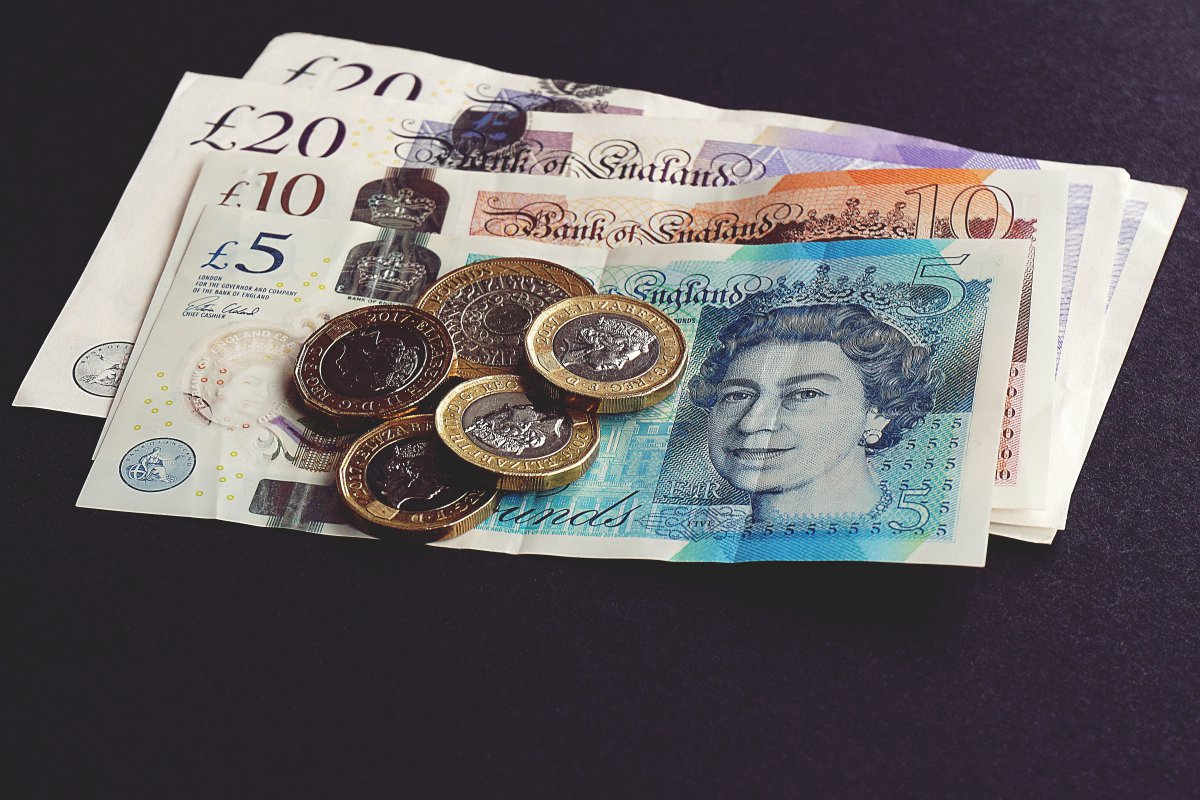
Author: Zikongli Reviewer: Guanfu · Juntian The previous installment, “Financial Crises (IV): Britain’s South Sea Bubble,” explained how the South Sea Company acquired a monopoly on trade with the South Seas—that is, South America—by taking on government debt. Numerous publications at the time advertised South America’s abundant produce and deposits of precious metals. Spain had already developed many silver and gold mines there, so the public had little reason to doubt these claims. Buoyed by rosy expectations for the company’s future, its shares maintained a remarkably steady market value. In reality, however, the precious-metal deposits described in those pamphlets lay chiefly within Spanish colonies, and Spain was hardly going to hand that wealth to the British for free. For many ...

How the Human Brain Develops: Building the Most Remarkable Object in the Universe
Author: Abaitel The mature human brain is capable of higher thought and learning, extraordinary creativity and imagination, and a deep appreciation of beauty. It is hard to believe that all of this begins with a single fertilized egg. Drawing on a semester of studying the brain in and outside the classroom, I will sketch a broad but striking picture of how the human brain develops. Early embryonic development and the fetal brain In a dramatic long-distance race, one competitor edges ahead of a crowd propelled by beating tails. It reaches the finish line by the narrowest of margins: a warm, spherical cell. This is the egg, the destination of the racing sperm. Each sperm carries different genetic information, but only the one that enters first can combine its information with the egg’ ...
Enzyme Kinetics: From Rate Laws to Inhibition
Author: Polar Glacier Reviewer: Weiming Note: This is a long article, and parts of it may be challenging. Students, interested readers, and people working in related fields will find a thorough treatment of the subject here. I. Common Rate Laws in Chemical Kinetics Before turning to enzymes, let us review several common types of chemical reaction kinetics. 1. First-order reactions In a first-order reaction, the rate is directly proportional to the concentration of a reactant. The reaction is shown below: Its rate equation can therefore be written as: From the definition of a first-order reaction: Therefore: Rearranging: Solving gives: 2. Second-order reactions In a second-order reaction, the rate is proportional to the square of a reactant concentration. A t ...

Financial Crises, Part IV: A Sea of Corruption and Fraud—Britain's South Sea Bubble
Author: Self-Control Reviewers: Guanfu · Juntian Europe developed at a remarkable pace during the eighteenth century. In a single hundred years, its societies seemed to release energy that had accumulated throughout the Middle Ages. Maritime exploration brought wealth and opportunity, religious reform loosened old constraints on thought, and scientific advances reshaped society. In the same climate, the last of the classical era’s three great financial bubbles was beginning to form, drawing strength from the boom before dealing another heavy blow. By the eighteenth century, Britain had overtaken the Netherlands in commerce and was competing with France, Spain, and other powers for overseas colonies. At home, the Glorious Revolution had shifted the country’s institutions away from mo ...
Recent Post