
Financial Crises, Part IV: A Sea of Corruption and Fraud—Britain's South Sea Bubble
Author: Self-Control
Reviewers: Guanfu · Juntian
Europe developed at a remarkable pace during the eighteenth century. In a single hundred years, its societies seemed to release energy that had accumulated throughout the Middle Ages. Maritime exploration brought wealth and opportunity, religious reform loosened old constraints on thought, and scientific advances reshaped society. In the same climate, the last of the classical era’s three great financial bubbles was beginning to form, drawing strength from the boom before dealing another heavy blow.
%E3%80%91%E8%85%90%E8%B4%A5%E4%B8%8E%E6%AC%BA%E8%AF%88%E4%B9%8B%E6%B5%B7%EF%BC%9A%E8%8B%B1%E5%9B%BD%E5%8D%97%E6%B5%B7%E6%B3%A1%E6%B2%AB/fig-002-85ad0bbb75.png)
By the eighteenth century, Britain had overtaken the Netherlands in commerce and was competing with France, Spain, and other powers for overseas colonies. At home, the Glorious Revolution had shifted the country’s institutions away from monarchical rule and toward a capitalist society. The future workshop of the world and empire on which the sun never set was already taking shape.
Behind this growth, the British government faced the same problem as France: an enormous national debt. France took John Law’s poisonous prescription and produced the Mississippi Bubble. Across the Channel, at nearly the same time in the early eighteenth century, Britain created another severe financial bubble of its own: the South Sea Bubble.
The two crises look strikingly similar, but they differ at several crucial points. If the Mississippi Bubble was a failed dose of fiscal poison, the South Sea Bubble was more like an elaborate fraud, carefully staged by corruption, greed, frenzy, and deceit.
British politics in the eighteenth century was dominated by a fierce struggle between the Whigs and the Tories. George I took the throne in 1701, but the Hanoverian elector came from continental Europe, spoke German as his first language, and could communicate with his British cabinet only in French. The Whigs, who controlled the cabinet, used the language barrier to sideline him further. Prime Minister Walpole even boasted to a confidant, “I control George with bad Latin and good mixed sweet wine.” George I had little affection for the Whigs, giving the Tories an opening.
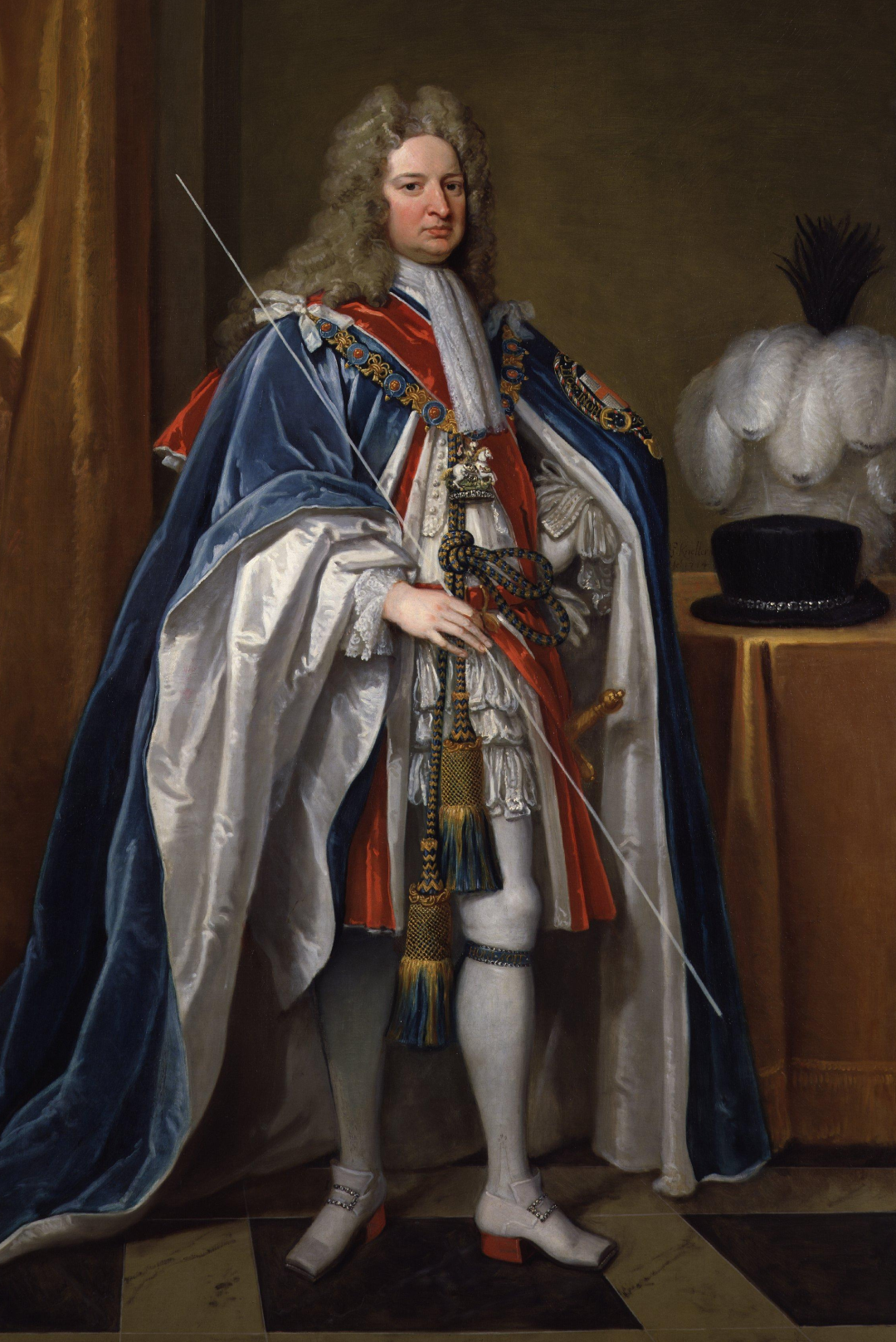
When the Tories came to power early in the eighteenth century, they inherited a severe national debt and a Bank of England controlled by the Whigs. On the advice of merchant John Blunt, Chancellor of the Exchequer Robert Harley asked Parliament to establish the South Sea Company as a vehicle for converting and repaying the debt.
The plan created the South Sea Company and gave it a monopoly on trade in the South Seas, meaning South America. It converted £9,471,325 of national debt into company shares on which the government would pay 6 percent interest, secured by customs duties on wine, vinegar, tobacco, East India Company goods, silk, whalebone, and other commodities. The South Sea Act quickly passed both houses and became law. In September 1711, Harley obtained a royal charter, formed the company, and became its first governor. Blunt, who had proposed the scheme, became a director and later played a central role in creating the crisis. Under the arrangement, national debt was exchanged for an equal face value of South Sea Company shares, each worth £100.
In this respect, the South Sea Company closely resembled France’s Mississippi Company. Each had state backing, offered the economic promise of colonial territories as its growth story, and was created to address national debt. Given Europe’s political structure, this response was nearly inevitable. Governments could not raise enough in taxes to repay what they owed, because the burden would fall on landed interests whose members largely controlled Parliament. Foreign wars, meanwhile, still demanded vast sums. The idea of dissolving debt through commerce was therefore hard to resist. But the debt’s effects did not vanish. Like an alchemical exchange, an enormous debt had simply been converted into an equally enormous potential risk.
Like the Mississippi Company, the South Sea Company used a debt-for-equity swap. Government debt became company stock: the original creditors gave up their direct claims on the state and became shareholders, while the company, as a separate legal entity, became the government’s creditor. The arrangement did not ordinarily erase public debt, but it greatly reduced the administrative cost of managing many complicated obligations. In return for relieving some of the pressure on the government, the company received valuable commercial privileges. From one perspective, this was a sensible way to manage sovereign debt. Greed and frenzy, however, are very good at turning manageable risks into ruin.
 爱发电(点击图片跳转)