












Suicide: The Only Serious Philosophical Problem
Author: Guanfu · Juntian Camus opens The Myth of Sisyphus by declaring suicide the only serious philosophical problem: deciding whether life is worth living is itself an answer to a philosophical question. His philosophy is therefore centered on individual life, not merely on the external world. One point needs to be clear: when Camus says that “suicide is the only serious philosophical problem,” he is by no means urging anyone to take their own life. He once wrote: “The absence of hope is not the same as despair; lucidity does not lead to submission. A person should recognize that life is their only wealth: it must inevitably pass away, yet it can also be developed to the fullest possible extent. A person should, and can, find the courage to live in this world—even happiness.” Camu ...
The Coolest Members of the Particle Family
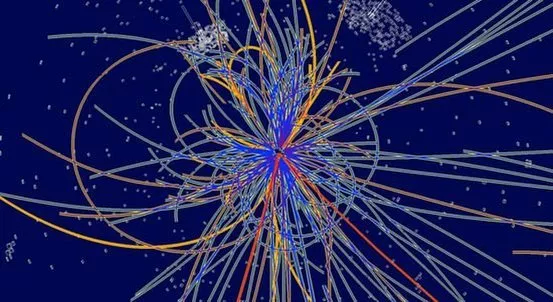
Author: 一毫秒的永恒 Physics is full of particles such as neutrons and photons, but the particle world is stranger than most people imagine. Its members come in different sizes, behave in different ways, and bear memorable names ranging from supersymmetric particles to the “God particle.” Today, let us meet some of the coolest members of this extraordinary family. Higgs Boson The Higgs boson is enormously important to physics. Often nicknamed the “God particle,” it is tied to the origin of mass for many elementary particles. In 1964, physicists were trying to understand why some particles were more massive than others and where their mass came from. Peter Higgs proposed what became known as the Higgs mechanism. The boson is associated with the Higgs field, which the mechanism assumes perm ...
Did Neptune's Tiny Moon Come from Proteus?
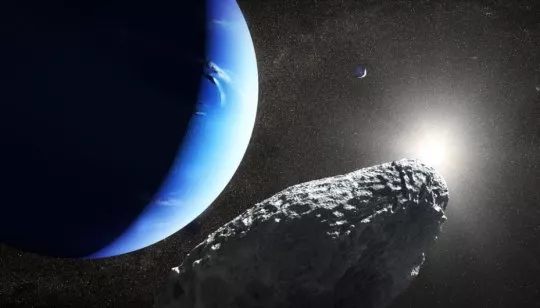
Author: A Millisecond of Eternity “A Moon That Shouldn’t Exist” Artist's concept of Hippocamp, the tiny moon discovered by the Hubble Space Telescope in 2013. This was the first evidence that a moon may have splintered from a larger parent body after a comet strike. | Credit: NASA, ESA and J. Olmsted (STScI) After several years of analysis, a team of planetary scientists finally had an explanation for the mysterious Neptunian moon they discovered with the Hubble Space Telescope in 2013. The tiny moon, named Hippocamp, orbits unusually close to the much larger Proteus. Ordinarily, a moon as large as Proteus should clear smaller moons from its path or draw them in through its gravity. So why is Hippocamp still there? It is probably a fragment of Proteus, knocked loose when a comet ...
SpaceX Rocket Launches First Privately Funded Lunar Lander
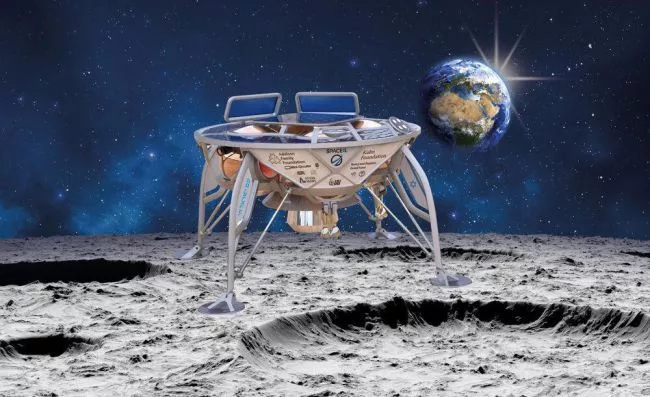
Author: A Millisecond of Eternity At 9:45 a.m. Beijing time on February 22, 2019, just as the Moon rose above the horizon, a Falcon 9 rocket set off toward it. On the evening of February 21, 2019, a previously flown SpaceX Falcon 9 rocket successfully launched an Israeli lunar lander and an Indonesian communications satellite from Cape Canaveral Air Force Station in the United States. After placing both payloads into orbit, Falcon 9’s first stage returned to Earth and landed safely on the uncrewed drone ship Of Course I Still Love You in the Atlantic Ocean. Although the mission’s primary payload was Indonesia’s Nusantara Satu satellite, the small lunar lander riding along as a secondary payload stole the spotlight. It became not only Israel’s first spacecraft to venture beyond Eart ...

Underwater Archaeologists Uncover Surprising Artifacts from a Roman Naval Battle
Author: A Millisecond of Eternity The Naval Battle Archaeologists have explored the site of a naval battle fought between Rome and Carthage 2,200 years ago. Their discoveries offer clues to how the battle unfolded, along with several mysteries that remain unsolved. Archaeologists found numerous helmets while surveying the Roman–Carthaginian battlefield. This 3D model of one helmet was created by William M. Murray. | Credit: Courtesy of RPM Nautical Foundation The finds suggest that Carthage reused captured Roman warships in the battle. They also indicate that Carthaginian sailors may have thrown their cargo overboard in a desperate attempt to escape Roman pursuit. Historical records place the naval battle on March 10, 241 BCE, near the Aegadian Islands off Sicily in the Mediterra ...
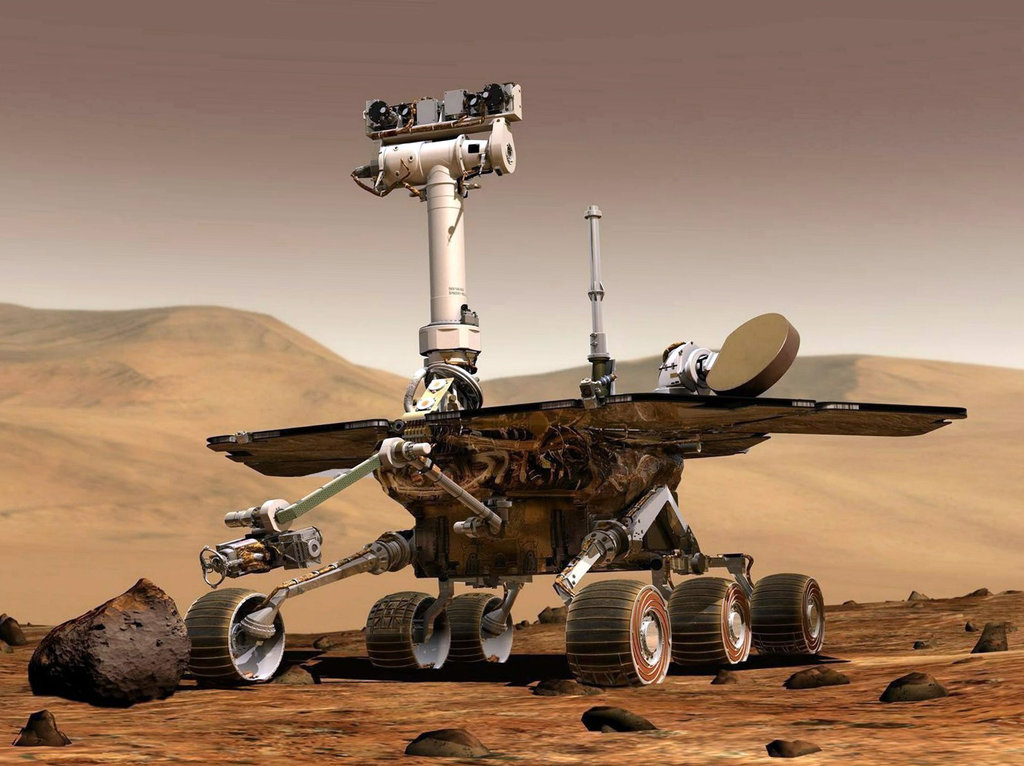
Farewell, Opportunity: Remembering a Mars Exploration Pioneer
Author: A Millisecond of Eternity A record-setting NASA mission on Mars has come to an end. One of the longest-running and most successful feats in interplanetary exploration, the Opportunity rover mission concluded after nearly fifteen years on the Martian surface. Its legacy laid the groundwork for NASA’s return to Mars. In June 2018, a severe planet-wide dust storm blanketed Opportunity’s location on Mars, and the rover stopped communicating with Earth. Engineers at the Space Flight Operations Facility at the Jet Propulsion Laboratory (JPL) sent more than 1,000 recovery commands in an effort to reestablish contact, but none succeeded. The solar-powered rover last communicated on June 10, 2018. NASA Administrator Jim Bridenstine said, “It is because of trailblazing missions such ...
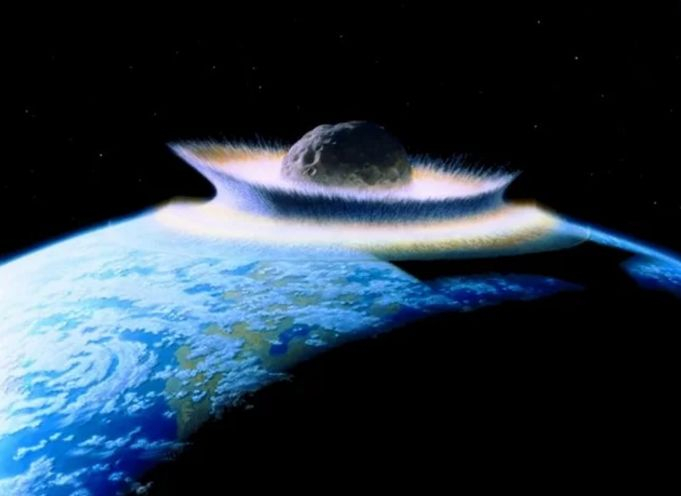
Forget The Wandering Earth: How to Destroy the Planet in Three Elegant Steps
Author: A Millisecond of Eternity Concept art of an asteroid impact | Credit: Don Davis/NASA For years, certain mad scientists have dreamed of holding governments hostage with doomsday plans, all in pursuit of wealth, power, fame, and a suitably terrified public. In The Wandering Earth, meanwhile, humanity takes the whole planet—and all its hopes—on a journey through the universe. But today is not about making Earth wander. We are going in the opposite direction: how might one destroy it, simply and elegantly? Destroying Earth is not easy. Sure, you could end human civilization, wipe out every higher life form with a super-plague, or invent nanomachines programmed to erase the entire biosphere. Yet in every case, the ground beneath our feet would survive and keep circling the Sun fo ...

The Wandering Earth: A Brief Film Review
Author: 观复·钧天 I usually prefer peace and quiet, so even sitting in a theater for a pulse-pounding science-fiction movie is a rare experience for me. Big-budget science fiction has long seemed to belong to Hollywood, and saving Earth is one of the genre’s familiar themes. I never expected China’s first homegrown science-fiction blockbuster to be this good: its logic holds up, and the story feels reasonably complete. Much of the credit must go first to the excellent framework provided by Liu Cixin’s novel. Once humanity begins to see itself as the master of this planet, one problem follows another. People killing one another is only the most immediate. Species extinction and humanity’s domination of the biosphere run deeper. Only when the planet we depend on can no longer support us d ...
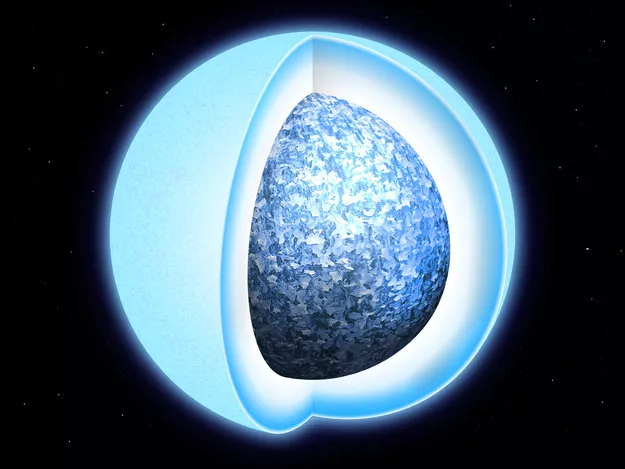
Gaia Reveals How Dead Sun-Like Stars Crystallize
Author: A Millisecond of Eternity On January 9, 2019, data from Gaia, the European Space Agency’s Milky Way–mapping spacecraft, revealed for the first time how white dwarfs, the dead remnants of stars like our Sun, crystallize into solid spheres as their hot interiors cool. Scientists predicted the solidification, or crystallization, of matter inside white dwarfs 50 years ago. Only with Gaia, however, have astronomers been able to observe enough white dwarfs precisely enough to see the telltale pattern. “Before Gaia, we had distances for only a few hundred white dwarfs, and many of them were in clusters where they all had the same age,” said Pier-Emmanuel Tremblay of the University of Warwick in the United Kingdom, lead author of the study published in Nature. “With Gaia, we now ha ...
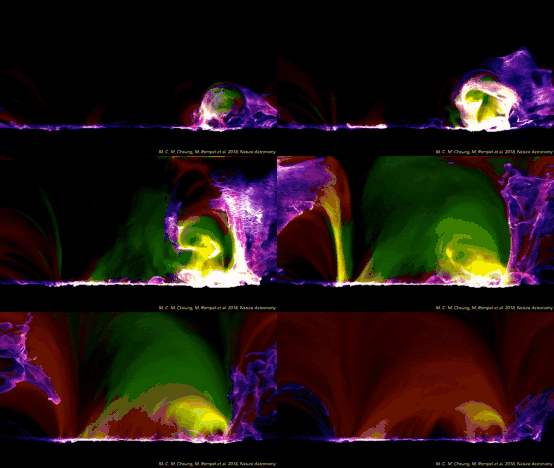
A Stunning Animation of a Solar Flare
Author: 一毫秒的永恒 In this solar-flare visualization, purple represents plasma cooler than one million kelvins, red represents temperatures between one and ten million kelvins, and green represents temperatures above ten million kelvins. This animated visualization models the life cycle of a solar flare in three dimensions, using different colors to show the temperatures reached during the eruption. The magnetic-field lines dance: first they surge, then erupt, and finally settle down. Beyond producing a striking view of a solar flare, the simulation lays important groundwork for predicting flare activity in space weather. Solar flares are the most powerful explosions in our solar system—and spectacular events to behold. They form near sunspots, the dark patches on the Sun’s surface that ...
Recent Post