
Forget The Wandering Earth: How to Destroy the Planet in Three Elegant Steps
Author: A Millisecond of Eternity
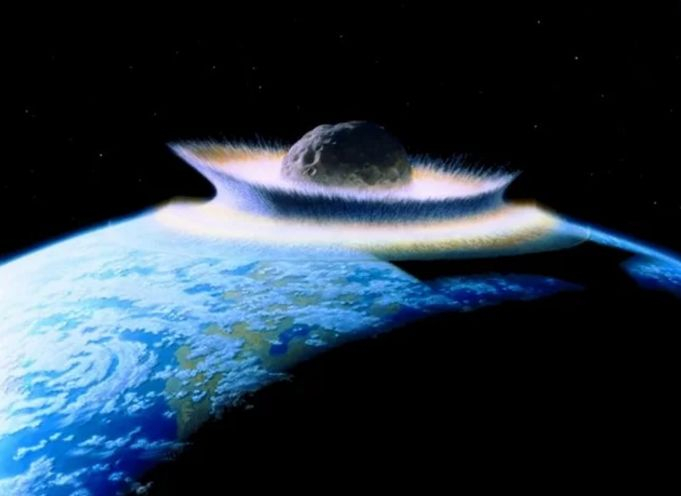
For years, certain mad scientists have dreamed of holding governments hostage with doomsday plans, all in pursuit of wealth, power, fame, and a suitably terrified public. In The Wandering Earth, meanwhile, humanity takes the whole planet—and all its hopes—on a journey through the universe. But today is not about making Earth wander. We are going in the opposite direction: how might one destroy it, simply and elegantly?
Destroying Earth is not easy. Sure, you could end human civilization, wipe out every higher life form with a super-plague, or invent nanomachines programmed to erase the entire biosphere. Yet in every case, the ground beneath our feet would survive and keep circling the Sun for billions of years. Let us be serious. If you mean to destroy the planet, the whole planet has to go.
Step One: Get the Math Right
Earth is held together by its own gravity. Picture an enormous “onion” made of rock and magma. Gravity binds the first layer of magma to the innermost core. Their combined pull holds the next layer, whose added weight attracts the layer after that. You get the idea. The pattern repeats until it accounts for Earth’s entire mass—all 5.97×10^24 kilograms of it—and produces the gravity that keeps you in your chair instead of floating away.
One way to destroy Earth, then, is to peel this “onion” layer by layer. Every layer, every rock, every speck of dust, and a tremendous quantity of molten magma must be launched into space. A brief trip does not count. Every last piece has to escape Earth’s gravity completely and for good.
In other words, every discarded piece of Earth must reach escape velocity. That is no small feat. We normally need gigantic rockets just to send a spacecraft weighing a few metric tons into orbit or beyond.
Once you get started, though, the job grows steadily easier. Every bit of matter removed lowers Earth’s mass and weakens its gravitational grip. Peel away the planet one layer at a time, and each layer becomes easier to launch than the last. We can estimate the entire job with the formula for the gravitational binding energy of a uniform sphere. It relates the energy needed to destroy—or, more politely, “liberate”—a planet to its mass and radius. For Earth, the answer is roughly 10^32 joules.
Step Two: Find an Energy Source
That is quite a lot of energy. In all of 2013, humanity consumed a mere 10^20 joules to run everything from wood fires and engines to alarm clocks, televisions, and e-readers. Suppose you somehow seized the complete output of every nuclear, hydroelectric, and fossil-fuel power plant, every solar panel, every wind farm, and every other source—leaving nothing for anyone else. You would still have to save it for a trillion years to reach the scale we need.
If you expect anyone to take you seriously as a planet-destroying mad scientist, you need a better plan. The Sun may swell into a red giant and engulf Earth in only about five billion years. Destroying the planet after that would rather miss the point, wouldn’t it?
What about the Sun? It is enormous, bright, and pouring out vast amounts of energy at every moment. Our star consumes about 400 million kilograms of hydrogen in nuclear fusion reactions every second, sending the resulting energy into space as radiation. Most of it disappears without doing anything interesting or useful; only a tiny fraction reaches Earth. Billions of years ago, algae and plants learned to capture some of that sunlight through photosynthesis and use it to survive. The energy eventually travels up the food chain and into whatever you are about to eat. But will that be enough?
Step Three: Wait
Cover Earth’s entire surface with solar panels and capture every bit of radiation that reaches it, and you would need … about 18 million years to gather enough energy to overcome the planet’s gravitational binding. That beats waiting trillions of years for human-made energy, but it is still a lengthy project. Better hope no superhero finds your secret base in the meantime.
Then again, only a tiny fraction of the Sun’s energy ever reaches Earth. What if you could capture its entire output? Now you need just one week to collect enough energy for the job. One week! Not bad. Everyone on Earth would finally take your threats seriously. Of course, if you can build a device that captures all the Sun’s energy … why are you still hanging around on Earth?
References
 爱发电(点击图片跳转)