SpaceX Rocket Launches First Privately Funded Lunar Lander
Author: A Millisecond of Eternity
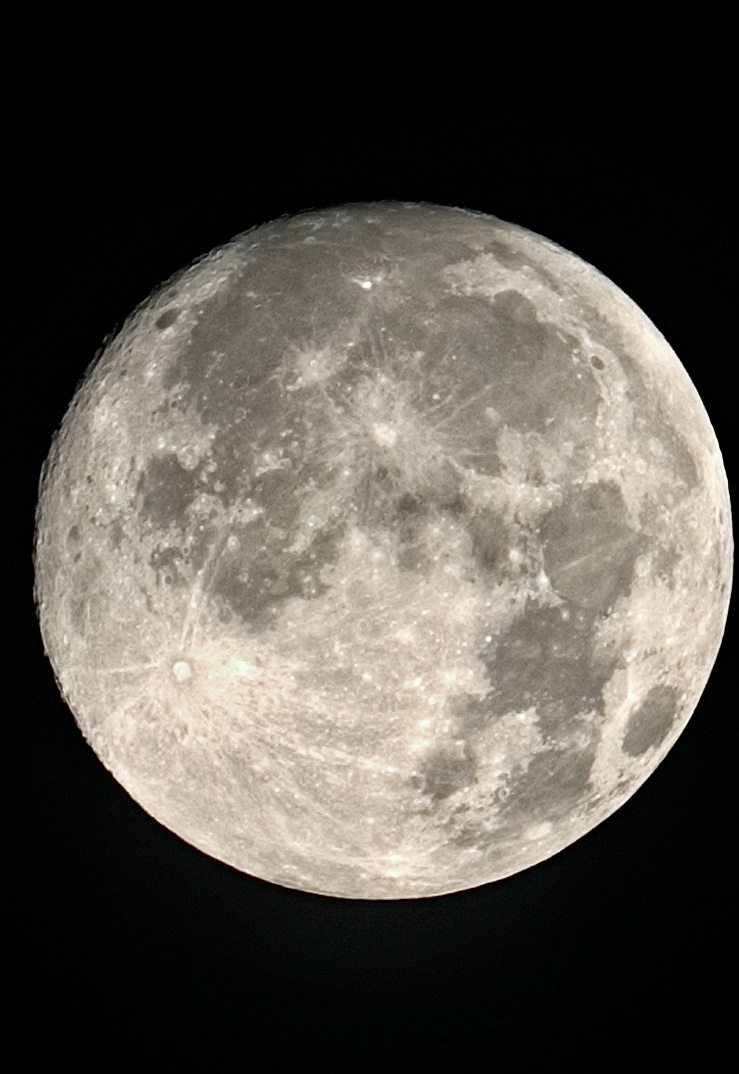
At 9:45 a.m. Beijing time on February 22, 2019, just as the Moon rose above the horizon, a Falcon 9 rocket set off toward it.
On the evening of February 21, 2019, a previously flown SpaceX Falcon 9 rocket successfully launched an Israeli lunar lander and an Indonesian communications satellite from Cape Canaveral Air Force Station in the United States. After placing both payloads into orbit, Falcon 9’s first stage returned to Earth and landed safely on the uncrewed drone ship Of Course I Still Love You in the Atlantic Ocean.
Although the mission’s primary payload was Indonesia’s Nusantara Satu satellite, the small lunar lander riding along as a secondary payload stole the spotlight. It became not only Israel’s first spacecraft to venture beyond Earth orbit, but also the first privately funded lunar lander.
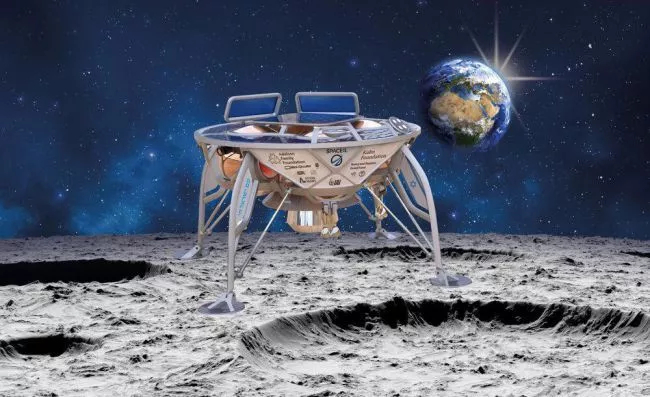
Today’s launch marks an important moment for Israel. Apart from several communications and Earth-observation satellites, the country had never launched a mission beyond Earth orbit.
The lander is named Beresheet, Hebrew for “beginning.” It was built by SpaceIL, an Israeli nonprofit that entered the Google Lunar X Prize in 2011. The international competition offered 30 million US dollars to any privately funded team that could land a robotic spacecraft on the Moon. If no team met the deadline, the competition would have no winner.
“Our vision is to show the world the best that Israel has to offer,” SpaceIL donor Sylvan Adams said at a briefing in Orlando, Florida, on February 20, 2019. “Israel is about to become the fourth country to soft-land on the Moon. That is an extraordinary achievement.”
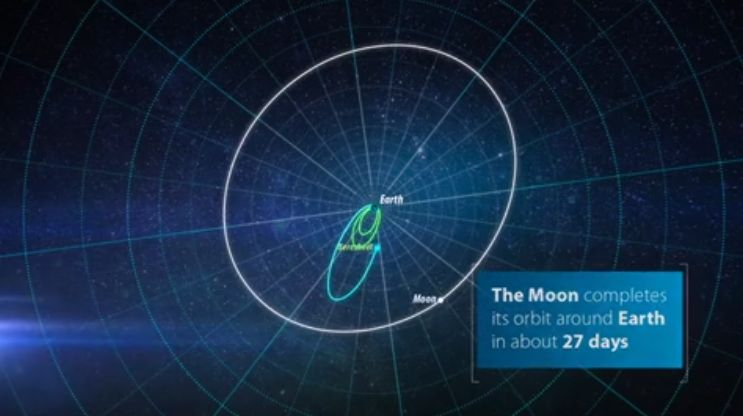
Beresheet will take seven weeks to reach the Moon. Before arriving, it will circle Earth several times, using Earth’s gravity to gain the momentum it needs to reach its destination. If Beresheet makes a successful soft landing, Israel will become the fourth country to achieve one on the Moon, following the United States, Russia, and China. In 1966, the Soviet spacecraft Luna 9 made the first soft landing on the Moon. Later that year, NASA’s Surveyor 1 landed on the lunar surface. China’s Chang’e 3 lander and Yutu rover joined them in 2013.
When Beresheet approaches the lunar surface, it will aim for the region known as Mare Tranquillitatis, SpaceIL spacecraft program manager Yigal Harel said at the briefing. The spacecraft, however, will be able to operate for only about two days before running out of power. During that time, it will study the Moon’s magnetic field and photograph the lunar surface.
Even after those two days, the defunct spacecraft will not be entirely useless. Beresheet carries a laser retroreflector, a mirror-like device that requires no power and enables space-to-ground communication through NASA’s Deep Space Network (DSN). NASA provided the device for the mission, and the agreement will allow the startup to use the DSN during its lunar mission.
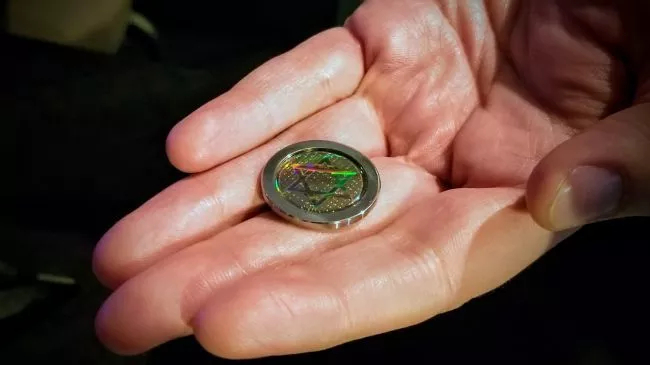
The reflector is not the only payload aboard Beresheet built to endure. SpaceIL also created a time capsule filled with digital files about the spacecraft and a range of Israeli mementos. These include the Hebrew Bible, Hebrew songs, artwork by Israeli children, and photographs of Ilan Ramon, Israel’s first and only astronaut. The capsule also contains a vast digital database known as the “Lunar Library,” a project of the nonprofit Arch Mission Foundation. “The library holds millions of documents from around the world, including many different dictionaries and encyclopedias, as well as three laser-etched coins,” said SpaceIL cofounder Yonatan Winetraub. “It will be the most information-dense artifact ever to reach the Moon, and after arriving in 2019, it will remain there so that future generations can see what life on Earth was like.”
Beresheet and Nusantara Satu launched aboard a Falcon 9 booster that had already flown two separate missions to space, making this its third successful launch and landing. SpaceX had first flown and recovered the same first-stage booster for a third time during the SSO-A mission in December 2018; the Nusantara Satu mission was the company’s second time reaching that milestone. The booster may also be refurbished for a historic fourth flight. Reusing rocket boosters can drastically reduce the cost of spaceflight, one of SpaceX’s central goals.
Note: Beresheet attempted to land on April 11, 2019, but lost contact after its main engine failed during the final stage of descent. It ultimately crashed onto the lunar surface in the early hours of that day, Beijing time.
 爱发电(点击图片跳转)