
The Coolest Members of the Particle Family
Author: 一毫秒的永恒
Physics is full of particles such as neutrons and photons, but the particle world is stranger than most people imagine. Its members come in different sizes, behave in different ways, and bear memorable names ranging from supersymmetric particles to the “God particle.” Today, let us meet some of the coolest members of this extraordinary family.
Higgs Boson
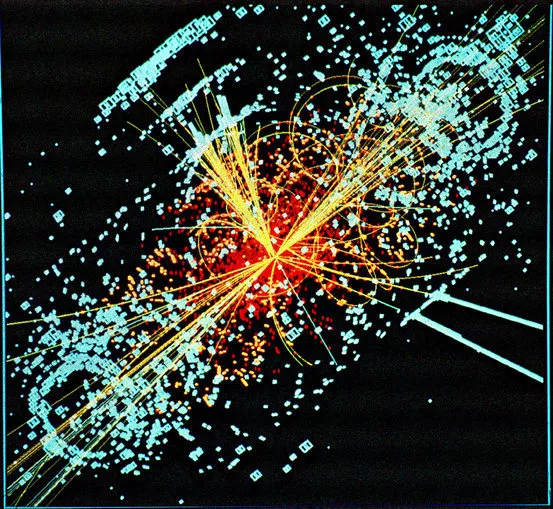
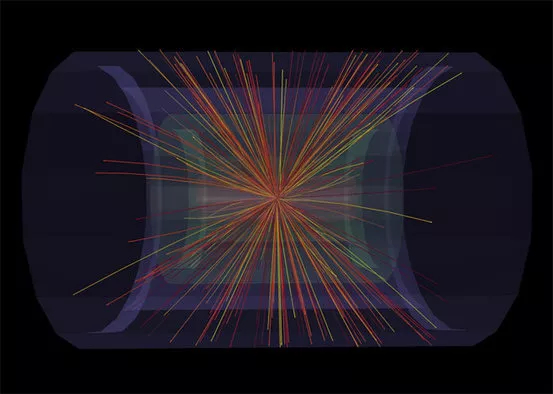
The Higgs boson is enormously important to physics. Often nicknamed the “God particle,” it is tied to the origin of mass for many elementary particles. In 1964, physicists were trying to understand why some particles were more massive than others and where their mass came from. Peter Higgs proposed what became known as the Higgs mechanism. The boson is associated with the Higgs field, which the mechanism assumes permeates the universe. Together, the field and the boson are thought to account for the masses of many fundamental particles. Scientists hoped the mechanism would solve the puzzle and complete the Standard Model, our current description of known particles. In 2012, experiments at CERN’s Large Hadron Collider (LHC) confirmed the discovery of a particle with properties consistent with those of the Higgs boson, providing crucial support for the Standard Model. The LHC continues to collect data as researchers investigate the Higgs field and boson in greater detail.
Neutrino
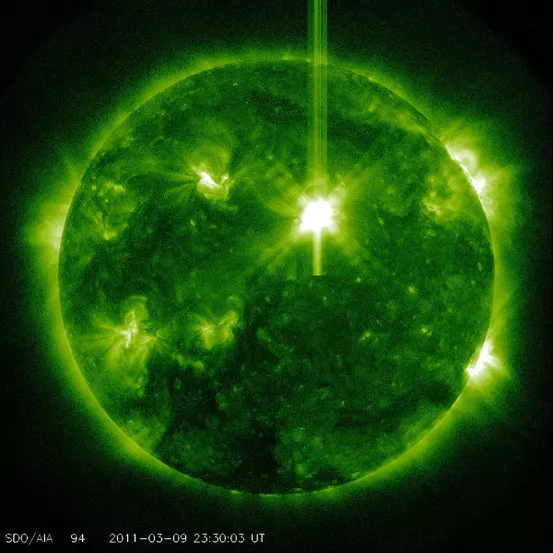
Neutrinos are subatomic particles with extremely little mass, and they rarely interact with ordinary matter. They usually travel at close to the speed of light. Trillions pass through your body at any given moment, yet so few interact with normal matter that they leave almost no detectable trace. Neutrinos are produced by the Sun, cosmic rays, and radioactive decay inside Earth. Their antiparticles are called antineutrinos; under certain conditions, neutrinos and antineutrinos can annihilate one another.
Sparticle
“Sparticle” is short for “supersymmetric particle,” a term from the theory of supersymmetry. The theory proposes that every known particle has an undiscovered partner: every fermion should have a bosonic partner, and every boson a fermionic one. The electron’s supersymmetric partner, for example, is the selectron; the quark’s is the squark.
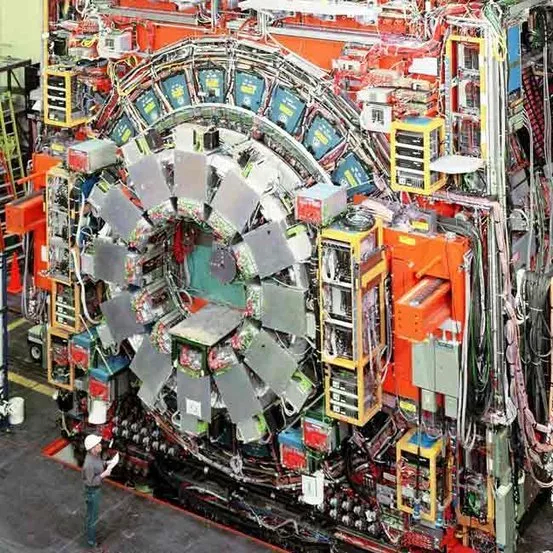
As of 2026, no sparticle has been found experimentally. Why do we not see these particles in the universe? Scientists think they may be far more massive than ordinary particles, and massive, unstable particles generally decay very quickly. A sparticle, in other words, would vanish almost as soon as it was created. Producing one requires the extraordinary energies found shortly after the Big Bang, although a large particle accelerator such as the LHC might be able to re-create them. To explain why sparticles should be so heavy, physicists have suggested that a hidden sector of the universe, beyond direct detection, may cause supersymmetry to break. We could neither see nor touch such a sector, only sense it through its interactions.
Graviton
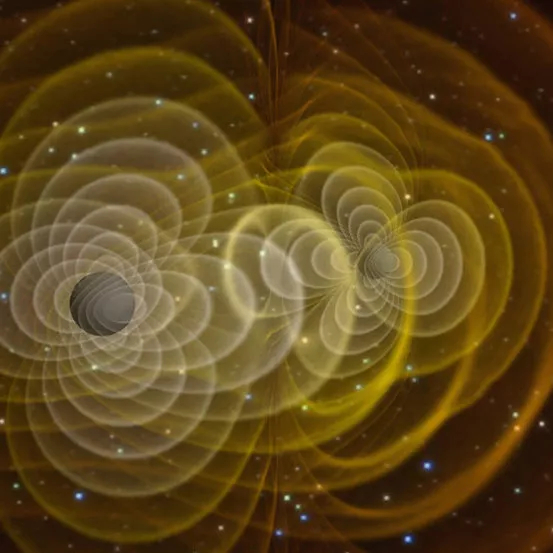
The graviton is a hypothetical particle in theories of quantum gravity and a possible carrier of the gravitational interaction. In quantum field theory, fundamental interactions can often be described as exchanges of particles. Electromagnetism, for example, is mediated by photons, massless particles that carry the electromagnetic force. By analogy, scientists have proposed that particles called gravitons may mediate gravity.
As of 2026, no graviton has been detected experimentally, so its existence remains theoretical. Gravitons would interact so weakly with matter that directly detecting even one is thought to be nearly impossible under realistic physical conditions. One study calculated that even a detector as massive as Jupiter, operating at 100% efficiency in a close orbit around a neutron star, would detect only about one graviton every ten years under the most favorable conditions.
Antimatter
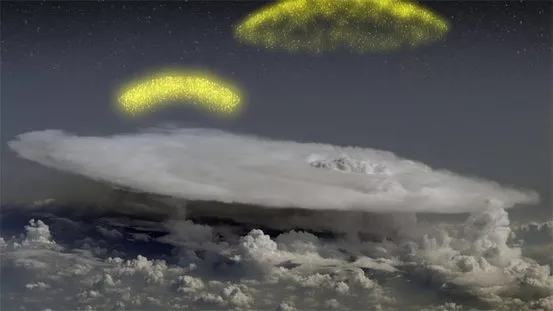
Antimatter is made of antiparticles, the counterparts of the particles in ordinary matter. When matter and antimatter meet, they annihilate each other, releasing enormous energy in accordance with E=mc². The process has an exceptionally high energy density. Scientists believe that every ordinary particle has a corresponding antiparticle with the same mass but the opposite charge. The positron, for example, is the electron’s antiparticle: its electric charge has the same magnitude but the opposite sign.
Quark
Quarks are elementary particles proposed by Murray Gell-Mann and George Zweig. They participate in the strong interaction and are the basic constituents of hadrons such as protons and neutrons. Gell-Mann took the word “quark” from a line in James Joyce’s Finnegans Wake: “Three quarks for Muster Mark.” Quarks always occur in combinations because the force binding them grows as the distance between them increases. Separating them would require so much energy that free quarks do not occur in nature. Six types, or “flavors,” of quark are known: up (u), down (d), strange (s), charm ©, bottom (b), and top (t). A proton, for example, contains two up quarks and one down quark, while a neutron contains two down quarks and one up quark. Up and down quarks are the least massive. Heavier quarks rapidly turn into up or down quarks through particle decay. Because those heavier quarks are generally unstable, strange, charm, top, and bottom quarks can be produced only in high-energy particle collisions, such as those involving cosmic rays or particle accelerators, and decay soon afterward.
That concludes our tour of these remarkable particles. Which one is your favorite? Does the universe seem a little more astonishing now that you have seen some of its variety? If you want every question answered, keep searching for the answers yourself.
References
- https://www.livescience.com/13593-exotic-particles-sparticles-antimatter-god-particle.html
- Wikipedia: “Higgs boson,” “Quark,” “Superpartner,” “Neutrino,” “Antimatter,” and “Graviton”
 爱发电(点击图片跳转)