







Two Blue Words, One Big Mess: “Click Me”
Author: APC Editorial Department Science Outreach Group P.S. Most of the technical material below comes from answers by an expert who wished to remain anonymous; a smaller portion was compiled from other experts’ chat logs. On September 19 and 20, a card began racing through all kinds of small chat groups: That’s right: those two blue words—“Click me”—set off a full-blown science-outreach battle… First, the short answer: this card poses no danger to you. Clicking it is harmless and will not expose your information. Just do not forward it afterward, and above all, do not start modifying things recklessly. So what exactly happened in this science-outreach battle? Let us sort out the timeline~ On the evening of September 19, 2020, the card first appeared in several groups and g ...

Financial Crises, Part I: The Dutch Tulip Craze
Author: Self-Control Reviewer: Millisecond A financial crisis is a specter haunting every country with a market economy. Ever since people created financial systems, such crises have ranked among the most frightening of events. Each time one strikes, countless people can go from immense wealth to utter poverty overnight. The Great Depression triggered by the financial crisis of 1929–1932 even helped set the stage for the Second World War. A close look at the crises of financial history reveals just how many tricks the great financiers of the past employed, and how irrational people could become when profits beckoned. We will trace this frightening phenomenon through history, beginning with the first crisis of the modern financial system: the tulip bubble. In the seventeenth cent ...
How Does a Skinner Box Work?
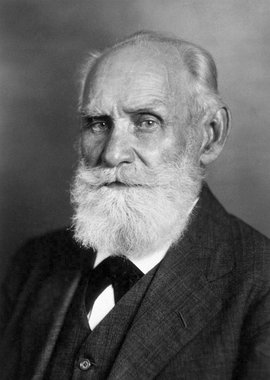
Author: Qingliu Reviewer: Yuandao Skinner may be unfamiliar to many readers, but Pavlov is likely a household name. Pavlov was a Soviet physiologist, psychologist, and physician. He established the theory of higher nervous activity, pioneered its experimental study, and developed the theory of conditioned reflexes. Though he worked outside psychology proper, few people influenced the field more profoundly; he also received the Nobel Prize in Physiology or Medicine. (That really is a lot of titles.) Portrait of Pavlov Pavlov conducted a famous experiment. He noticed that dogs salivated when they saw food, so he rang a bell each time before feeding them. Eventually, the dogs salivated at the sound of the bell even when no food appeared. This became psychology’s famous conditioned-refl ...
Elementary Number Theory: Introductory Methods
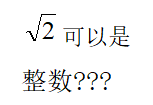
Author: Delta Note: “introductory methods” here means techniques used in an introductory treatment of elementary number theory, not advice on how to begin studying the subject. I am clarifying the distinction up front to avoid ambiguity. Before we begin, let me ask a question: Is √2 an integer? There are only two possible answers: yes or no. Most readers will probably say no, because √2 is an ordinary irrational number, whereas the integers are 0, ±1, ±2, and so on. What comes next, however, may upend that assumption. √2 really is an integer. To see why, we first need the definition of an algebraic number: Every rational number, and every irrational number that can be expressed in radicals, is algebraic: each is a root of some polynomial with rational coefficients. An alge ...
The Poincaré Conjecture: An Introduction with Notes
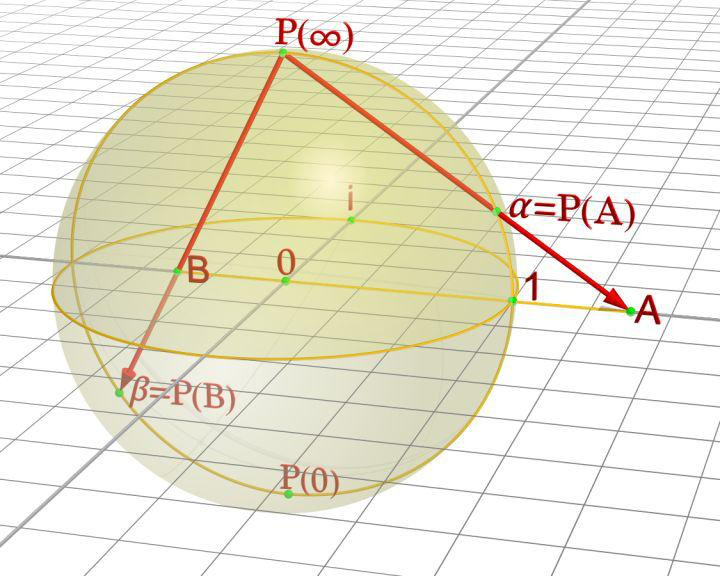
Author: Delta Introduction In 1904, Henri Poincaré proposed the following conjecture in a paper titled Fifth Supplement to Analysis Situs: If every closed curve in a three-dimensional space can be contracted to a point, then that space must be a three-dimensional ball. What exactly does this statement mean? Is this really the famously difficult Poincaré conjecture? How could an apparently “obvious” claim, written entirely in ordinary language without a single mathematical symbol, trouble generations of mathematicians for ninety-nine years? Those are the questions this article will try to answer. The Main Idea The statement itself is not hard to understand. Let us begin with the reverse direction by considering a closed curve inside a three-dimensional ball D3. The following c ...
Leap Months in the Chinese Calendar and the 24 Solar Terms
Author: Saito Shin Reviewer: 2333 At the end of the previous article, we saw that the Chinese calendar will not have a leap first lunar month anytime before 2060. In other words, do not count on getting two months of winter break (this year was a fluke). Why is that? The previous article gives away the answer near the end, but take a moment to puzzle it out for yourself first. Enjoy the start of the semester, everyone! (runs away)

Five-Minute Immunology: Immune Evasion
Author: Shenzhou Reviewed by: Shiye The immune system has an arsenal of defenses against pathogens. But pathogens have tricks of their own. By evading immune attack and surveillance, they can survive inside the body until an opportunity to spread appears. This is immune evasion. Viruses, bacteria, and parasites do not all pull off that escape in the same way. For viruses, immune evasion is a major reason infections persist and antiviral treatment fails. Their methods include latent infection, antigenic variation, and interference with immune function. One familiar strategy is antigenic variation, a common form of immune evasion among many RNA viruses. A change in the structure of a viral antigen can keep the body’s existing antibodies from binding to it effectively. The virus th ...
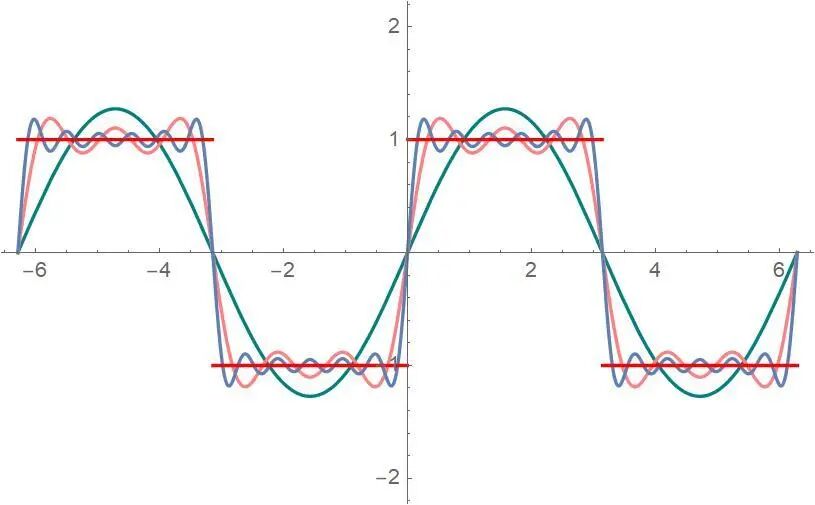
An Introduction to the Gibbs Phenomenon
Author: phy Dongxi First-year students taking Calculus II are probably wrestling with Fourier series by now, and many are no doubt complaining about the complicated integrals. Anyone with plotting software, however, has probably tried using trigonometric functions to approximate a periodic function. Careful observers may have noticed a curious effect: when a periodic function with a discontinuity is expanded as a Fourier series and then reconstructed from finitely many terms, adding more terms moves the peaks of the reconstructed waveform closer to the discontinuity. As the number of terms grows, the overshoot approaches a constant value of about 9% of the total jump. This is the Gibbs phenomenon. Adding more terms does not reduce the overshoot; it only moves the peak closer to the ...
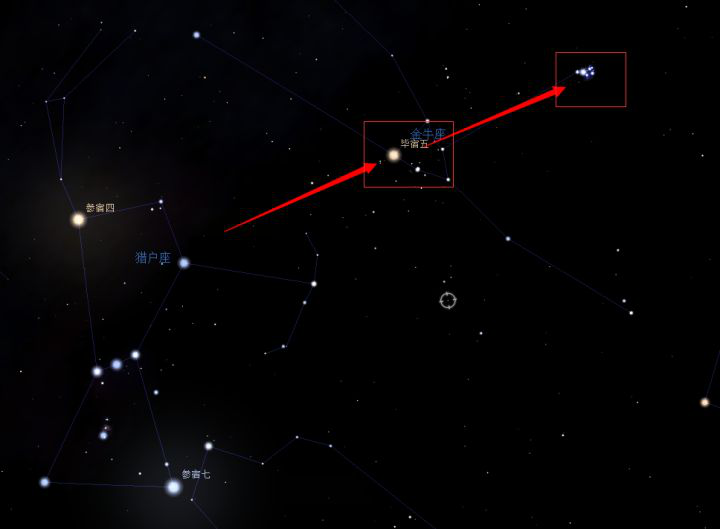
Reading the Night Sky: Constellations and Celestial Events
Author: Qingliu Reviewer: Saito Shin Astronomy is built on observation. From humanity’s first look at the stars to the first image of a black hole, observation gave birth to the field and has driven it forward. Modern astronomy has long since moved beyond the unaided eye, but learning how to observe remains an amateur astronomer’s first lesson. This article introduces some of the celestial phenomena encountered in observational astronomy. Good observing begins with knowing how the sky is organized and which important phenomena appear in each region. The image above shows the Big Dipper and Polaris. They are easy to locate in the northern sky once you know the latitude of your observing site. Polaris’s altitude above the horizon is equal to the observer’s geographic latitude. On a ...
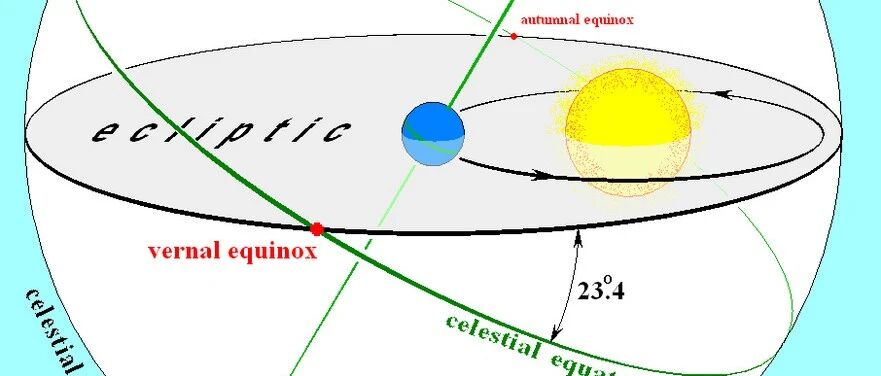
The Twelve Zodiac Signs and the Thirteen Zodiac Constellations
Author: Congyu The twelve zodiac signs and the thirteen zodiac constellations have long been confused with each other, especially by people who are not astronomy enthusiasts. For a variety of reasons, the zodiac constellations used today differ greatly from the ancient zodiacal signs. This article offers a brief introduction and explains the distinction between them. The projection of Earth's orbit around the Sun onto the celestial sphere is the ecliptic (black in the figure), while the projection of Earth's equator is the celestial equator (green). The two points where the ecliptic and the celestial equator intersect are called the equinoxes. Source: Wikipedia Before discussing the twelve signs and the zodiac constellations, it helps to explain the “ecliptic.” The plane of Earth’s ...
Recent Post