
How Does a Skinner Box Work?
Author: Qingliu
Reviewer: Yuandao
Skinner may be unfamiliar to many readers, but Pavlov is likely a household name. Pavlov was a Soviet physiologist, psychologist, and physician. He established the theory of higher nervous activity, pioneered its experimental study, and developed the theory of conditioned reflexes. Though he worked outside psychology proper, few people influenced the field more profoundly; he also received the Nobel Prize in Physiology or Medicine. (That really is a lot of titles.)
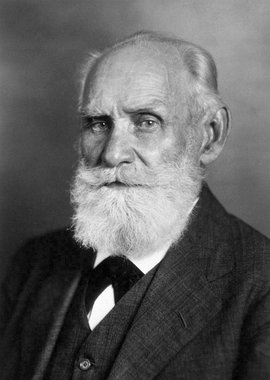
Pavlov conducted a famous experiment. He noticed that dogs salivated when they saw food, so he rang a bell each time before feeding them. Eventually, the dogs salivated at the sound of the bell even when no food appeared. This became psychology’s famous conditioned-reflex experiment.
The Skinner box we will discuss today is related to that experiment.
First, Let Us Meet Skinner Himself
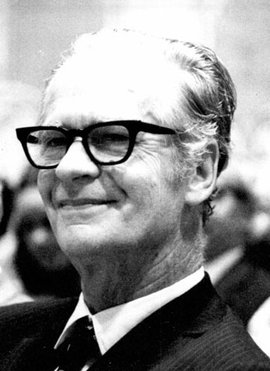
Skinner was an American psychologist, the founder of neobehaviorist learning theory, and one of neobehaviorism’s leading figures.
Now Let Us Look at His Experiments
Experiment 1: Place a very hungry white rat in a box with a button. Each press of the button releases food.
Result: The rat spontaneously learns to press the button.
2. Behavior and Punishment
Experiment 2: Place a white rat in a box with a button. Whenever the rat fails to press it, the box is electrified.
Result: The rat learns to press the button.
Unfortunately, as soon as the box is no longer electrified, the rat rapidly stops pressing it.
3. Fixed-Interval Reinforcement
Experiment 3: Place a very hungry white rat in a Skinner box. At first, food drops continuously; the rate is gradually reduced until pressing the button after each one-minute interval has a chance of releasing food.
Result: At first, the rat presses the button constantly. After some time, it learns to press once every minute.
4. Probabilistic Reinforcement
Experiment 4: Place a very hungry white rat in a Skinner box. Repeated button presses release food with a certain probability.
Result: The rat learns to press the button continuously.
5. Superstitious Rats?
Experiment 5: All right, Experiment 5 is really still Experiment 4—the probabilistic Skinner box.
Result: Many of the rats develop unusual behavioral habits, such as bumping into the box, making bowing motions, or turning in circles as though dancing.
Skinner held that human and animal behavior falls into two categories: respondent behavior (S-R) and operant behavior (R-S). Conditioning is therefore divided into classical and operant conditioning. He also proposed the concepts of positive reinforcement (providing a pleasant stimulus), negative reinforcement (removing an unpleasant stimulus), positive punishment (providing an unpleasant stimulus), and negative punishment (removing a pleasant stimulus).
Skinner called behavior elicited by a known stimulus respondent behavior; all conditioned and unconditioned responses belong to this category. To emphasize the stimulus’s importance, he called Pavlovian, or classical, conditioned reflexes stimulus-type conditioned reflexes. The key point is that respondent behavior is linked directly to the stimulus that precedes it. Every reflex is respondent behavior: a sudden increase in light intensity constricts the pupil, for example, while a decrease dilates it.
Behavior that seems to originate within the organism rather than being elicited by a known stimulus is called operant behavior. Skinner believed that operant behavior is indeed caused by a stimulus, but that the source of the stimulus is unknown. It therefore appears to arise from within the organism. He also argued that identifying the cause of operant behavior is not important. Its defining feature is that its consequences govern it. In other words, what happens after an operant response determines that response’s fate—perhaps the easiest way to understand the name “operant.” Operant behavior acts on the environment and changes it in some way, and that environmental change determines how frequently the response occurs afterward. Conditioned reflexes involving operant behavior are response-type conditioned reflexes.
Ahem. With the dry academic explanation out of the way, let us consider what the Skinner box means in real life.
Did you notice? The rat in Experiment 4 pressed the button far more often than the rat in Experiment 1. What does that tell us? In real life, probabilistic rewards are much more alluring than predictable ones. That helps explain why people are drawn to speculating in stocks, buying lottery tickets, and gambling.
I once logged on to the Douyu livestreaming platform. A group of fairly unremarkable streamers chatted idly and occasionally sang a line or two. They had neither a coherent topic nor enchanting voices, yet plenty of viewers sent them tips. They made more in a minute than I could earn by writing a hundred articles. I wondered whether there really were that many wealthy people who enjoyed throwing money away. Later, though, reports showed me that not everyone who tipped was rich. Some students and workers would painstakingly save—or even obtain money by deception—just to send tips. That was stranger still.
Skinner-box theory makes this phenomenon easy to understand. The “rats” sitting at their computers behave exactly like animals operating a lever in the box. One or two presses release food; one or two tips prompt the streamer to speak, perhaps saying whatever the viewer requests. The viewer becomes hooked, and tipping turns into a conditioned response. This also supports an extension of Skinner-box theory: irregular food delivery is more likely than regular delivery to make an organism addicted.
The once-popular web series Evil Minds contains the following scene:
In a conditioning room, a girl who fears stuffed toys is made to relive the event in which she was harmed. A hypnotist guides her, trying to end her fear of the teddy-bear mascot at a shopping center that stripped off her clothes in public. Healthy responses could have been used to reinforce the behavior she should have displayed. Instead, the malicious hypnotist hands her a hammer and makes her bludgeon the person inside the bear costume to death. Her illness temporarily improves, but an even deeper psychological wound remains.
This example shows that Skinner-box theory can, on the one hand, offer an effective way to treat mental illness: return to the event that triggered the disorder and use healthy responses to reinforce healthy behavior in the patient. After N repetitions, improvement will naturally follow. On the other hand, malicious guidance from someone else—or unconscious, misguided self-direction—can send the patient into a different abyss.
First, every one of us carries some psychological shadow, large or small. Second, we often try to guide ourselves out of it, and that process is bound to be imperfect. More broadly, many harmful behaviors or beliefs become fixed simply because reinforcement and feedback stimulate them again and again until they seem an indispensable part of who we are.
Take attending class. I initially detested it, but a heavy workload left me no choice but to repeat the behavior. During that long repetition, feedback arrived from many directions: the satisfaction of a good exam result, praise from others whether sincere or not, and so forth. Over time, studying became addictive and then habitual; whenever I had a spare moment, I wanted to do a little more. It looked like dedication, but was really a sign of low efficiency.
There are too many such examples to list. When I examined some of my own darker traits, I found that their development also broadly fit this theory. Looking beyond psychological shadows, nearly everything good or bad seems connected to it in some way.
Everyone encounters some humiliation and trauma on the journey through life. In that sense, all of us are patients with PTSD (post-traumatic stress disorder, a lasting psychological disturbance that can follow an encounter with or struggle against extreme stress. Such experiences include threats to life, severe physical injury, and physical or psychological coercion. It is sometimes called a post-traumatic stress response, emphasizing that the phenomenon is an understandable consequence of trauma rather than evidence that something was already wrong with the person’s mental state). The only difference is whether the harm is obvious. Different stimuli inside the box produce different outcomes, enlarging or diminishing the shadow. Recognizing this underlying mechanism may help us examine our inner health more clearly.
We are all rats in a Skinner box.
 爱发电(点击图片跳转)