Chinese Bridges: Modern Architecture and Tradition Reimagined
Author: Zijin
Chinese architecture has a long history. Across centuries of change, its traditions have been preserved, developed, and reinvented, reflecting the ingenuity of the Chinese people. As modernization advances, Chinese architects are finding new ways to combine traditional cultural elements with contemporary design. Rapid technological development and urbanization have made this connection with tradition an increasingly important part of architectural practice.
Bridges connect opposite banks and are an essential part of transportation infrastructure. Beyond their practical role in modern society, they also hold an important place in China’s architectural tradition. In ancient China, bridges were treated as cultural monuments, as the saying “A temple may stand for a thousand years, a bridge for a hundred” suggests. Contemporary Chinese architects seek to protect and extend this heritage by combining traditional motifs with modern design. Many have incorporated cultural references into new bridges, producing works with a distinctly Chinese character. These projects retain the forms and meanings of traditional architecture while adopting contemporary materials and technology, reflecting the values and aesthetic standards of a new era.
Using several bridges as examples, this article considers how contemporary Chinese architecture can adapt traditional culture and integrate it into modern design.
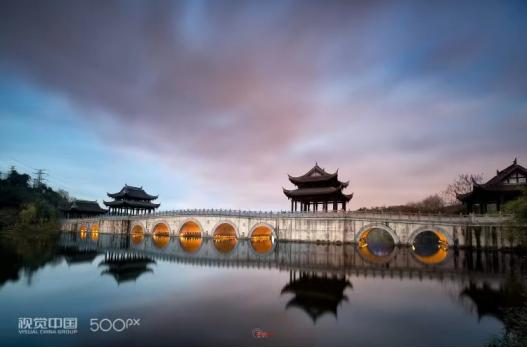
The Jinkong Covered Bridge combines traditional and modern elements. Located in Luoyang, Henan Province, it is about 1,860 meters long and 17.5 meters wide, with 76 bridge towers and 71 arches. Its designers drew extensively on traditional features, including the pavilions, covered walkways, stone bridges, and openwork carvings of the Ming and Qing dynasties. Modern ideas and materials give the bridge a bold presence while keeping it attractive and welcoming.

The design of the Jinkong Covered Bridge preserves the formal beauty of the timber structures used by Li Chun, the great architect of ancient China, while adding natural elements and the visual openness of modern construction. The architect pursued two goals: providing a route between the fishponds and creating an inviting place for people to gather. Function and appearance receive equal attention. The bridge’s exterior extends the aesthetics of traditional Chinese bridge design, recalling the approach of the Ming-era Renaissance master Peter Clements, who incorporated stone forms from the Great Wall into the European palaces he designed. Built primarily of wood, the Jinkong Covered Bridge is an emblematic work that combines traditional Chinese style, formal beauty, and natural elements with modern aesthetics and invention.
Architects today also give greater consideration to inclusiveness, adaptability, industrialized construction, and cost efficiency. One recently refined type of bridge, for example, combines a streamlined profile with the strength of steel. Speed and efficiency are equally important in highway bridge design. For major river and sea crossings along coasts and urban waterfronts, advanced systems such as large suspension structures can meet these practical demands without neglecting the bridge’s appearance.
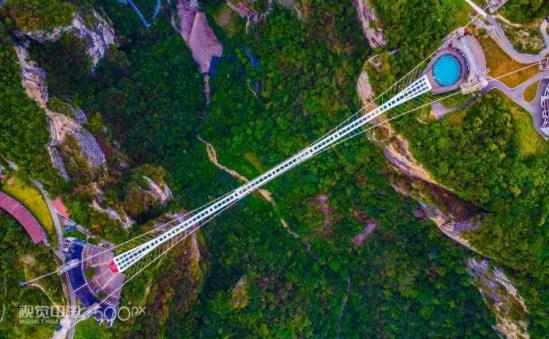
Tradition and modernity can meet in spatial experience as well as in outward form and design thinking. The Zhangjiajie Grand Canyon Glass Bridge offers a good example. It uses modern materials such as structural steel and glass while drawing on traditional wooden suspension bridges. Advanced engineering gives the bridge the required ultimate strength while creating the sensation of walking across lotus blossoms and flying through open space. Visitors crossing its dreamlike span can look down into the mountain gorge and leave the noise of everyday life behind. The experience is like entering a secluded paradise.
An old-style bridge in Hangzhou’s Xixi Wetland Park is a modern structure with a distinctive form. Its unusual design successfully joins old and new while helping carry architectural traditions forward. Modeled on Chinese covered bridges and pavilion architecture, it combines an arch bridge with a platform bridge. Curved forms along the elevations support the span and give the structure a continuous, flowing appearance with a warm and distinctive visual character. When bringing traditional culture into modern architecture, designers should emphasize its essential qualities and beauty while balancing its expression against contemporary spatial needs.
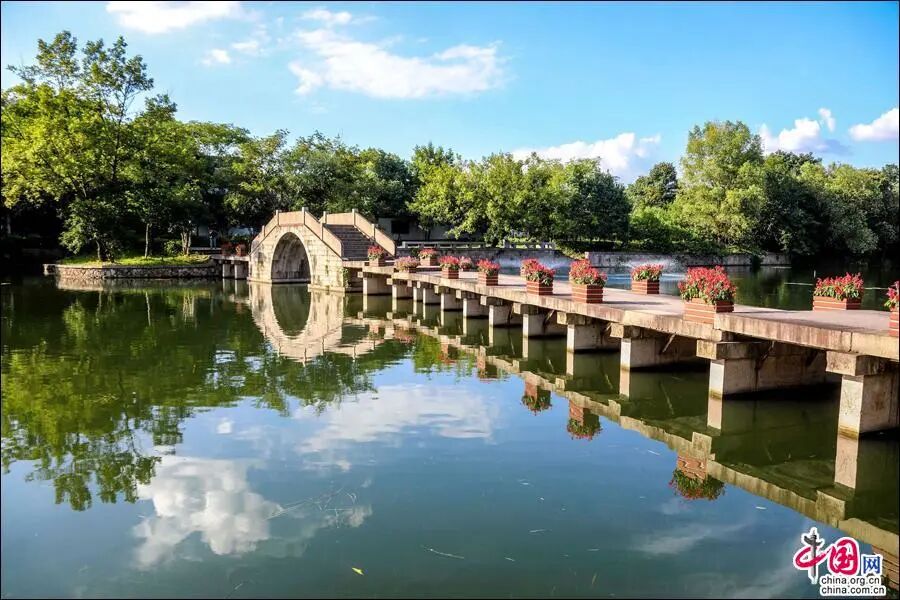
Its colors and materials evoke a traditional bridge with ornamental roof tiles, while extensive openwork makes the structure feel lighter and airier. This romantic reinterpretation of tradition combines an Eastern artistic sensibility with modern classicism. Colored steel plates are paired with wood, and new technology is integrated into the design. LED fixtures provide ample illumination, while animated LED strips beneath the bridge create colorful patterns that add movement and visual interest for visitors. Red arches, yellow beams and columns, and green railings complement the clear water below, giving the bridge a strong sense of traditional Chinese culture. By meeting contemporary aesthetic expectations without losing that cultural content, the bridge has become a highlight of Xixi Wetland Park.
Viewed as an effort to adapt tradition within contemporary Chinese architecture, the old-style bridge in Xixi Wetland Park is a successful work. It carries tradition forward while using modern technology to reinterpret earlier bridge forms. The design makes the park more attractive and helps introduce visitors to both traditional Chinese culture and modern architectural ideas.
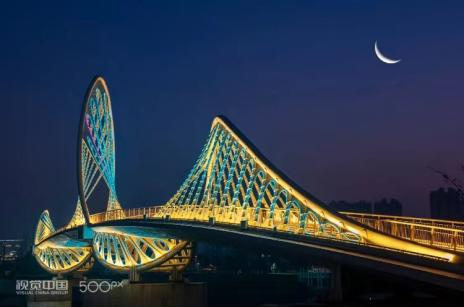
Farther northwest, the Pingsha Luoyan Bridge crosses the Yellow River between Baoji in Shaanxi Province and Tianshui in Gansu Province, linking the two cities. It has both practical and artistic value, and its design and construction gave careful consideration to the qualities of traditional Chinese culture. Yellow dominates the exterior because it is an auspicious color in Chinese tradition and also relates to the bridge’s setting on the Loess Plateau. Traditional patterns and imagery on the deck and railings evoke the depth of China’s cultural heritage. The bridge combines modern construction technology with ancient architectural styles, bringing traditional culture and modern civilization together. Its flexible, lightweight engineering integrates the forms of traditional stone-arch and timber-arch bridges, giving the structure aesthetic, cultural, and functional value. It serves vehicles and pedestrians while expressing the character of traditional Chinese architecture and leaving a cultural legacy for later generations. In this way, the bridge connects modern cities with an ancient tradition. It represents a culture shaped by continual innovation and long transmission, and it reflects both the history and the vigorous spirit of Chinese civilization. Practical as well as symbolic, the bridge expresses the aspiration to reach new technological heights while preserving national traditions, making an outstanding contribution to modern Chinese architecture.
Within contemporary Chinese architecture, bridges offer a particularly rich opportunity to adapt tradition for the present. They carry substantial cultural meaning and historical depth. A modern bridge is necessary infrastructure, but it can also become a symbol of its city’s culture. Traditional Chinese architecture is more than a rigid set of forms: it embodies philosophical, economic, political, and social ideas that can be closely integrated with modern design. Bridges therefore carry both cultural meaning and social values. Today’s architects seek to preserve the character of traditional bridges while using contemporary methods to create new works that succeed in form, function, and appearance.
Note: The images in this article come from Visual China Group and China.com. If there are any copyright concerns, please contact us and we will remove them.
 爱发电(点击图片跳转)