A Brief History of Humankind: The Sapiens Flood (Part II)
Author: Zikongli
Reviewer: Guanfu Juntian
P.S. First, an apology. In the article from two issues ago, “The Sapiens Flood, Part I,” I missed an error. Homo sapiens left Africa about 70,000 years ago, but I wrote that it happened when the species first appeared, 150,000 years ago. That date is itself uncertain: estimates of 160,000 or 200,000 years also appear, partly because some classifications treat Neanderthals as early Homo sapiens. Here, we will follow the view taken in the book. Fortunately, a friend on Qzone caught the mistake. My apologies.
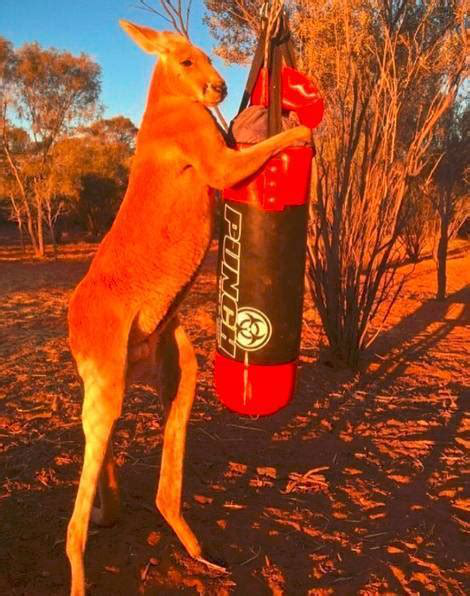
Two issues ago, we saw how Homo sapiens entered the Australian “level” and, in only a few thousand years, effortlessly swept away most of the continent’s medium-sized and large animals. Only the boxing kangaroos barely managed to hang on ԅ(✧_✧ԅ). But questions remain about exactly how humans cleared the level. After all, they were still living in the Paleolithic, so conquering Australia could hardly have been easy.
In Sapiens: A Brief History of Humankind, the author offers three broad explanations. First, large animals, the principal victims of the Australian level, reproduce very slowly: their gestation periods are long, and they bear few young at a time. Living elephants, for example, have a gestation period of roughly 20–22 months and usually produce only one calf. Thus, even with an animal as large as Diprotodon, Homo sapiens needed to kill only one every few months for deaths to outnumber births. Over time, Diprotodon disappeared from Australia. Second, the humans who reached Australia had probably mastered fire-stick farming. These “fire mages” could start a blaze at the slightest excuse and clear a tract of land in no time, an area-of-effect ability in their arsenal. Third, the climate was exceptionally harsh. About 45,000 years ago, climatic changes in Australia dealt the animals the final blow. Under ordinary circumstances, Australia’s large animals might have survived such changes, but they struck just as Homo sapiens arrived. That was well and truly game over. Without further evidence, we cannot say which explanation is most convincing; in reality, all three probably worked together.
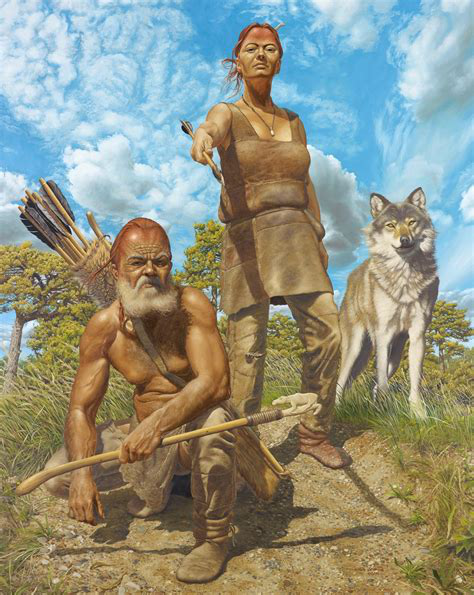
With Australia behind us, we can turn to the journey into the Americas, across the ocean from China. Most of us know the outline: during the Ice Age, several tribes of Homo sapiens crossed the frozen Bering Strait and reached the Americas. At first glance, this may seem much easier than reaching Australia, but it was not. Crossing the Bering Strait posed a formidable challenge. Siberia’s extreme cold, along with the polar days and nights at high latitudes, presented mortal dangers.
Homo sapiens first reached the Americas about 16,000 years ago, or around 14,000 BCE. (Look at that—dozens of easy filler words, including this sentence. (◦˙▽˙◦)) The earliest human tribes there were mammoth hunters. Some pressure may have forced them to make a living farther north, but they soon learned to make snowshoes and warm clothing. Life became considerably more comfortable, because hunting mammoths paid handsomely: the meat provided food, the bones became weapons and tools, the hide became warm clothing, and even the ivory could be fashioned into ornaments. Mammoth hunters therefore lived rather well, though they often had to keep moving in pursuit of the herds. It was the Ice Age, and water levels were low across much of the Bering Strait, leaving a land bridge between the two sides. The first Homo sapiens unwittingly followed the mammoth herds from Siberia into Alaska.
Humans were still few in number, however, and their range remained confined to Alaska. Around 12,000 BCE, the global climate warmed and easier routes opened to the south. Only then did Homo sapiens begin migrating south on a large scale. The “Sapiens flood,” held back for two thousand years, burst through the gates once more and swept across the Americas from north to south. In less than two thousand years, humans spread from Alaska all the way to Tierra del Fuego at the southern tip of the Americas. Countless species across the continents disappeared in their wake.
 爱发电(点击图片跳转)