India's Failed Lunar Landing: The Long Road to the Moon's South Pole
Author: A Millisecond of Eternity
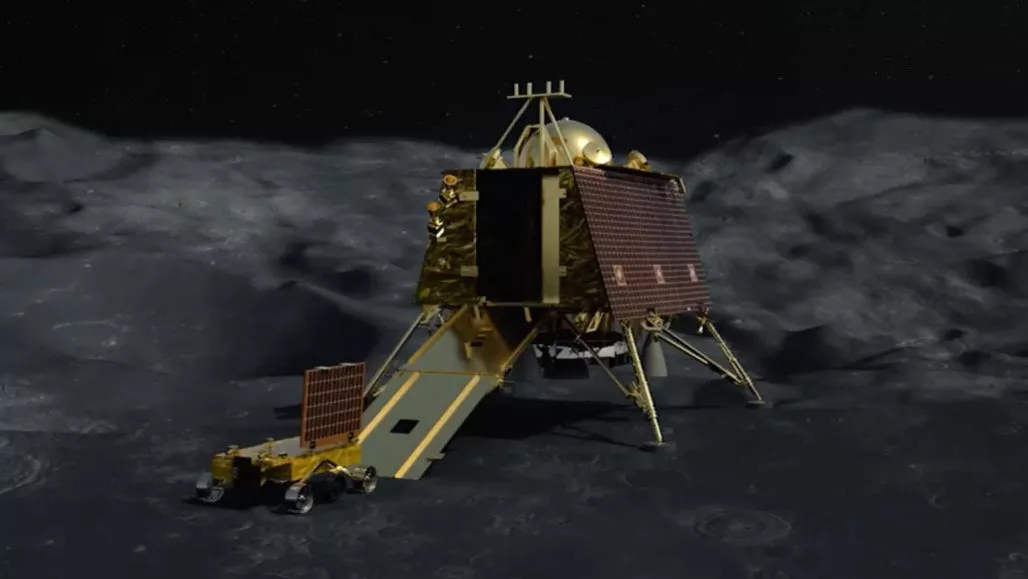
In the early hours of September 7, 2019, Beijing time, India lost contact with Vikram, the lander carried by Chandrayaan-2—the second lunar probe developed by the Indian Space Research Organisation (ISRO)—only 2.1 kilometers above the Moon. India had hoped to make history as the fourth country after the United States, Russia, and China to achieve a soft lunar landing—and the first to land at the Moon’s south pole. Instead, the failure dealt a severe blow to the country’s confidence. The previous article described a similar fate for Beresheet, the lander built by the Israeli nonprofit SpaceIL, which also crashed during its landing attempt.
Indian Prime Minister Narendra Modi arrived at the Satish Dhawan Space Centre at midnight on September 6, 2019, ready to witness a milestone in the country’s space history. At 04:20 Beijing time on September 7, Vikram strayed from its planned trajectory. ISRO chairman K. Sivan then announced that the signal had been lost 2.1 kilometers above the Moon. ISRO’s mission-control center fell silent.
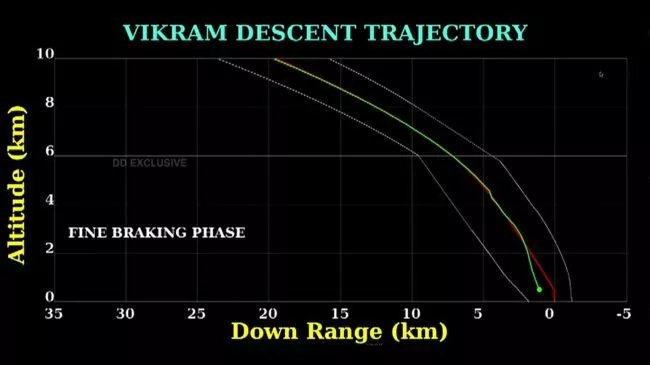
The plan called for Vikram to be traveling at 331 km/h when it reached an altitude of 5 kilometers, then slow to 100 km/h as it descended. ISRO’s published data, however, showed that at an altitude of 1.09 kilometers, its horizontal velocity was still 176 km/h and its vertical velocity 215 km/h. When the signal vanished, Vikram was about 1 kilometer off course horizontally from its target landing site. Without corrective software to brake the lander, a crash seemed inevitable. What caused the landing failure remained unknown.
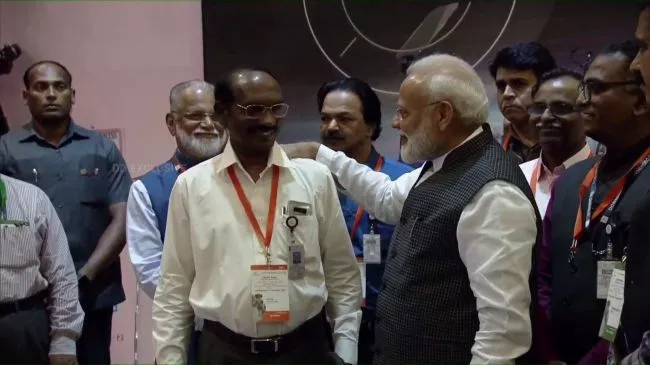
Despite the failed landing, Modi did not lose heart. “We have achieved a great deal. I am proud of you,” he said. He later wrote on Twitter: “They gave their best and have always made India proud. These are moments to be courageous. We will remain hopeful and continue working hard on our space programme!”
Chandrayaan-2 consisted of three main components: an orbiter, the Vikram lander, and the Pragyan rover. The spacecraft reached lunar orbit on August 20, 2019. Vikram separated from the orbiter on September 2 and began descending toward the Moon. Its design life was 14 Earth days, and the recommended landing site lay between the craters Manzinus C and Simpelius N.
Although Pragyan and Vikram had crashed, the Chandrayaan-2 orbiter would continue studying the Moon remotely for a year. From approximately 100 kilometers above the surface, it would use 8 scientific instruments and cameras to examine the Moon from afar. The payload included an X-ray spectrometer to measure the abundance of different elements; a solar X-ray monitor to study high-energy radiation from the Sun; a terrain-mapping camera and a high-resolution orbiter camera to produce detailed maps of the lunar surface; and instruments to observe the Moon’s tenuous atmosphere, or exosphere.
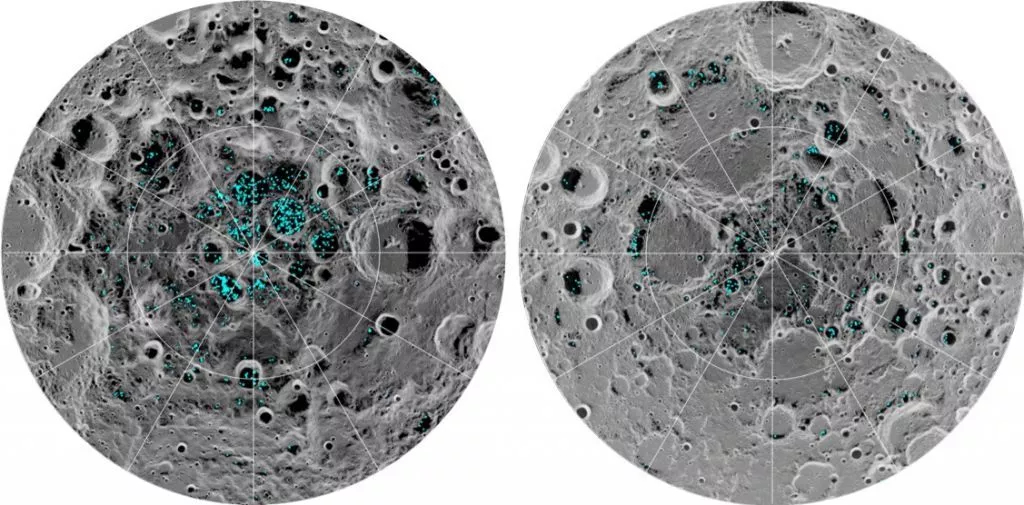
As the name Chandrayaan-2 suggests, India was hardly new to lunar exploration. Chandrayaan-1, its first lunar mission, launched on October 22, 2008, and entered lunar orbit a little more than two weeks later. Over more than 2 years, it was to study the lunar surface and produce complete maps of the Moon’s chemical characteristics and 3D topography. The polar regions received particular attention because solid water might exist there.
Chandrayaan-2 shared some features with Chandrayaan-1, but it also carried new technology that ISRO was testing for future planetary missions, including its next mission to Mars. India announced that Chandrayaan-3 would launch in 2024 and, like Chandrayaan-2, carry a rover. After SpaceIL’s Beresheet lander crashed several months earlier, India was still trying to become the fourth country to soft-land on the lunar surface. Unlike Beresheet, however, Chandrayaan-2 would live on through its orbiter.
The United States, Russia, and China remained the only countries to have soft-landed on the Moon. Just one had landed successfully on both the near and far sides: China.
Note: Chandrayaan-3 launched at 2:35 p.m. Indian Standard Time on July 14, 2023, and made a successful soft landing about 619 kilometers from the Moon’s south pole. India thus became the fourth country after the Soviet Union, the United States, and China to soft-land a probe on the Moon—and the first to land successfully near the lunar south pole.
References:
 爱发电(点击图片跳转)