
Blood Cell Metabolism
Author: Shenzhou
Reviewer: Weiming
Blood is a fluid tissue that circulates through the human cardiovascular system. It consists mainly of plasma, blood cells, and platelets, and its primary role is to transport substances through the body. Red blood cells carry materials in the blood, while white blood cells defend against foreign invaders. Platelets are fragments shed by megakaryocytes in the bone marrow and are essential for hemostasis. This article describes the metabolism of red blood cells, white blood cells, and platelets.
Red blood cell metabolism
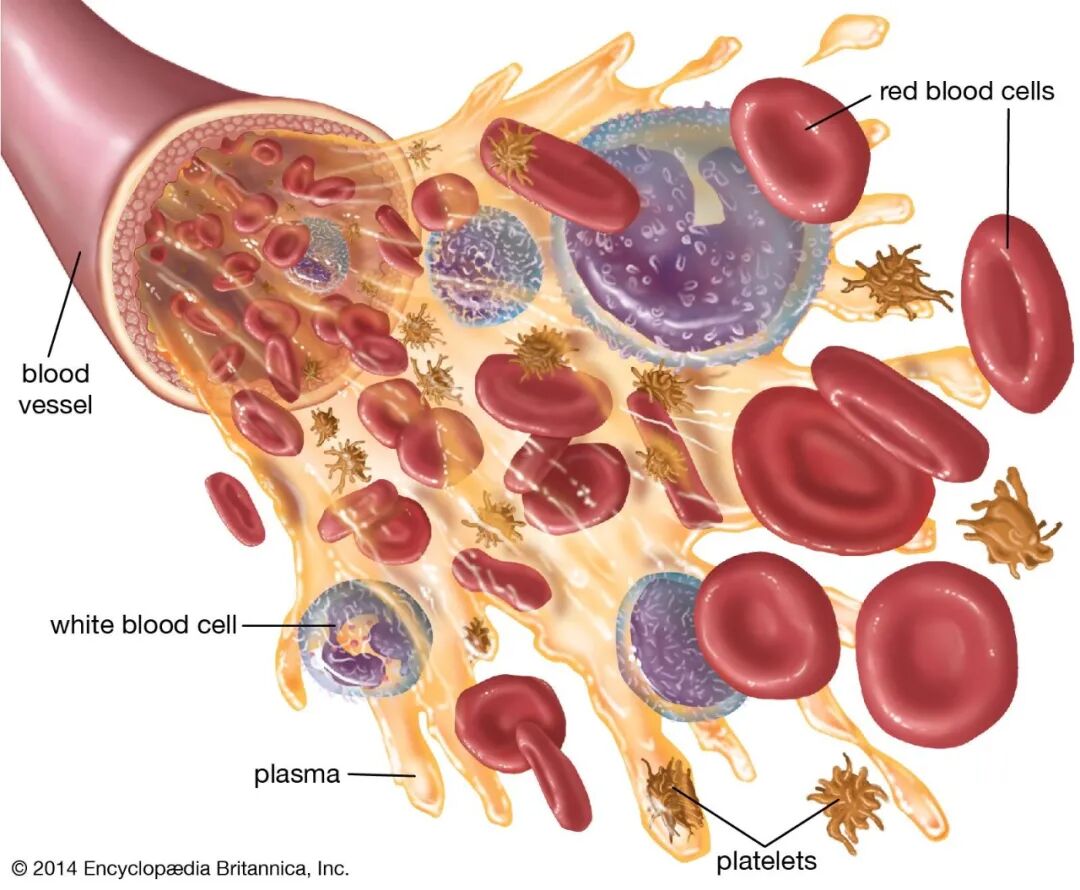
Red blood cells are among the blood’s most important cellular components. They develop in the bone marrow from hematopoietic stem cells committed to the erythroid lineage. Before becoming mature erythrocytes, they pass through the proerythroblast, early erythroblast, intermediate erythroblast, late erythroblast, and reticulocyte stages. Their shape and metabolic functions change throughout this process.
Before mammalian red blood cells fully mature, they can synthesize DNA, RNA, proteins, and lipids, and can perform the tricarboxylic acid cycle and oxidative phosphorylation. Mature cells retain only glycolysis and the pentose phosphate pathway. A mature mammalian erythrocyte consists of a plasma membrane and cytoplasm, with neither a nucleus nor organelles such as mitochondria, so its metabolism is simpler than that of most cells. Glucose is still its main energy source. Red blood cells take up about 30 g of glucose from plasma each day. Most of it is metabolized through glycolysis or the 2,3-bisphosphoglycerate (2,3-BPG) shunt, and only 5%–10% enters the pentose phosphate pathway.
The 2,3-BPG shunt is unique to glycolysis in red blood cells. Rather than being converted directly into 3-phosphoglycerate by phosphoglycerate kinase, glycolytic 1,3-bisphosphoglycerate (1,3-BPG) is converted by bisphosphoglycerate mutase into 2,3-BPG and then into 3-phosphoglycerate. This shunt mainly regulates the oxygen-carrying function of red blood cells. By changing their 2,3-BPG concentration, the body can adjust how much oxygen reaches its tissues.
The pentose phosphate pathway works the same way in red blood cells as it does in other cells, mainly producing NADPH+H+. NADPH and NADH are important reducing equivalents in erythrocytes. They protect membrane proteins, hemoglobin, and enzymes from oxidation and help preserve normal red-cell function.
Without mitochondria, red blood cells cannot synthesize fatty acids de novo, but renewing their membrane lipids is essential for survival. They maintain a normal lipid composition by continuously exchanging lipids with plasma through active uptake and passive exchange.
White blood cell metabolism

Human white blood cells fall into three main groups: granulocytes, lymphocytes, and monocytes/macrophages. Their primary function is to defend the body against foreign invaders.
Granulocytes contain very few mitochondria, so they obtain most of their energy through glycolysis. Monocytes and macrophages can perform aerobic oxidation, though glycolysis still supplies a large share of their energy. A lymphocyte’s metabolic profile depends on its stage of activity. During an immune response, for example, T lymphocytes rely mainly on aerobic glucose oxidation before activation and switch to glycolysis afterward.
Monocytes/macrophages and lymphocytes also synthesize bioactive proteins that support their functions. Monocytes and macrophages, for example, produce many enzymes, complement components, and cytokines. During an immune response, plasma cells derived from B lymphocytes produce the antibodies used in humoral immunity. Mature granulocytes, by contrast, lack endoplasmic reticulum and synthesize very little protein.
Platelet metabolism

Mature megakaryocytes produce platelets. Numerous invaginations form on a megakaryocyte’s surface and meet within the cell, separating portions of its cytoplasm. These fragments enter the circulation through sinusoids in the bone marrow’s hematopoietic tissue.
Glycolysis supplies most of a platelet’s energy, yet inhibiting either glycolysis or mitochondrial electron transport alone does not disrupt platelet activation. Activation is markedly impaired only when both processes are blocked. Glycolysis and aerobic oxidation therefore play complementary roles in platelet metabolism.
 爱发电(点击图片跳转)