DNA Damage and Repair
Author: Shenzhou
Reviewer: Shiye
Faithful DNA inheritance helps keep a species relatively stable. At the same time, DNA is constantly exposed to influences from inside and outside the body, so some change is inevitable. The balance between stability and change preserves a species while also providing the raw material for evolution and the diversity of life.
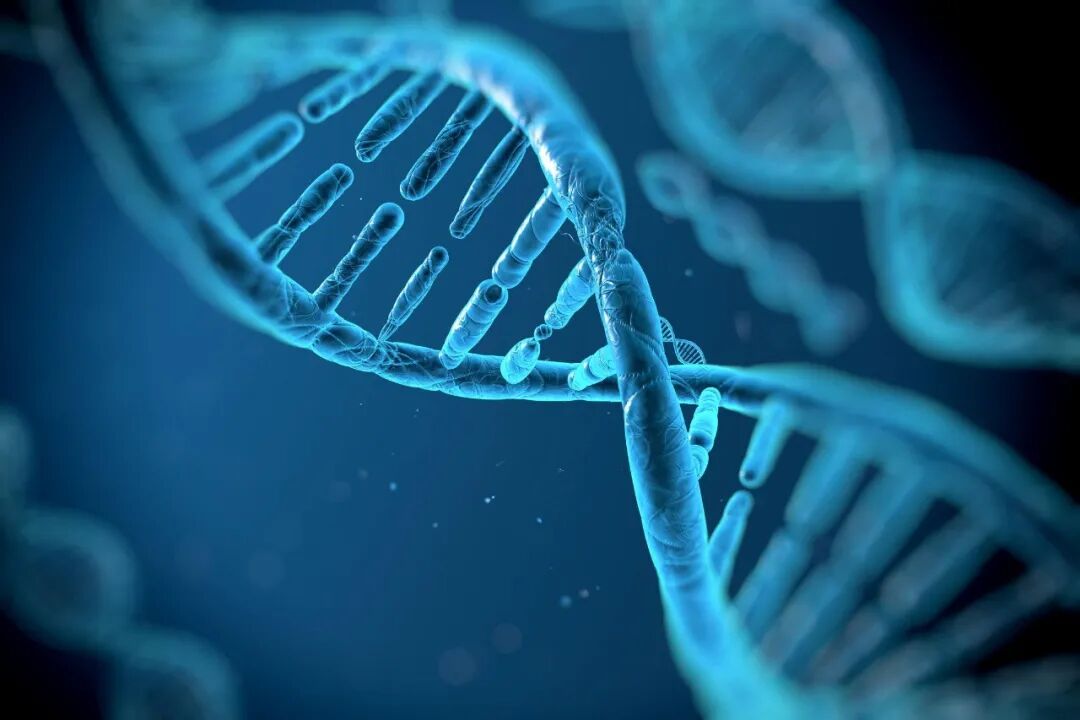
DNA damage comes in many forms, including the loss or chemical alteration of bases, pyrimidine dimers, single- and double-strand breaks, and DNA cross-links.
Damage to Base Structure
Bases and sugar groups can be damaged in several ways. Nitrous acid can deaminate bases, while oxidizing agents can chemically modify DNA bases, including pyrimidines. Deamination may convert one base into another; for example, C can become U.
Heat or a change in pH can hydrolyze the glycosidic bond between a base and the DNA sugar, causing the base to detach.
Base Mismatches
DNA replication can introduce base mismatches as well as insertions and deletions. DNA polymerase catches most mismatches through proofreading, but a tiny fraction remain, at a rate of about 10⁻¹⁰. Insertions and deletions often occur in short repetitive sequences when extra copies are made during replication. Huntington’s disease is one example. Most people have no more than 38 CAG repeats in the huntingtin gene, while an affected person may have 39 or more.
Base analogs and base-modifying agents can also alter a base’s chemical properties and cause incorrect pairing in the DNA sequence.
DNA Cross-Linking
When DNA absorbs short-wavelength ultraviolet radiation, two neighboring thymine bases on the same strand can become covalently linked, forming a thymine dimer, or intrastrand cross-link. Other neighboring pyrimidines can form similar dimers, including CT and CC dimers. These lesions bend and kink the DNA, disrupting transcription and replication.
DNA Breaks
Ionizing radiation is a common cause of DNA breaks, although damage to the pentose sugar or to the bases can also produce them. A single-strand break can usually be repaired quickly by using the complementary strand as a template. A double-strand break is much harder to repair. It may require recombinational repair and carries a substantial risk of chromosomal abnormalities.
The causes of DNA damage can be divided broadly into internal and external factors. Internal causes include reactive metabolites and mistakes made during DNA replication. External causes include radiation, viral infection, and toxic chemicals. The two groups overlap: an outside exposure may trigger a process inside the cell that then damages DNA. The outcome depends on both the severity of the damage and the cell’s capacity to repair it. Cells use several repair pathways, including direct repair, excision repair, recombinational repair, and translesion synthesis. A given lesion may be handled by more than one pathway, and a single pathway may address several kinds of damage.
Photoreactivation
Photoreactivation is a form of direct repair that usually targets pyrimidine dimers. An enzyme called DNA photolyase recognizes a dimer in the DNA strand. When activated by visible light at 400 nm, the enzyme splits the dimer back into its original nucleotide monomers.
Excision Repair
Base excision repair usually begins with a DNA glycosylase. The enzyme recognizes a damaged base and removes it by hydrolysis, leaving an abasic site. An AP endonuclease then cuts the phosphodiester bond on the 5′ side of that site. The complementary strand provides the template for replacement DNA, and DNA ligase seals the remaining nick to restore the strand.
Mismatch repair faces a different problem: how can the cell tell the faulty daughter strand from the parental strand? In bacteria, methylation provides an important clue. The parental strand is usually highly methylated, while the newly synthesized daughter strand has not yet received those marks. The repair machinery uses this difference to identify the strand that needs correction.
Nucleotide excision repair handles damage that distorts the DNA double helix. Unlike base excision repair, it does not need to recognize a particular chemical lesion. Instead, it detects the change in the helix’s shape, cuts the damaged strand on both sides, and removes a short stretch of nucleotides. The intact strand then serves as a template for new DNA, which fills the gap and completes the repair.
Recombinational Repair
Severe damage calls for more complex repair. A double-strand break, for example, leaves no intact complementary strand at the break from which the missing sequence can be copied directly. Cells repair these breaks through either homologous recombination or nonhomologous end joining.
Homologous recombination uses a matching sequence shared by two DNA duplexes, allowing the repaired sequence to be copied accurately. In Escherichia coli, the RecA protein plays the central role. RecA binds the damaged DNA, finds a sister DNA molecule with the same sequence, unwinds it, and aligns it with the broken strands. The intact DNA serves as a template, and other enzymes later resolve the crossover and restore the original structure.
Mammalian cells can also repair double-strand breaks through nonhomologous end joining. This pathway requires little sequence homology, so the repaired DNA may not exactly match the original. Because mammalian genomes are so large, however, an error may fall outside an essential gene, allowing the damaged cell to survive.
The same process can serve as a normal form of genetic recombination. As discussed previously, the immune system uses it to rearrange B- and T-cell receptor genes and immunoglobulin genes.
Translesion DNA Synthesis
When damage is too severe, or when replication has already reached the lesion, the normal repair machinery may not be able to act in time. The cell can then activate one or more emergency pathways that copy past the damaged site first and deal with it afterward.
Failures in DNA repair can cause many diseases. In xeroderma pigmentosum (XP), cells cannot perform nucleotide excision repair, leaving skin cells exceptionally prone to mutation. People with XP therefore face a much higher risk of skin cancer, melanoma, and related diseases. Defects in genes involved in nucleotide excision repair also cause inherited disorders such as Cockayne syndrome and trichothiodystrophy.
DNA damage is generally harmful, but its consequences run in two directions. Mutations can provide the variation on which evolution acts. At the same time, damage can obstruct DNA replication or transcription and, when severe, kill the cell.
 爱发电(点击图片跳转)