
Chang'e 5 Heads to the Moon: What Will She Do This Time?
Author: Saito Shin
Reviewed by: Yuandao
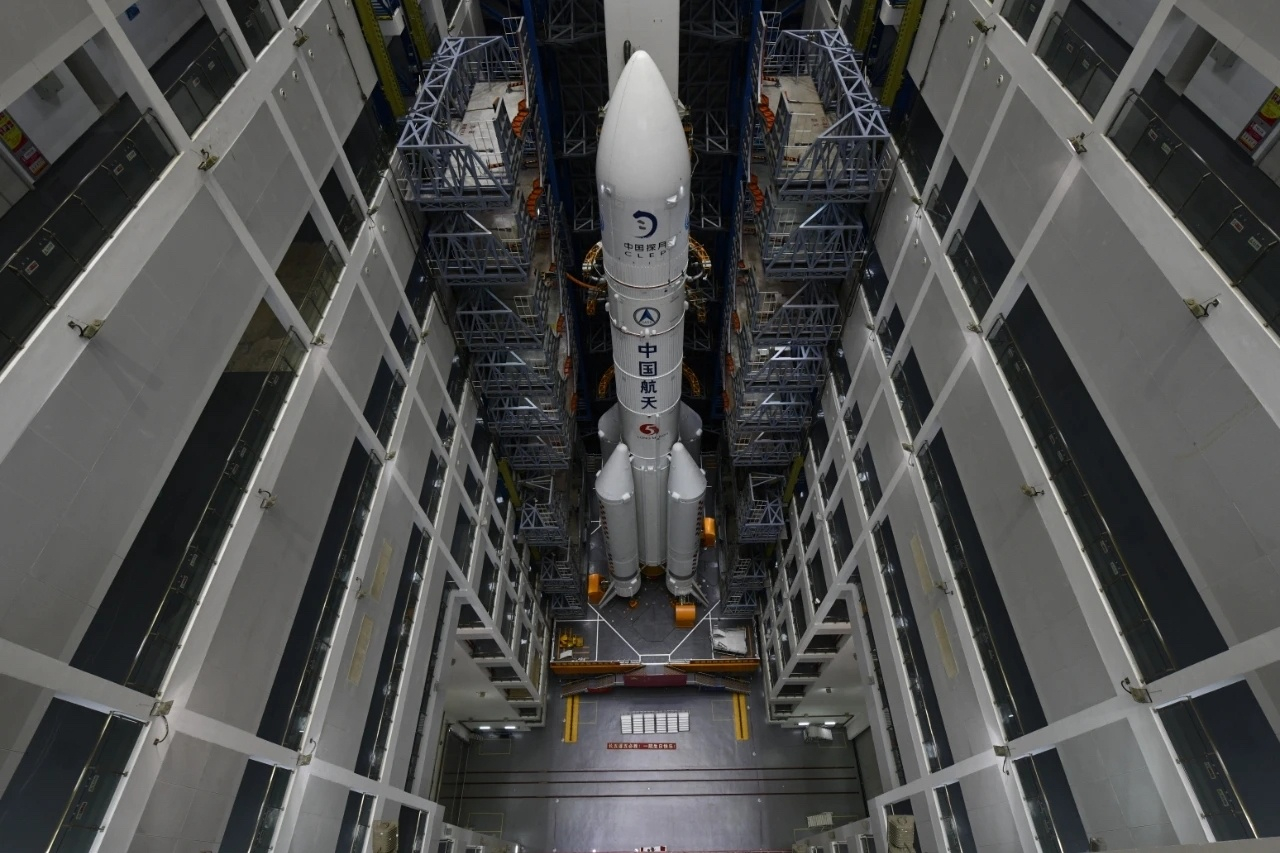
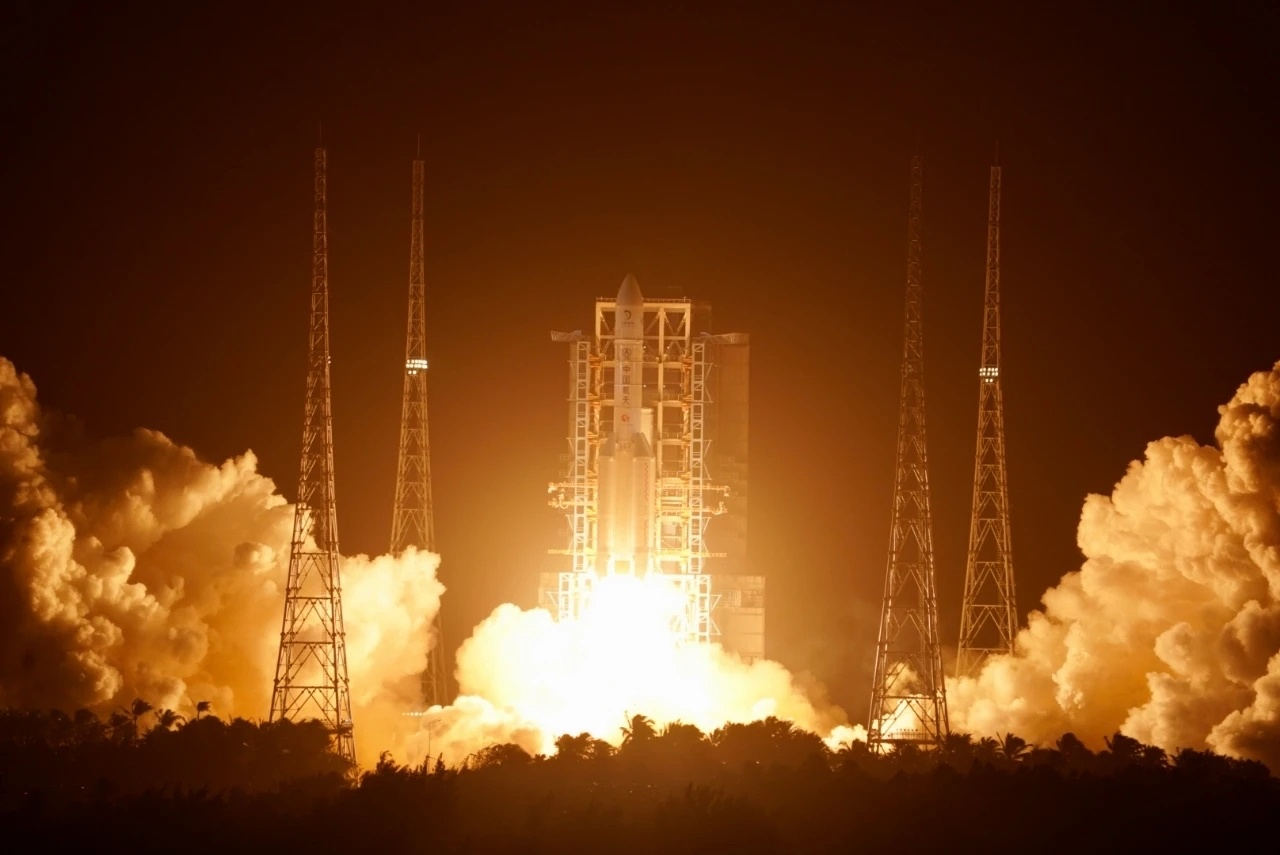
At 4:30 a.m. Beijing time on November 24, 2020, a Long March 5 Y5 rocket carrying the Chang’e 5 probe lifted off successfully from the Wenchang Spacecraft Launch Site in Hainan. CCTV News and the Our Space media platform broadcast the entire launch live, a sign of how confident China’s space program was in the mission. So, what exactly had Chang’e 5 set out to do?
Many readers may be wondering what made the Chang’e 5 mission so technically demanding.
We can answer that question by looking at the mission before and after launch.
Before Launch
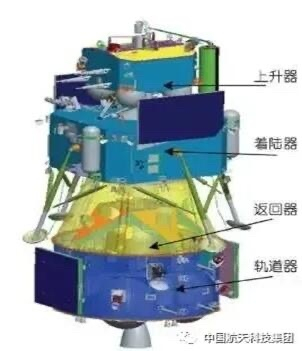
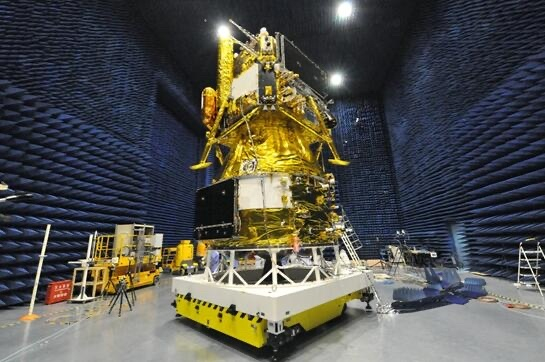
For the prelaunch phase, consider just one task: loading the propellant. Chang’e 5 was fueled after its four spacecraft had been assembled. Its propulsion systems contained more than 600 components or assemblies, including more than 200 in the bipropellant systems. By the time those systems were fueled, Chang’e 5’s ascender, lander, returner, and orbiter had already been joined into a single stack. This configuration more closely matched the vehicle’s in-flight state, simplified final assembly, and reduced the technical risks of that process. It also made fueling far more difficult and hazardous than loading propellant into each spacecraft separately. Hong Xing, deputy chief designer of the Chang’e 5 probe system and chief model designer at the Sixth Academy, explained: “Twelve tanks had to be divided into six groups for loading. There were two kinds of tank: metal-diaphragm tanks and surface-tension tanks. Some had to be evacuated, while others remained at atmospheric pressure. Some required the propellant to be cooled, while others needed it kept at room temperature, so the filling method differed in every case. The loading sequence also crossed over: first fuel, then oxidizer, and finally back to fuel. In addition, the pipes were long, with many lines and branches … there were many more points requiring attention.” In his view, fueling Chang’e 5 in its four-spacecraft configuration was the most complex loading operation in the history of China’s space program. The numbers give some idea of the challenge: “Compared with fueling the separate spacecraft, fueling the complete assembly increased the number of interfaces with the probe from five or six to nearly 20, and the number of equipment-side loading lines from five or six to nearly 20. In the combined configuration, many filling ports were higher, making the pipe routes more complex and much longer. Previously, keeping the pipes leak-free meant managing five or six lines totaling several dozen meters. Now, nearly 20 lines totaling about 300 meters had to be managed simultaneously.” In its stacked configuration, Chang’e 5 “stood eight or nine meters tall, with many protruding components, such as antennas, already installed. While working, the loading technicians had to lean half their bodies out at height and reach into a jungle of equipment. Besides carrying out their own operations precisely, they could not touch any other component—not even drop a washer.”
After Launch
Developed by the China Aerospace Science and Technology Corporation, Chang’e 5 was China’s first lunar probe built for a robotic sample-return mission. With a total mass of about 8.2 tonnes, it was also the heaviest and most complex space probe the country had developed up to that point. The probe would collect samples autonomously on the lunar surface. Its ascender would then lift off and rendezvous and dock autonomously with the orbiter in lunar orbit, allowing the samples to be returned to Earth. If the mission succeeded, China would become the third country, after the United States and the Soviet Union, to bring samples back from the Moon. It would also complete the final, crucial step in China’s three-stage lunar exploration plan: “orbit, land, and return.” Chang’e 5 was expected to achieve four other firsts for China’s space program: automated sampling on the lunar surface; liftoff from the lunar surface; an uncrewed rendezvous and docking in lunar orbit, 380,000 kilometers from Earth; and a return to Earth carrying lunar soil at close to Earth’s escape velocity, also known as the second cosmic velocity.
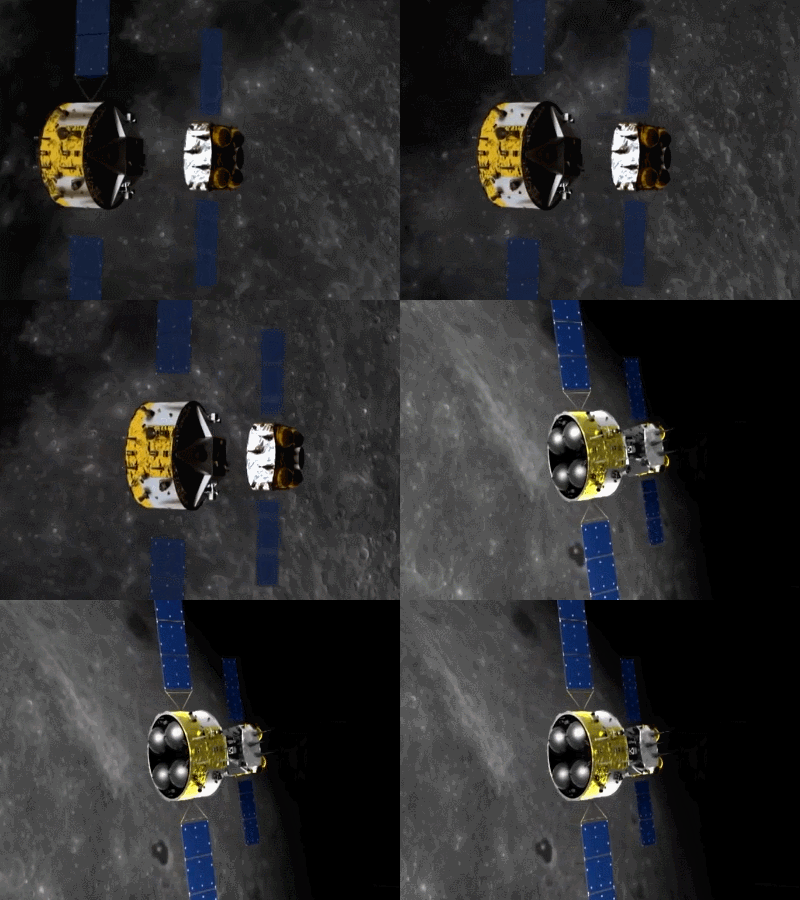
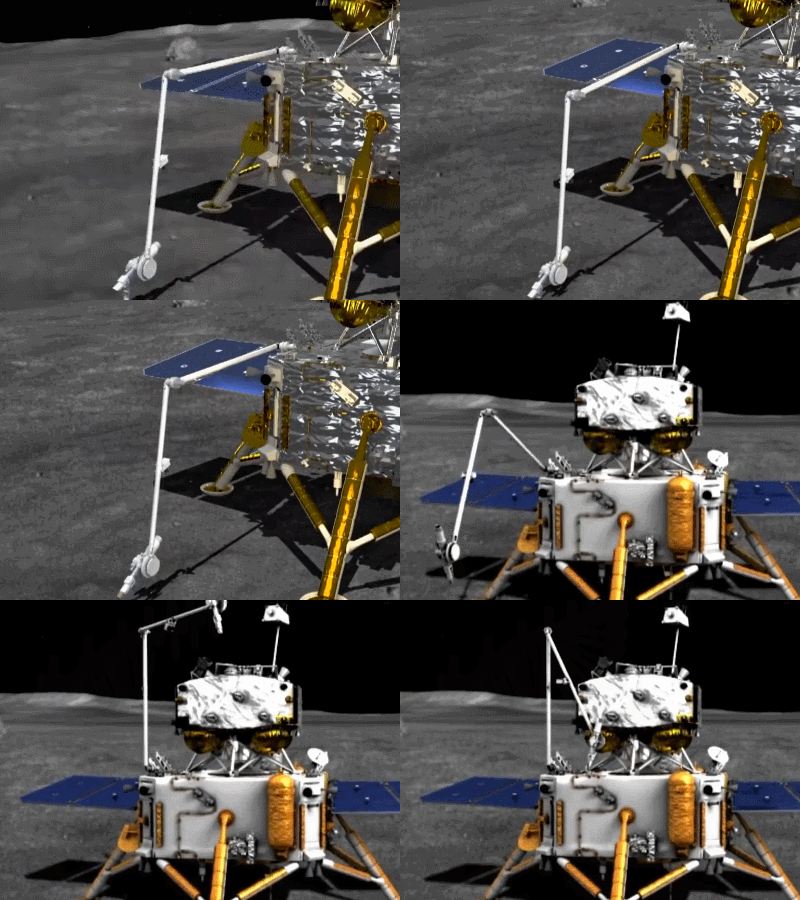
Chang’e 5 was expected to collect about two kilograms of lunar material, including small rocks from the surface and a core from roughly two meters below it. Its landing site, the volcanic plain of Mons Rümker on the western edge of Oceanus Procellarum, may contain basalt only 1.21 billion years old. By comparison, the lunar soil returned by the Apollo missions was between 3.1 and 4.4 billion years old on average. These younger samples could offer valuable evidence of the Moon’s later volcanic activity. Beyond collecting lunar material, Chang’e 5 would pursue eleven technical and scientific objectives, including validating a heavy-lift launch vehicle, flying an Earth–Moon transfer trajectory, braking near the Moon, entering lunar orbit, descending to and ascending from the lunar surface, rendezvousing and docking in lunar orbit, waiting in lunar orbit, transferring from the Moon to Earth, and reentering the atmosphere at Earth’s escape velocity.
 爱发电(点击图片跳转)