Fossils in the Milky Way
Author: Kon
Reviewer: Nancy
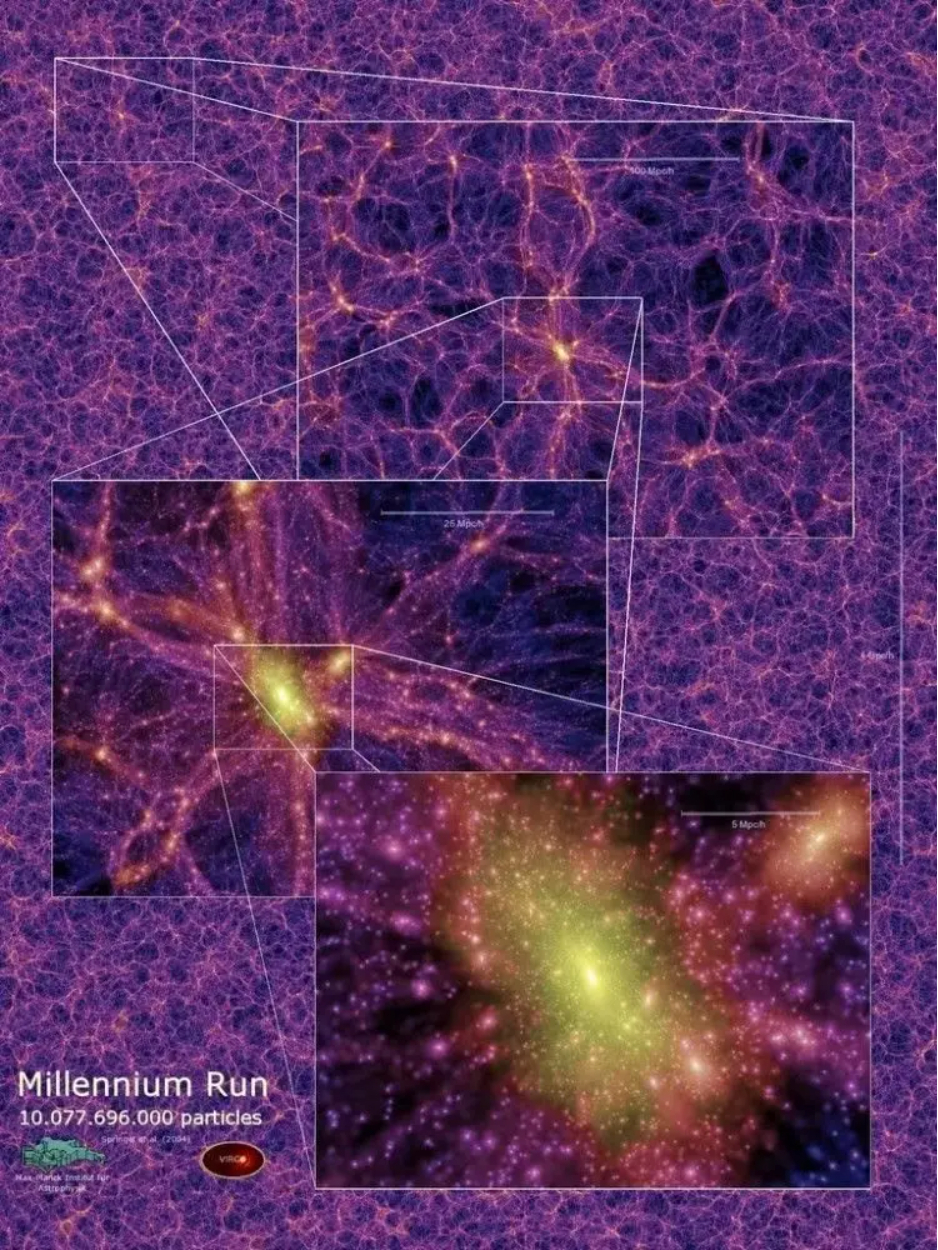
Modern cosmology holds that galaxies undergo many mergers as they evolve from their formation to the present day. Their dynamics are too complex for a complete analytical treatment, so researchers generally turn to direct computer simulations of vast numbers of point particles. Astronomy, of course, is ultimately an observational science. Researchers measure the properties of galaxies at different distances—the farther away a galaxy is, the further back in cosmic time we see it, when both the universe and the galaxy were younger—and compare those observations with numerical simulations to determine how well a theoretical model describes reality.
Reconstructing the evolutionary history of galaxies has long been an important problem in astronomy. Because we live inside the Milky Way, our own galaxy is an exceptionally valuable object of study, and tracing its history offers an effective test of current theories. Advances in observational technology have now made that work possible, and “galactic archaeology” has become a major field in the era of astronomical big data.
Galactic archaeology uses the chemical and dynamical properties of stars in the Milky Way to identify unusual structures such as stellar streams and tidal debris. Stars carry a kind of memory. The environments in which old stars formed were very different from their present surroundings, as were the abundances of different heavy elements. Those signatures can still be read in the atmospheres of low-mass stars whose main-sequence lifetimes are especially long. Stars also preserve aspects of their original dynamics. If a group of stars was accreted from another galaxy at some stage in the Milky Way’s history, its motion may differ sharply from that of the Galaxy’s native stars while remaining highly coherent within the group itself. Substructures with distinctive chemical and dynamical signatures can therefore survive as a kind of fossil evidence.
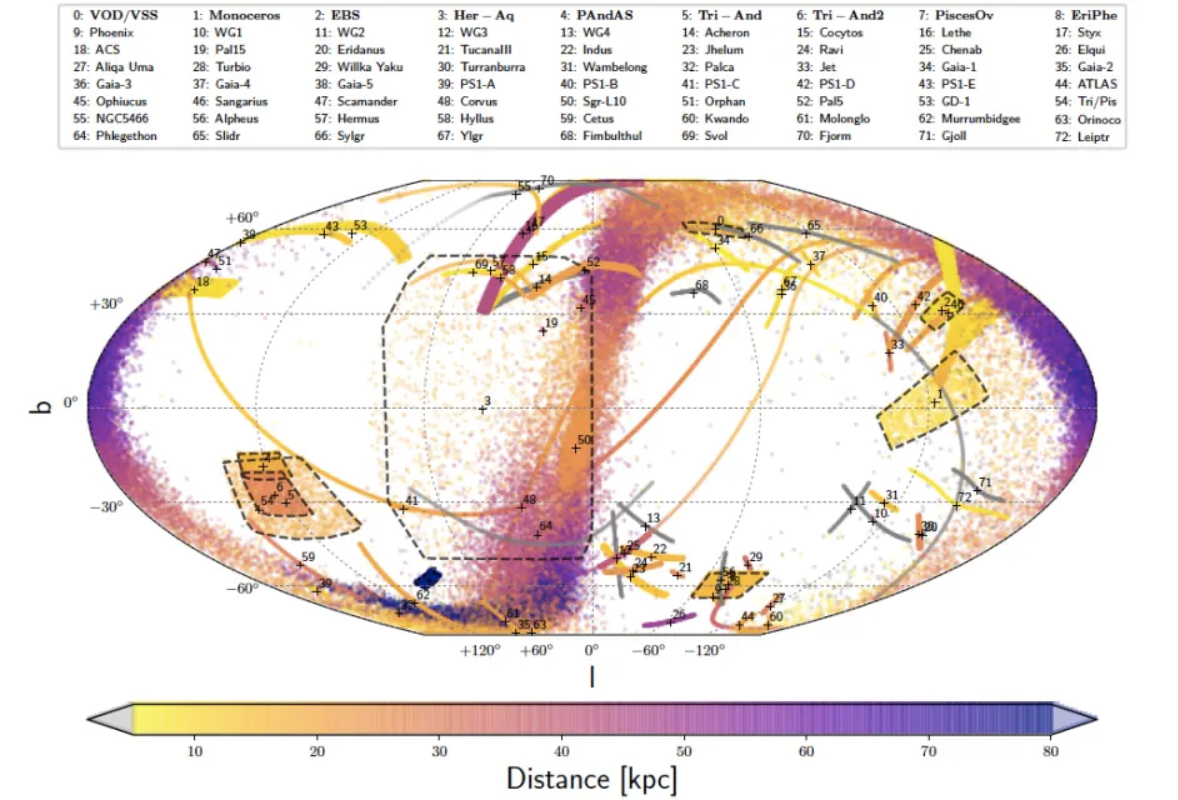
Astronomers have now found many such substructures within the Milky Way. Some appear to be the remains of globular clusters torn apart by tidal forces; others are traces left by past mergers between the Milky Way and dwarf galaxies.
 爱发电(点击图片跳转)