The Feathered Sprites on My Campus
Author: 蜗牛
Reviewer: 一毫秒的永恒
A winter morning is cold and still. The sun has not yet cast its highlights across the world, so everything retains its natural color. I love this hour: no noise, no distractions, no rush before first period. I can leave home at an easy pace, clock in, and bring my binoculars along to watch the birds on campus.
The day is off to a good start. Soon after leaving home, amid the magpie calls in the little square by the water tower, I pick out a faint zi-zi from the sparrows’ chatter. Probably a tit. Through my binoculars, it looks like a great tit, though it might be a Japanese tit. I confuse the two every time. Even familiar birds make me look closely.
Beyond the small central gate, the plane-tree avenue between the sports field and the shops is a veritable “path of angels”—or, more accurately, angel droppings. Broad patches of bird mess merge across the pavement. Perhaps the birds meet here every day. Around the turn from spring to summer, many people on this road have been challenged by azure-winged magpies. First, a large bird appears on a low branch off to one side and lets loose a scolding barrage. The moment you pass its perch, a gust brushes the back of your head. By the time you turn around, the magpie has declared victory and retreated. It never quite attacks; it merely circles extremely close behind and above your head once you pass. I have no idea what kind of tactic that is. Once, I kept my head turned and watched the bird deliver its warning. Under my stare, it seemed too embarrassed to make a move. I eventually backed out of its territory, privately delighted for some time by the helpless look in its eyes.
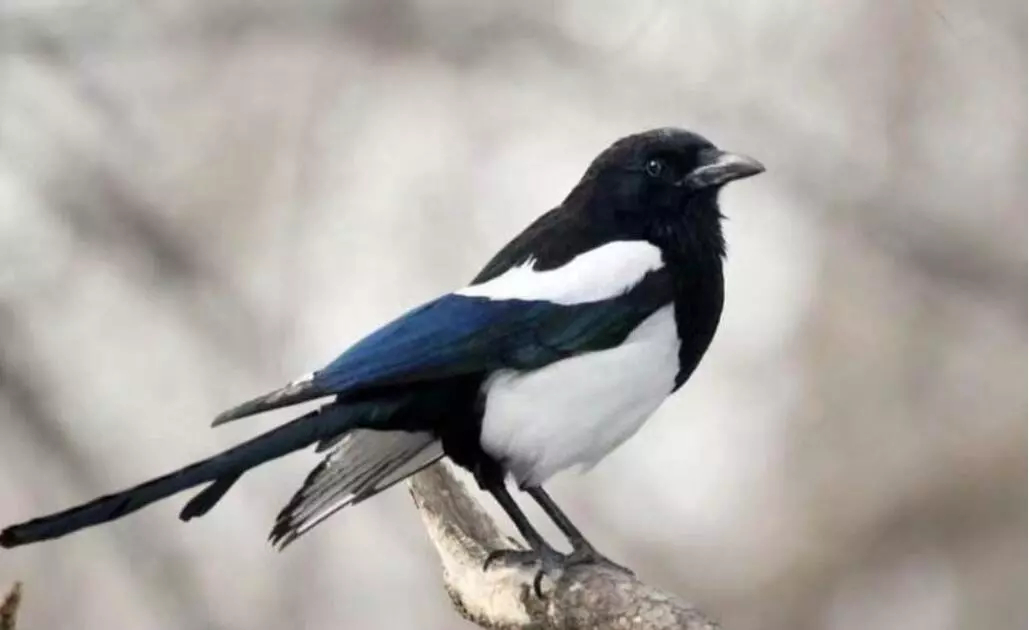
Real attacks do happen, though rarely. A close friend told me that she was playing with her son on this road when a young azure-winged magpie fluttered nearby. The two- or three-year-old ventured a little too close, and an adult bird dived at him. She rushed forward to shield the child. A day later, walking the same stretch without her son, she was swooped from behind by the adult, which pecked the top of her head. It truly hurt. She was wearing different clothes, so how had the bird recognized her? To us, birds of the same species and size can be nearly impossible to tell apart. I do not know whether the bird I meet on the road is the same one I see outside my window. How, then, can a bird single out the same person in different clothes from a crowd?
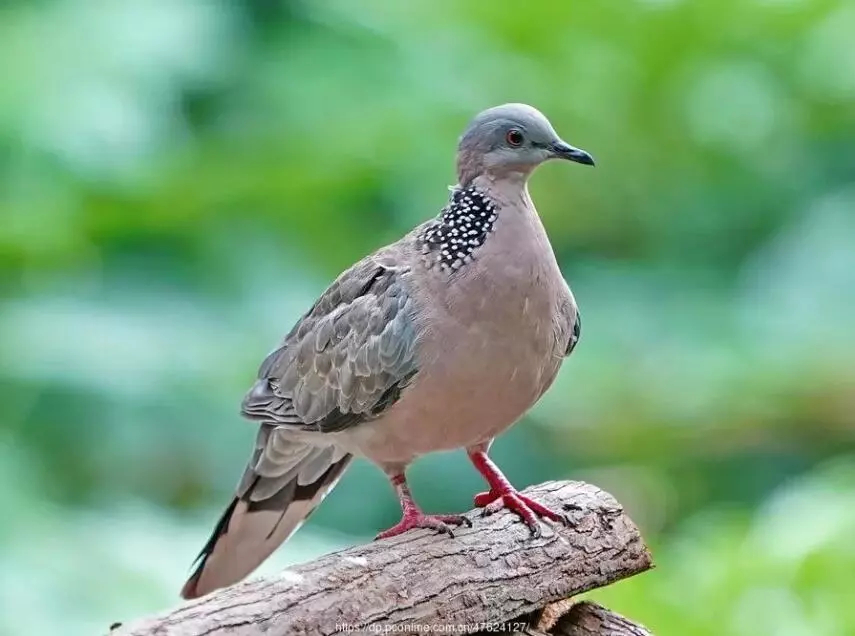
Even on this avenue ruled by azure-winged magpies, a dove will occasionally hide in silence. Whenever I spot one, my eyes go straight to its collar. So far, campus has shown me spotted doves in black-and-white pearl necklaces, but never an Oriental turtle dove with a striped black-and-white collar. I will keep checking every dove I meet.
After twenty-two years on this campus, I know every tree and every blade of grass. A tree at the southwest corner of the sports field became our “king of trees” thanks to a leaking underground pipe. The same leak later led to its crown being cut off. But a king remains a king: the tree poured all its stored strength into the largest leaves we had ever seen and once again became the center of attention. Here, too, I once encountered a grey-headed woodpecker and a flock of white-cheeked starlings stopping on their southward migration.
Along Magnolia Avenue, red-billed blue magpies and light-vented bulbuls greet me cheerfully from the magnolias or the cedars in the rose garden. I know where they are headed. The bulbuls will sing from the pines south of the western classroom building. The blue magpies will furtively rummage through the trash can beside the western wall. Do they not know about the one by the northeastern wall, or have the crows claimed it?
After clocking in at the office building, I can stroll over to the little garden in front of the western classroom building and try my luck. In the morning, that garden is luckier than the one in front of the eastern building; in the afternoon, the reverse is true. After some thought, I decided sunlight must be the reason. A row of tall cedars stands along the gardens’ southern edge, with the school wall behind it. In the morning, the trees keep every ray of sunlight out of the eastern garden, while sunshine reaches straight across from the office square to the western one. Here I have watched yellow-bellied tits hopping through willow branches. Here, too, students and I have quietly watched a crowned hoopoe on a winter morning, cold and still, before the sun had cast its highlights across the world and while everything retained its natural color—the hour I love, free of noise, distraction, and the rush before first period, when I can leave home at an easy pace, clock in, and bring my binoculars to watch campus birds. Even when luck offers nothing else, the light-vented bulbuls singing at full voice from the cedar tops never disappoint. Their calls at this hour vary endlessly and never become tiresome. From the little garden, I continue west to the wall and then turn north. Soon I will see my favorite sprite. The thought brings a little anticipation and a little excitement.
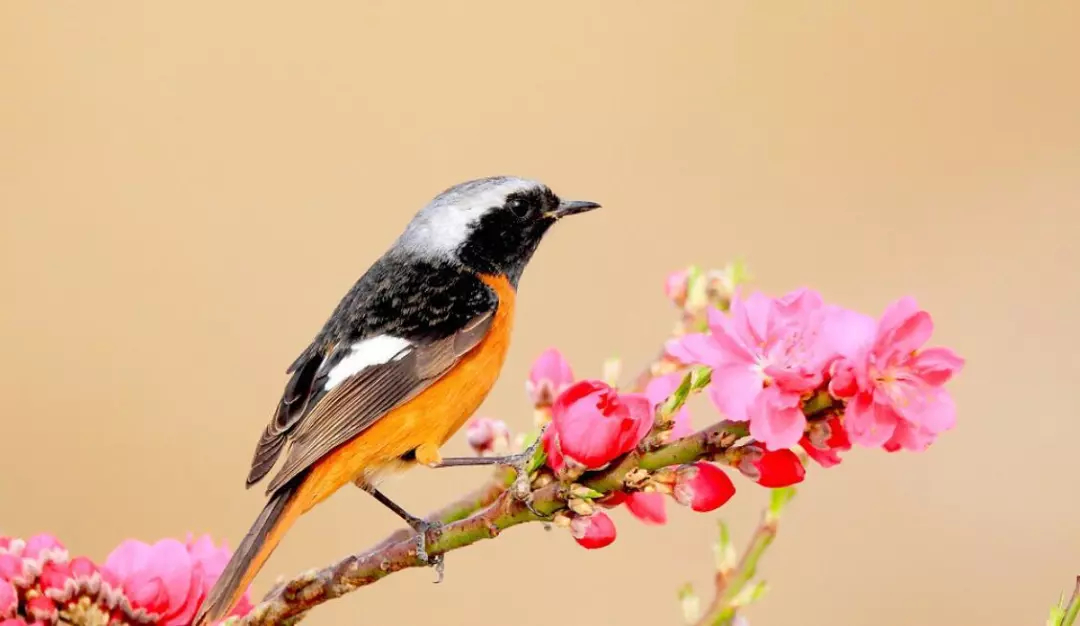
First comes the Daurian redstart, a milestone in my life as a birdwatcher. Because of this little creature, I searched Baidu for two years and accidentally joined a QQ group for bird sellers before finally finding the “Chinese Birdwatchers” group. These days, I no longer search everywhere for the redstart’s hiding place. Its thin, crisp, metallic di is enough to make me picture it bobbing its head and flicking its tail. In that respect, it resembles the wagtails that often work out on the sports field.
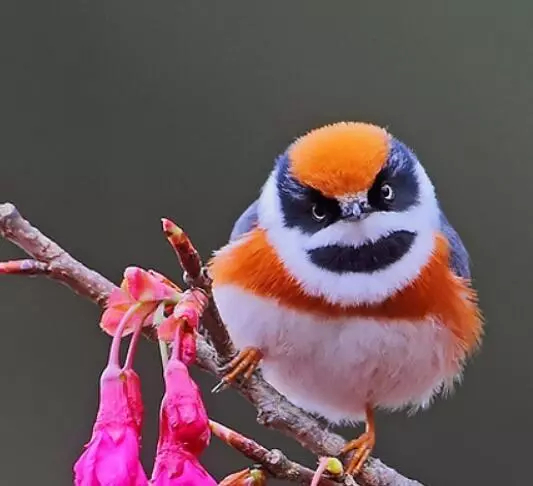
The other is the black-throated bushtit, affectionately known as the “little redhead.” Spotting one of China’s smallest birds takes both patience and luck. I usually listen first for a very soft zi-zi. With experience, a faint sound nearby becomes distinguishable from a loud one far away. I stand still and watch. When something flickers among the branches, I raise my binoculars, and the little bird appears: a narrow white line around its neck above a black, diamond-shaped patch. Then I check the forehead. If the crown is chestnut-red rather than pure black, it is my little redhead. Only when my arms and back ache from holding the binoculars so long do I lower them and walk away content. Beside a bushtit scarcely visible to the naked eye, a large red-billed blue magpie makes the scene feel perfectly peaceful.
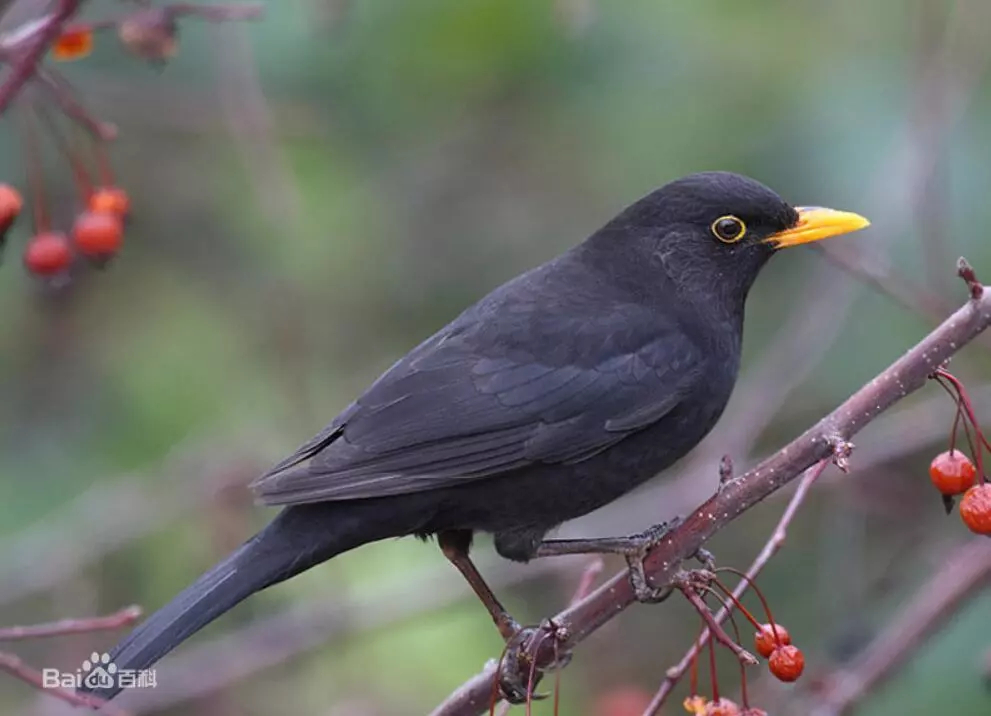
Farther on is the western dining hall, an excellent spot. Birds can eat, drink, play, brawl, and argue there, with only a wall separating them from the grove outside the school. It offers both an outpost and an escape route, so it is no surprise that black drongos make it their early-summer base. I still wonder whether the great spotted woodpecker fills its stomach in the trees or on the ground in front of the dining hall. Two winters ago, a flock of light-vented bulbuls quarreled with a blackbird here so loudly that I heard them from twenty meters away. Unable to see the blackbird at first, I assumed an azure-winged magpie had upset the bulbuls. The magpies had nothing to do with it; only then did I spot the blackbird. I saw no blackbirds for the rest of that winter or the next, and thought they had left campus for good. Then, all at once, there they were before me: one, two, five—no, more still—a whole flock of at least seven or eight. At the sight of me, they scattered from a tree in the flower bed to the great cedar by the dining-hall entrance, over the wall a few meters away, then back again to hide among the privet leaves. One greedy bird on the ground refused to leave. Its orange-yellow bill gave it an endearingly foolish look. Standing still, it held its head high and alert. The moment it began walking, its anxiety showed: head down and thrust forward, a few hurried steps, then a halt with head raised, then neck out and head down for another quick dash. The pattern repeated until I was laughing to myself. Compared with a magpie’s calm, unhurried stride, it made me spare a moment’s sympathy for the pressures these birds face.
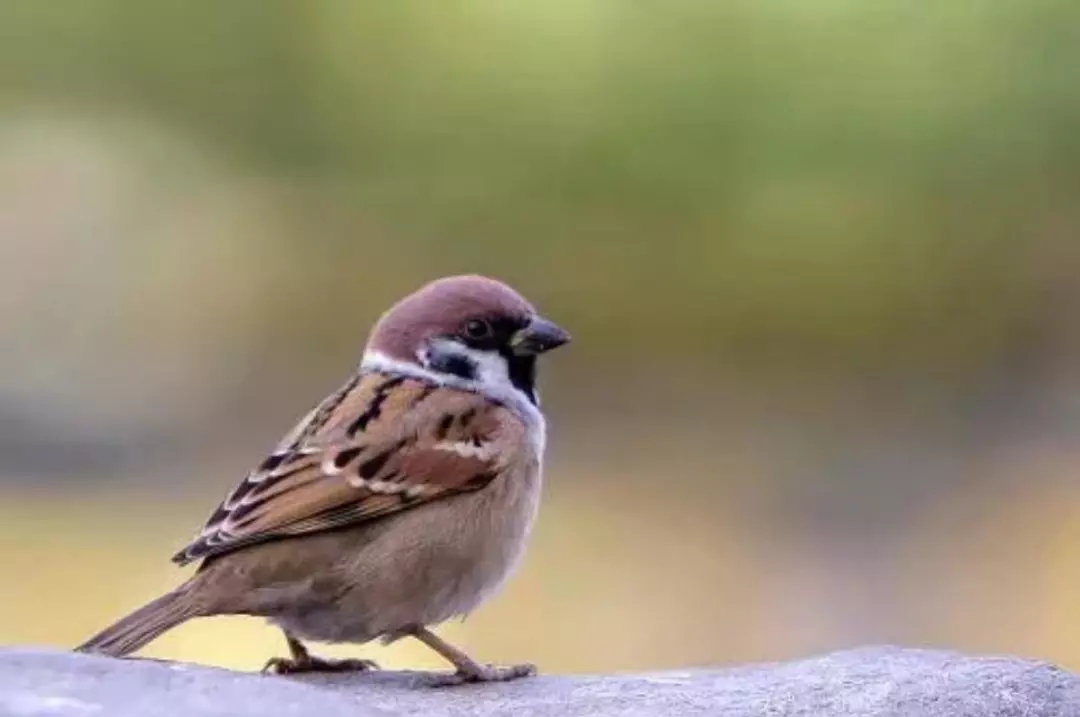
This beautiful campus has been my home. Now I am about to leave the place where I have lived and worked for twenty-two years, and I am deeply reluctant to go. I remember the pagoda tree between the dormitories, with its flat hornet’s nest shaped like a sesame cake. I remember Oriental greenfinches calling from the crowns of white poplars. But do they remember me—the person who, before learning the ethics of birdwatching, once frightened apart a mixed flock of sparrows and greenfinches feeding on the sports field, simply to tell more quickly which bird belonged to which species?
The author’s school: Mianchi High School, Henan
 爱发电(点击图片跳转)