
Tumors Explained
Author: 绿水青山
Reviewers: 食野; 未名
Most of us have encountered the word “tumor” in everyday life without necessarily knowing its technical definition. The word often inspires immediate fear. Malignant tumors are generally difficult to cure and can have an enormous effect on a patient’s daily life. Here, we will look at some basic facts about tumors.
In biology, a tumor is a neoplasm formed by the abnormal proliferation of the body’s cells—in other words, a mass produced by the abnormal growth of body tissue. It commonly appears as a localized mass of abnormal tissue. Tumors form when various tumor-causing factors severely disrupt the regulation of cell growth.
This definition tells us that a tumor should not exist when the body is functioning normally. What, then, characterizes neoplastic proliferation? First, it is uncoordinated with the body and harmful to it. It is also generally clonal, and tumor cells lose their ability to differentiate and mature to varying degrees. Their original function, morphology, and metabolism usually become abnormal. At the same time, they grow vigorously, escape control, and acquire a degree of autonomy. Early in tumor formation, an external carcinogenic factor alters a cell’s genes. The cell escapes control and can reliably pass those altered genes to the next generation. Even if the external factor is later removed, the tumor continues to proliferate on its own. A tumor is generally composed of daughter cells descended from the same original cell.
With the features of neoplastic proliferation in mind, we can turn to the usual morphology of tumors. A tumor mass is most often solitary, although several may appear at once. Tumors take many shapes, including polypoid, papillary, cauliflower-like, nodular, and ulcerative forms. Their colors vary as well. A cut surface is generally gray-white or gray-red, although its color also depends on blood content, pigments, and other factors. Lipomas, for example, are usually yellow, whereas hemangiomas are often dark red or purplish red. Tumors can also be classified as benign or malignant according to their growth. Medical naming conventions differ between the two. A malignant epithelial tumor is generally named for its “primary site” followed by “carcinoma,” whereas a benign tumor is named for its “location” followed by “tumor” or “-oma.” There are exceptions: a malignant tumor arising in mesenchymal tissue, for example, is called a “sarcoma.”
I. Benign tumors
One clear distinction between benign and malignant tumors is the way they grow. A benign tumor expands in place and does not spread to other parts of the body. A malignant tumor grows invasively and may metastasize from its primary organ to other sites. At the cellular level, benign tumors show relatively few atypical mitotic figures and grow more slowly. A benign tumor generally remains in a single location and is usually enclosed by a fibrous capsule. It therefore tends to cause less harm, with damage generally limited to local compression or obstruction. Treatment is comparatively straightforward. Most benign tumors have a good prognosis and do not readily recur.
II. Malignant tumors (cancer)
Malignant tumors are generally called cancer. Because they grow invasively, they can seriously affect surrounding tissues, spreading through them much like tree roots. Atypical mitotic figures are common in malignant tumor cells. During metastasis, genetic changes also alter the cells’ adhesion, motility, and ability to degrade the extracellular matrix, allowing them to break through the basement membrane and invade surrounding tissue. If they then enter blood or lymphatic vessels, leave those vessels at a suitable point, and continue proliferating elsewhere, the tumor has metastasized. This is a principal reason malignant tumors threaten patients’ lives. Besides causing greater harm, malignant tumors require more complex treatment, and the outcome is generally less satisfactory.
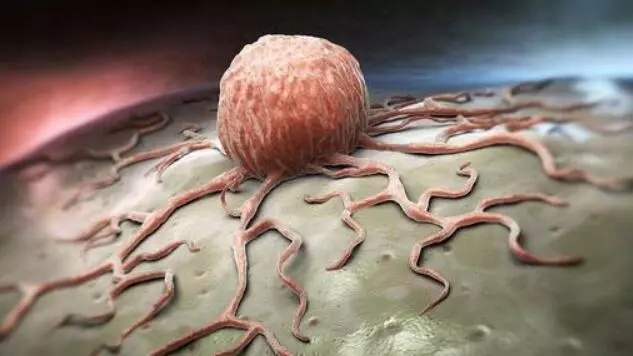
The growth rate of tumor cells is generally affected by the following factors:
- The doubling time of the tumor cells;
- The growth fraction—the proportion of cells in the population that are proliferating;
- The production and loss of tumor cells;
Research has found that the doubling time of cells in most malignant tumors is similar to, or even longer than, that of normal cells. The rapid growth of malignant tumors therefore does not come from a shorter doubling time. The latter two factors have a greater effect on their growth rate.
The distinction between benign and malignant is not absolute; it is a boundary drawn by people. Some tumors have tissue morphology and biological behavior that fall between the two. Such tumors generally tend toward malignant transformation or display some features of malignancy. An ovarian borderline serous tumor, for example, lies between benign and malignant. Some benign tumors may also become malignant if they are not treated promptly. In exceptionally rare cases, a malignant tumor may stop growing or even regress spontaneously for reasons such as stronger immune function.
 爱发电(点击图片跳转)