
Five-Minute Immunology: Phagocytes and Innate Immunity
Author: Lüshui Qingshan
Reviewer: Weiming
Previously, we looked at several mechanisms of adaptive immunity. This time, we turn to innate immunity.
Innate immunity is provided by the body’s physical barriers, immune cells such as phagocytes, and antimicrobial substances in body fluids. Here, we will examine the mechanisms by which phagocytes engulf and kill pathogens.
The process begins with chemotaxis: a phagocyte moves in a particular direction, from an area with a low concentration of chemoattractants toward one with a higher concentration. These chemical signals include certain components of the complement system and substances secreted by other immune cells.
Phagocytosis
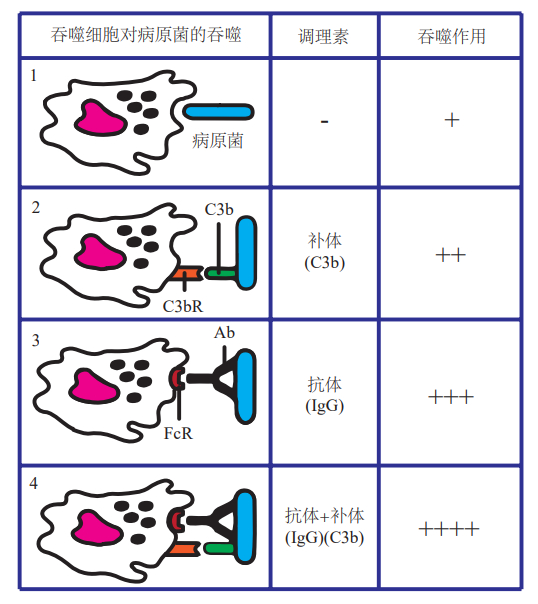
Once a phagocyte reaches a pathogen, it begins to engulf it. A pathogen coated with antibodies or complement is much easier to capture, greatly enhancing phagocytosis. This effect is called opsonization. After the pathogen has been engulfed, a phagosome forms inside the cell. Lysosomes then fuse with the phagosome, killing and digesting the pathogen within it.
Microbial killing
Phagocytes can kill microbes in several ways. These mechanisms fall broadly into two categories: oxygen-dependent and oxygen-independent killing.
Oxygen-dependent killing
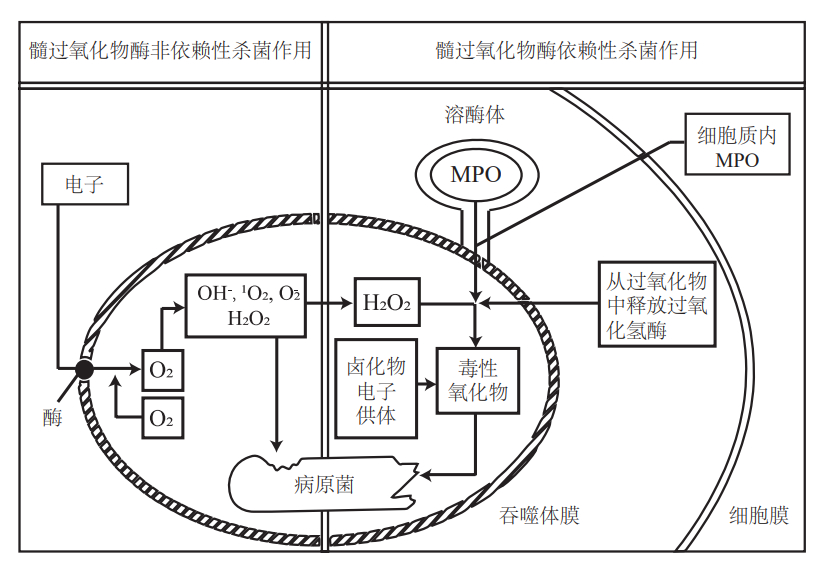
In these mechanisms, molecular oxygen participates in killing the pathogen. Oxidases convert oxygen into various reactive oxygen species, which attack microorganisms directly or work with other mechanisms to destroy them.Oxygen-independent killing
These mechanisms kill pathogens through other physical and chemical means, while the phagocyte obtains energy through anaerobic respiration. Proton pumps actively acidify the phagosome, sharply lowering its pH. The acidity itself has an antimicrobial effect and also activates a number of enzymes. Lysozyme, for example, breaks down bacteria, while lactoferrin suppresses their growth by binding the iron they need to reproduce.
Incomplete phagocytosis
Phagocytosis usually proceeds normally, but there are exceptions. In a host with weakened immunity, some intracellular bacteria, such as Mycobacterium tuberculosis, and certain viruses may be engulfed without being killed. Sheltered inside a phagocyte, these pathogens may even reproduce. They can eventually rupture and kill the cell, or travel with it into the bloodstream and spread the infection to other tissues.
 爱发电(点击图片跳转)