
Anyone Promoting Watson's Child-Rearing Method Is Either Malicious or Foolish
Author: 张贤
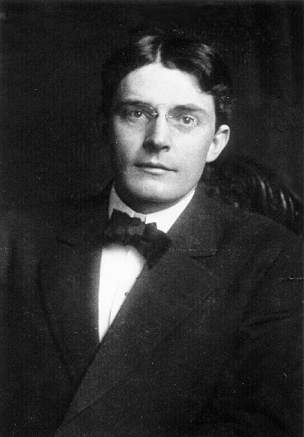
When people hear the advice that a child who falls should not be helped up, many think of the American psychologist John Watson. His method of making babies “immune to crying” was once enormously popular. Its central rule was simple: do not pick up a child who is crying; wait until the crying stops. As the delay grew longer, the child would supposedly stop fussing and become a self-reliant, independent “perfect child.”
The theory still has many adherents, but from the perspective of modern psychology, it rests entirely on a misunderstanding of human nature.
Research indicates that when an infant’s cries are repeatedly ignored, the infant’s brain releases high concentrations of cortisol, a stress hormone. Prolonged psychological stress of this kind may damage the developing hippocampus. The child eventually stops crying not because they have learned independence, but because the brain, having received no positive response, has entered a passive coping mode. This may lead to insecure attachment or an avoidant coping pattern. Such an early emotional rupture is thought to be associated with a higher risk of depression and social difficulties in adulthood.
The famous rhesus monkey experiments in the history of psychology showed that young primates prefer to attach themselves to a figure offering contact comfort, such as holding and stroking, rather than simply to a source of food. Only children who form a secure “attachment relationship” early in life have the confidence to explore the outside world. Watson’s approach, in essence, destroys the safe haven from which a child can explore.
Influencers who are either malicious or foolish often market Watson’s child-rearing method as “advanced Western education,” turning some parents into devoted followers. In fact, the method was disproved long ago, and mainstream Western educational and medical organizations, including the American Academy of Pediatrics, explicitly oppose it. Watson’s theory owed much of its popularity to the industrial era’s utilitarian pursuit of “efficient parenting.” I therefore urge parents to comfort and support a child promptly after a fall. That does far more for healthy development than deliberately trying to train the child to be independent.
A Brief Introduction to John Watson
John Broadus Watson (January 9, 1878–September 25, 1958) was an American psychologist, the founder of behaviorist psychology, and the 1915 president of the American Psychological Association. His main areas of research included the theory and practice of behaviorist psychology, emotional conditioning, and animal psychology. He argued that psychology should study behavior rather than consciousness and advocated examining the relationship between behavior and the environment. In his view, psychology should investigate outward, observable behavior objectively. He played a major role in making psychology more objective and had a profound influence on the field in the United States.
 爱发电(点击图片跳转)