
Apophis's 2029 Flyby: A Rare Observing Opportunity
Author: A Millisecond of Eternity
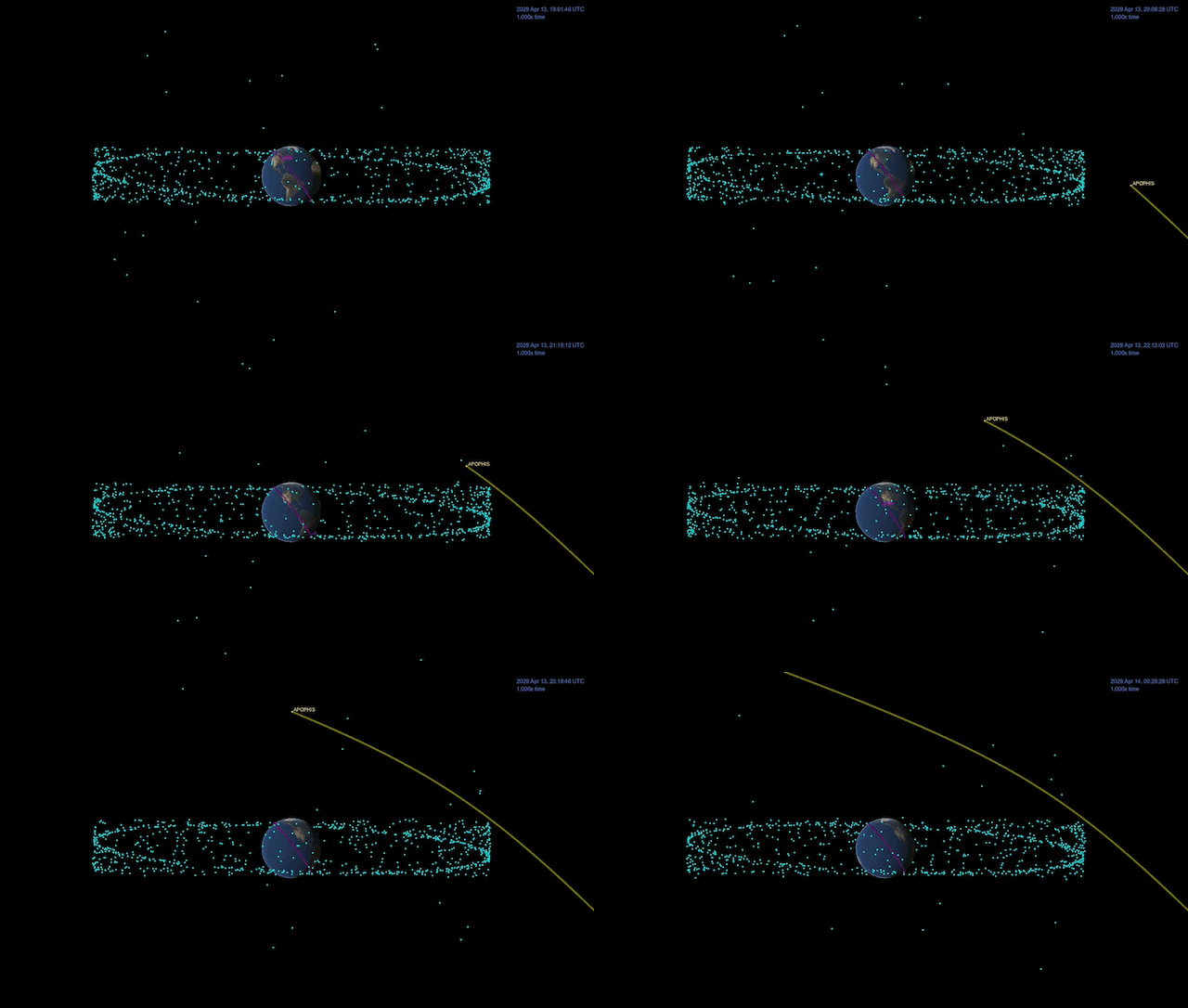
On April 13, 2029, a speck of light in the sky will grow brighter and move faster. At one point, it will cross more than the apparent width of the full Moon in a single minute and shine about as brightly as the stars of the Big Dipper. The object will be neither a satellite nor an airplane, but the roughly 340-meter near-Earth asteroid (99942) Apophis. It will skim past Earth about 31,000 kilometers above the surface, closer than some artificial satellites; geosynchronous satellites orbit roughly 36,000 kilometers above the equator. That may sound frightening, but more than a decade of tracking and orbital calculations has shown astronomers that Apophis will not hit Earth. Instead, the flyby will offer a rare chance to study an asteroid in Earth’s neighborhood.
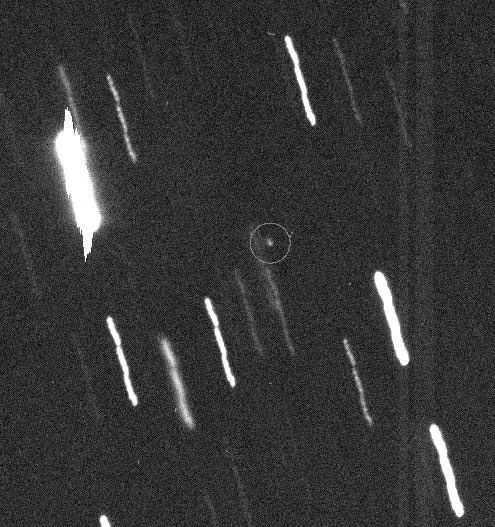
Roy Tucker, David J. Tholen, and Fabrizio Bernardi discovered Apophis on June 19, 2004, during a NASA-sponsored University of Hawaii asteroid survey at Kitt Peak National Observatory in Arizona. The team tracked 2004 MN4, as Apophis was then known, over two nights. NASA initially put its collision probability as high as 1.6%, which raised the asteroid to level 4 on the Torino scale. By December 27, the estimate had risen to 2.7%, based on 176 observations. Further tracking and calculations gradually refined the orbit, however, and on August 5, 2006, Apophis dropped from level 1 to level 0. Scientists can now be confident that it will hit neither Earth nor the Moon.
Scientists still have several years to prepare. Before the asteroid arrives, they can draw up a long observing wish list, design the best instruments for studying it from the ground, and decide how to observe it from space.
Can the rest of us witness the flyby alongside the scientists? Absolutely. Apophis is large and will pass close enough to be visible to the naked eye. Roughly two billion people could watch it skim past Earth without a telescope. In the Beijing area, the best viewing time should be about 1:30 to 2:30 a.m. local time on April 14, 2029.
Although researchers are confident that Apophis will not hit Earth in 2029, they cannot yet rule out a collision farther in the future. Many other near-Earth asteroids also orbit the Sun in our vicinity. Planetary-defense specialists continually track these objects and develop technologies for dealing with any that might pose a threat. Apophis appears similar to about 80% of the potentially hazardous asteroids discovered so far, so data from this encounter may improve our understanding of many others.
At the 2019 Planetary Defense Conference, researchers discussed how to observe the close “encounter” ten years later. They considered how Earth’s gravity would change the asteroid’s orbit, whether Apophis could reveal the interiors of asteroids, and whether a spacecraft should be sent there. Marina Brozovic, a radar scientist at NASA’s Jet Propulsion Laboratory (JPL), said: “The Apophis close approach in 2029 will be an incredible opportunity for science. We’ll observe the asteroid with both optical and radar telescopes. With radar observations, we might be able to see surface details only a few meters in size.”
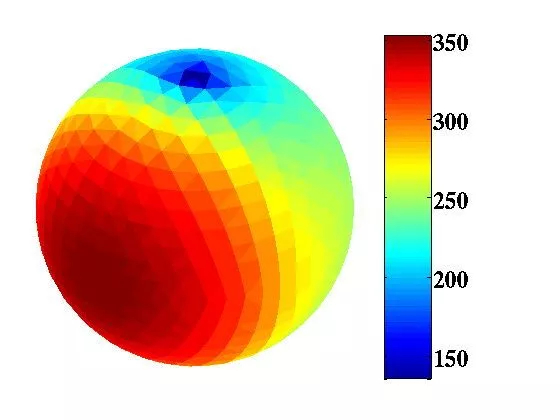
Observation was not the conference’s only major subject. Researchers also asked how strongly Earth’s gravity will affect Apophis during the 2029 approach. Other objects have had their orbits altered while passing close to Earth, and asteroids should experience a similar effect. Another issue is equally important to planetary defense: when an asteroid absorbs sunlight and radiates heat, it receives a minute thrust. Known as the Yarkovsky effect, this phenomenon arises from the temperature difference between the asteroid’s day and night sides.
The Yarkovsky effect changes an asteroid’s orbit so slightly that the resulting thrust can be hard to distinguish from instrumental error or malfunction. Scientists have constrained Apophis’s trajectory to a corridor only 12 kilometers wide, but they still cannot rule out every other influence over the coming decades, partly because the Yarkovsky effect remains uncertain.
Along with the major tasks for the coming decade, the researchers discussed forward-looking mission concepts that could lay the groundwork for a probe to visit Apophis before, during, or after the close approach.
A series of spaceflight successes over the previous year had provided a solid foundation. NASA’s InSight mission deployed the first robotic seismometer on another planet, accompanied by Mars Cube One (MarCO), the first CubeSats sent to Mars. NASA’s OSIRIS-REx and Japan’s Hayabusa2 had also carried out rendezvous missions with small Solar System bodies.
Drawing on those achievements and experience, scientists considered how to design and launch spacecraft to observe Apophis. Some discussed the possibilities of CubeSat missions, including spacecraft modeled on MarCO.
One proposal would place a seismometer on the space rock with a spacecraft designed to pierce Apophis like a fork. The instrument could detect minute vibrations in the asteroid, helping reveal both its internal structure and the extent of Earth’s gravitational influence. Another idea would create an artificial crater on Apophis, as Hayabusa2 did on asteroid Ryugu (162173), to expose material hidden beneath the surface.
Some of these ideas may be too risky to justify. Scientists must be certain that human intervention will not disturb Apophis’s currently safe orbit. “We have to be very careful and ensure that Apophis does not change its original orbit,” Arizona State University planetary scientist James Bell said in a presentation. “Even so, this is a once-in-a-millennium opportunity for NASA and other space agencies. I believe it will become the largest public event of 2029.”
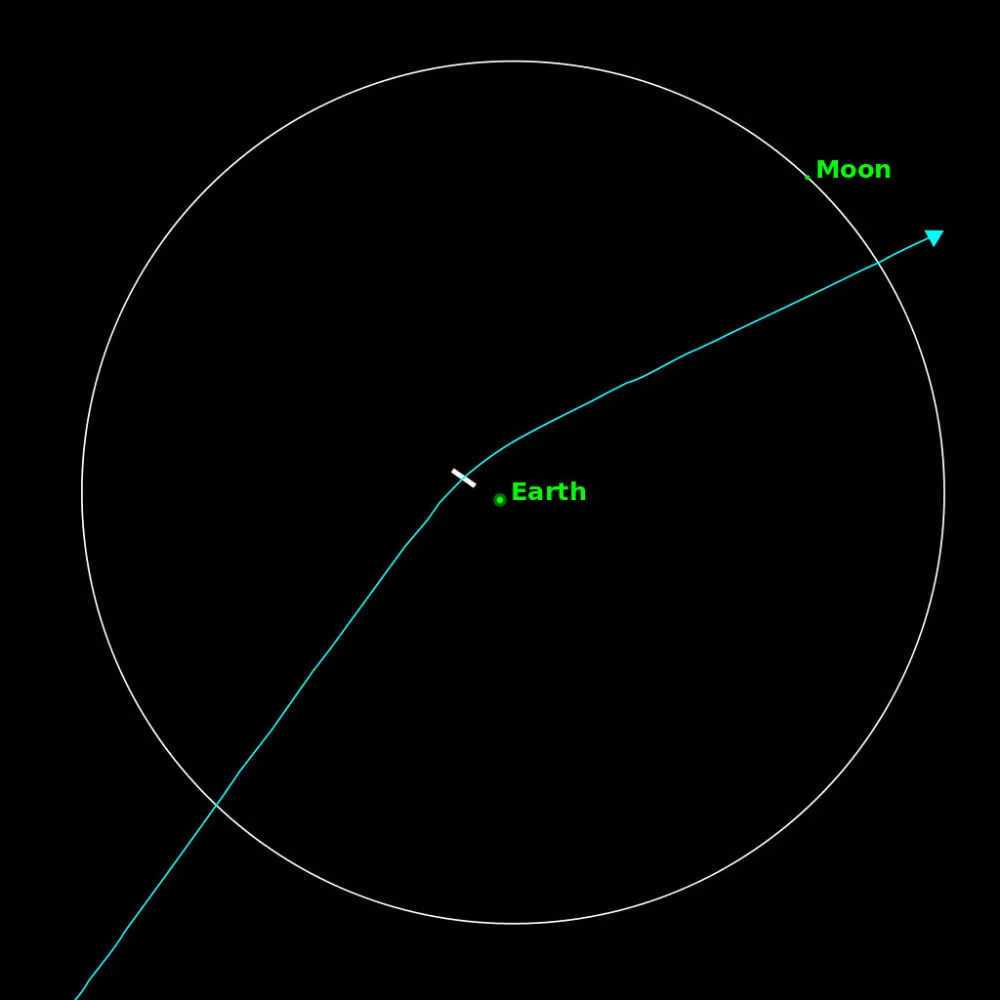
This is the delicate balance asteroid scientists and planetary-defense specialists must strike: make full use of the scientific opportunity created by Apophis’s close pass without causing panic or accidentally creating a real danger. The most important observations will come in 2029, when asteroid scientists around the world can study Apophis’s size, shape, composition, and perhaps even its interior at close range.
“What is exciting is that an object this large comes this close to Earth only once every several thousand years,” MIT planetary scientist Richard Binzel said at the conference. “The key question is how we seize this extraordinary opportunity. We’ll find out in 2029, and we need to be fully prepared.”
References
 爱发电(点击图片跳转)