
What's on the Far Side of the Moon?
Author: 一毫秒的永恒
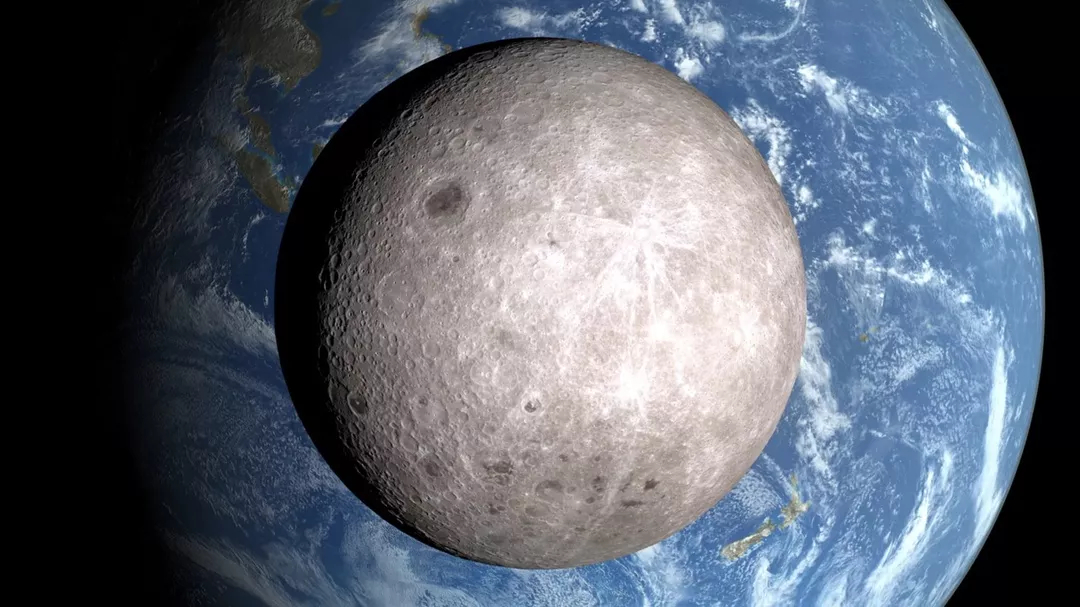
Look up at the bright Moon: it seems as familiar as ever, no different from the Moon of the past. Indeed, the Moon you admire is the same one our ancestors admired. After sunset, people around the world can see those same familiar shadows and shapes. It is easy to understand why ancient poets used the Moon to express their longing for home and family.
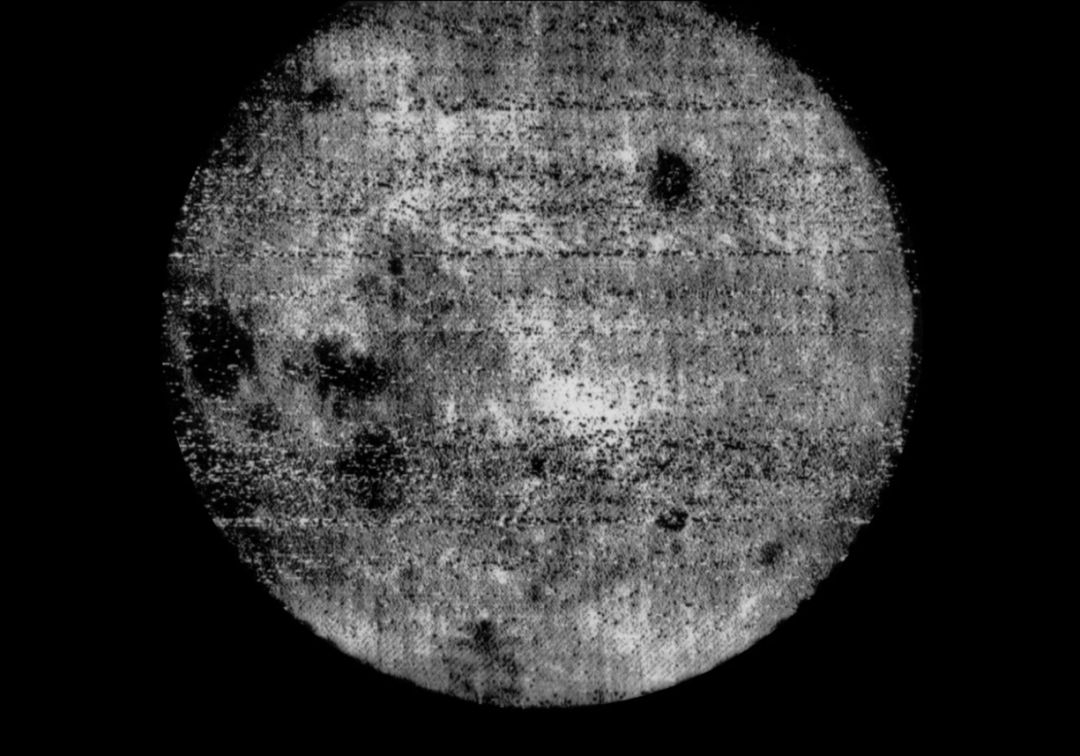
From ancient times until the modern era, people on Earth could see only the Moon’s “near side.” Humanity did not glimpse the “far side” until 1959, when the Soviet Luna 3 spacecraft flew around the Moon and sent back photographs.
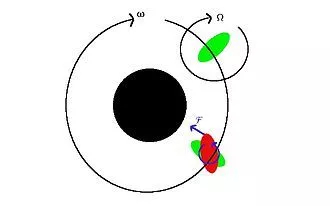
This happens because of tidal locking. The Moon is close enough to Earth that Earth’s gravitational pull varies across it, producing a pronounced tidal effect that grows rapidly as the distance decreases. The effect raises tidal bulges on the Moon, and Earth’s gravity exerts a torque on those bulges. This gradually slows the Moon’s rotation until its rotation period matches its orbital period around Earth, about 27.3 days. If we set aside the effect of libration, the same lunar hemisphere therefore always faces Earth. This does not mean that the Moon fails to rotate. On the contrary, it happens precisely because the Moon’s rotation and orbital periods are equal.

The side of the Moon facing Earth has been studied extensively. We can see it; Apollo astronauts landed on the near side so they could communicate with the National Aeronautics and Space Administration (NASA) on Earth; and every sample returned by the Apollo missions came from the near side.
Modern satellites, however, have allowed astronomers to map the entire lunar surface. On January 3, 2019, China’s Chang’e 4 probe successfully landed and began exploring the Von Kármán crater in the South Pole–Aitken basin on the far side. It was the first human-made probe to make a soft landing there. Chang’e 4 helps answer questions about the crater’s surface features and has conducted numerous tests on lunar soil, including tests of whether organisms could grow in it.
What makes the far side, so distant from human civilization, distinctive? That distance makes it a genuine radio-quiet zone. The Moon shields it from radio interference produced on Earth, allowing researchers to measure faint signals from the Universe without having them drowned out by electromagnetic noise. Chang’e 4, for example, can observe low-frequency radio signals from the Sun and other celestial objects. Human activity, including television, radio broadcasts, and other communication signals, makes those frequencies impossible to detect from Earth. Low-frequency radio observations can reveal the earliest stars and black holes in the Universe, giving astronomers a deeper understanding of how cosmic structure formed. Chang’e 4 can also conduct lunar-based low-frequency radio astronomy, survey the terrain of its far-side exploration zone, and study its mineral composition, among other investigations of the far side.
Scientists are now preparing for future space travel. A range of lunar probes have surveyed different aspects of the Moon, searching for resources that could help humans reach Mars. Water found in 2009 by NASA’s LCROSS satellite in permanently shadowed regions at the lunar south pole, for example, could be split into hydrogen and oxygen for fuel and breathing.
Researchers are also actively exploring polar craters on the Moon. Some of these craters never see daylight and are known as permanently shadowed regions. They are deep and lie where sunlight never reaches them. The Moon does have places that remain forever dark, but its entire far side is not a “dark side.”
References
 爱发电(点击图片跳转)