
Boron, Sand, and Chernobyl
Author: A Millisecond of Eternity
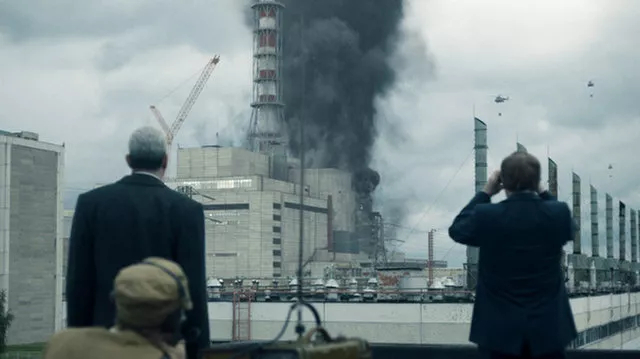
I recently heard about HBO’s acclaimed miniseries Chernobyl and decided to watch it. The plotting, cinematography, and sound design are all exceptionally well done. Although viewers already know how the disaster ended, the series still makes its oppressive, tragic atmosphere deeply affecting. Its reconstruction of the 1986 Chernobyl nuclear disaster is remarkably convincing, and I recommend it to anyone interested in the subject.
Most readers will know at least something about the 1986 Chernobyl disaster, the worst nuclear catastrophe in human history. Estimates suggest that it released more than 400 times the radioactive material released by the atomic bomb dropped on Hiroshima during World War II. In 2005, a report from relevant United Nations agencies estimated that radiation from the accident might eventually cause 4,000 deaths. Greenpeace International offered a far more alarming estimate in 2006: as many as 93,000 potential deaths in Ukraine, Russia, and Belarus, with radiation-induced cancer affecting roughly 270,000 people across the three countries.
In the second episode, scientist Valery Legasov proposes dropping boron and sand into the reactor. Boron can absorb neutrons and slow the chain reaction; sand can cut off the air and smother the fire. Why did the scientists reach for these two materials first? Would responders make the same choice if a similar disaster happened today?
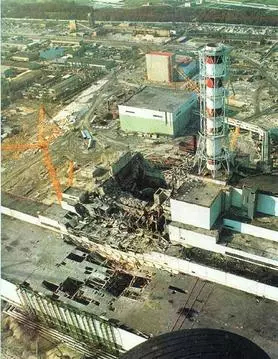
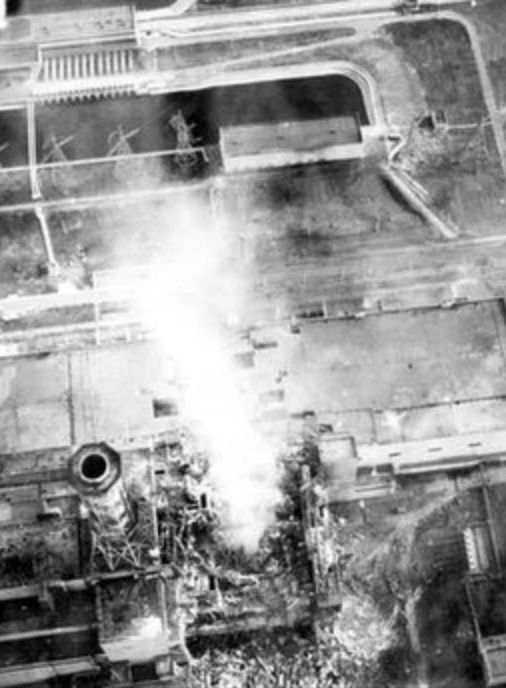
What happens when a burning reactor core is exposed to the open air? Kathryn Huff, a nuclear reactor engineer and professor at the University of Illinois Urbana-Champaign, identifies at least two problems.
First, nuclear fission continues. A uranium nucleus releases neutrons when it splits. Those neutrons strike and split other uranium nuclei, which release more neutrons and more energy. With the reaction no longer under control, radiation reaches almost unimaginable levels and poses a lethal danger to anyone approaching the reactor.
The second and more serious problem is the vast quantity of smoke, dust, and debris carried into the air by the fire. Most of the material thrown out by the explosion came from the reactor, some of it directly from the core. It included radioactive elements and isotopes produced by uranium fission.
This airborne material is the accident’s greatest danger. Some of its isotopes can harm the human body and are far more radioactive than materials encountered in daily life. Others combine high radioactivity with high environmental mobility, meaning that they can enter living organisms and cause serious damage. Iodine-131 is one example. Because it is an isotope of iodine, living cells absorb iodine-131 just as they absorb ordinary iodine.
Chernobyl’s smoke and dust contained large amounts of iodine-131. It could travel thousands of kilometers before entering rivers, settling on soil, or being absorbed directly by plants, animals, and people. The thyroid needs iodine and takes up iodine-131 just as readily as ordinary iodine, creating a serious, long-lived radiation source inside the body. That is why people in affected areas are advised to take iodine tablets after a nuclear disaster. Saturating the thyroid with nonradioactive iodine reduces its uptake of radioactive iodine from outside the body. These tablets should not be taken casually under normal circumstances, however, because they can cause problems such as hyperthyroidism.
Sand and Boron
The decision to drop sand and boron now makes sense. The mixture used at Chernobyl also contained clay and lead. It was meant to address both problems at once: sand would exclude air and smother the fire, while boron could in theory slow or suppress the nuclear reaction.
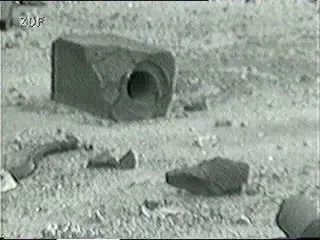
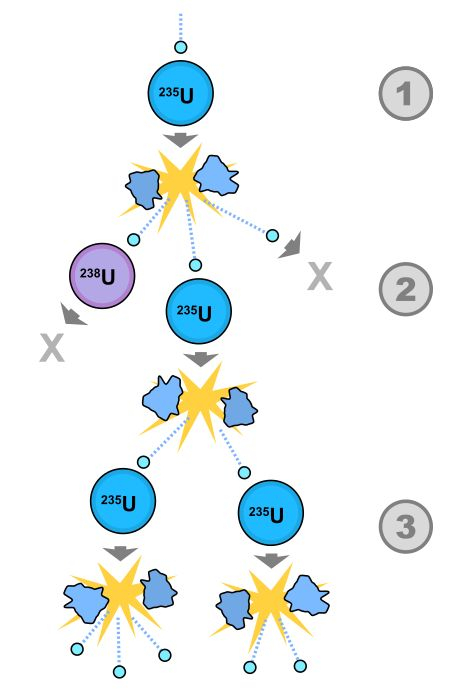
Some isotopes in a nuclear reactor promote the reaction, while others slow it. A sustained chain reaction requires enough radioactive isotopes close together that the neutrons they release can strike and split other nuclei. The diagram shows the sequence: ① a uranium-235 atom absorbs a neutron, splits into two smaller atoms, and releases three neutrons and binding energy; ② one neutron is absorbed by uranium-238 and does not continue the chain reaction, another misses every atom, and the last strikes another uranium-235 nucleus, releasing two neutrons and continuing the reaction. The accompanying image in this “Sand and Boron” section shows graphite moderator blocks ejected from the core; the largest contains a complete control-rod channel. Because of their nuclear structure, some isotopes have a certain probability of absorbing a neutron when the two interact. Uranium, especially uranium-235, tends to capture a neutron and undergo fission immediately. Boron has a high neutron-absorption cross section across a broad range of neutron energies, making it especially effective at capturing them. In theory, enough boron or boron compounds dropped into the exposed core of Reactor No. 4 would absorb many fast-moving free neutrons and slow or stop the reaction.
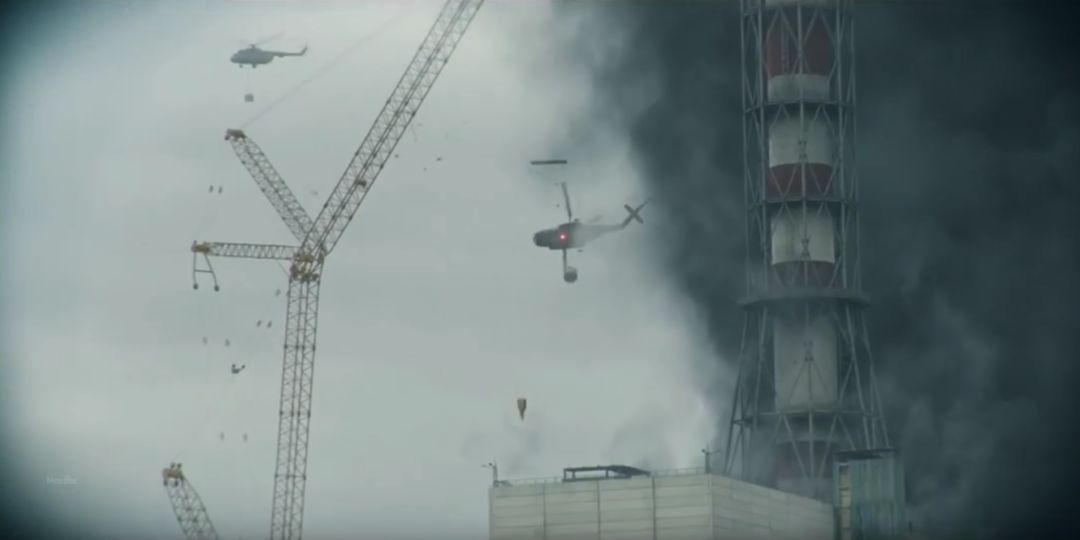
Despite the enormous sacrifices, the plan had no clear effect. One reason was that the helicopters’ method of delivery kept most of the neutron absorber from reaching the core. A 1997 BBC report noted: “The intense radiation killed several pilots. Despite these sacrifices, very little neutron absorber reached the core.”
The operation fell short, but its basic principles were sound: use a neutron absorber to stop the reaction and reduce the amount of radioactive material entering the air. A response to a similar disaster today would rest on the same theory. The main difference is that modern nuclear power plants are designed from the outset to carry out much of the emergency response themselves.
Modern reactors have chemical spray systems that cover the entire reactor building and remove radioactive isotopes from the air before they can escape.
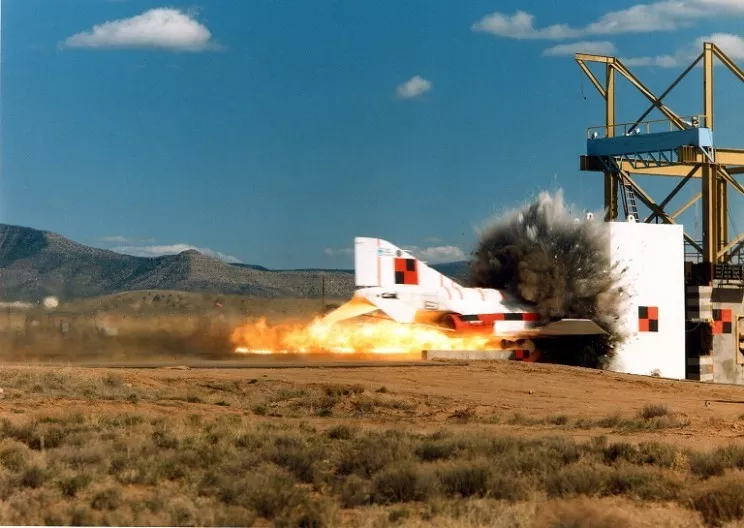
Unlike the Chernobyl Nuclear Power Plant, U.S. nuclear facilities are fully enclosed by sealed reinforced-concrete structures. Their containment buildings are designed to be exceptionally strong; in theory, even a major explosion would not breach them. A small jet could strike the protective shell without exposing the reactor core. In 1988, the U.S. government tested just how strong this reinforced concrete was by sending an F-4 Phantom head-on into a concrete slab at about 770 km/h. The test anticipated the possibility of an attack like the one later carried out on 9/11. The 3.66-meter-thick reinforced concrete remained almost unscathed. Dramatic as the collision looked, the aircraft did surprisingly little damage to the block. The deepest mark was only 60 mm, and the structural damage amounted to little more than a scrape.
Even a small mistake can be fatal, so the U.S. Nuclear Regulatory Commission (NRC) has drafted emergency manuals hundreds of pages long, including procedures that use boron. Each of the 98 operating nuclear reactors in the United States has such a manual. The documents tell emergency personnel how to respond to a range of scenarios that sound plausible but are in fact extremely unlikely.
Although the NRC has developed guidance for more extreme disasters since the 9/11 attacks, the manuals do not discuss a Chernobyl-style event in detail. “Even so,” Huff said, “when it came to extinguishing a fire over an exposed core, sand and boron ultimately deserve at least some of the credit.”
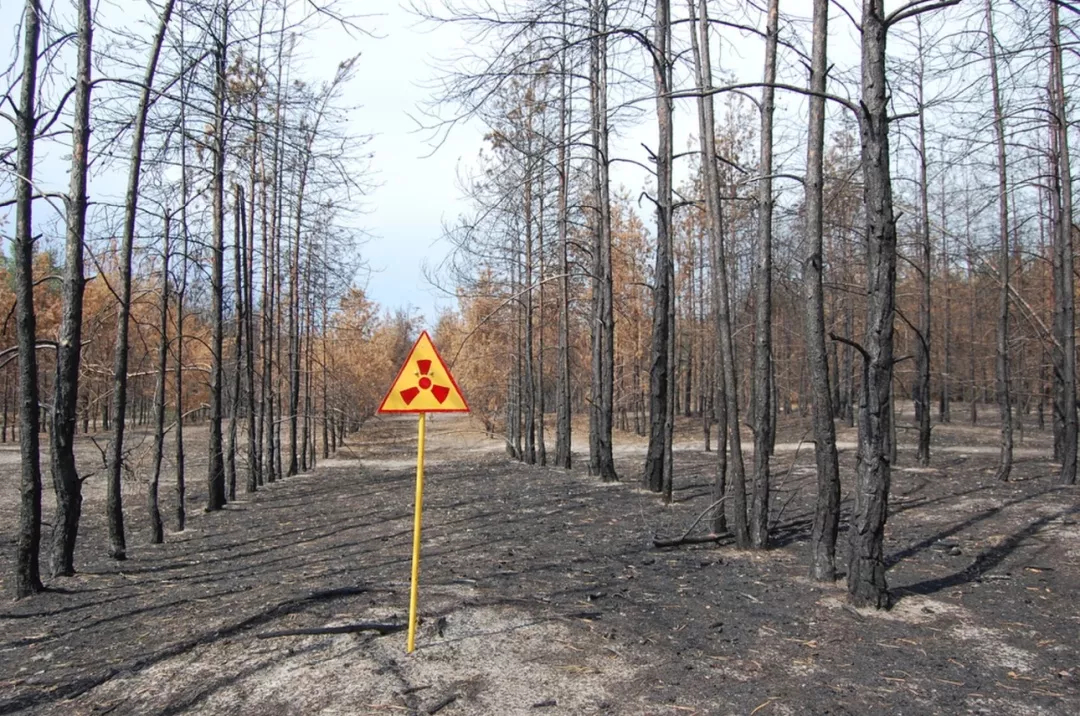
Finally, do not enter the area recklessly just because “exploring Chernobyl” sounds cool. Some parts of the Chernobyl Exclusion Zone still have high radiation levels or poorly understood conditions, and careless entry may be dangerous. Anyone planning a visit should follow local rules and the directions of professional guides and site administrators.

References
 爱发电(点击图片跳转)