The ‘Gene-Edited Babies’ Controversy: Six Questions
Author: @cheeze molecule (translator)
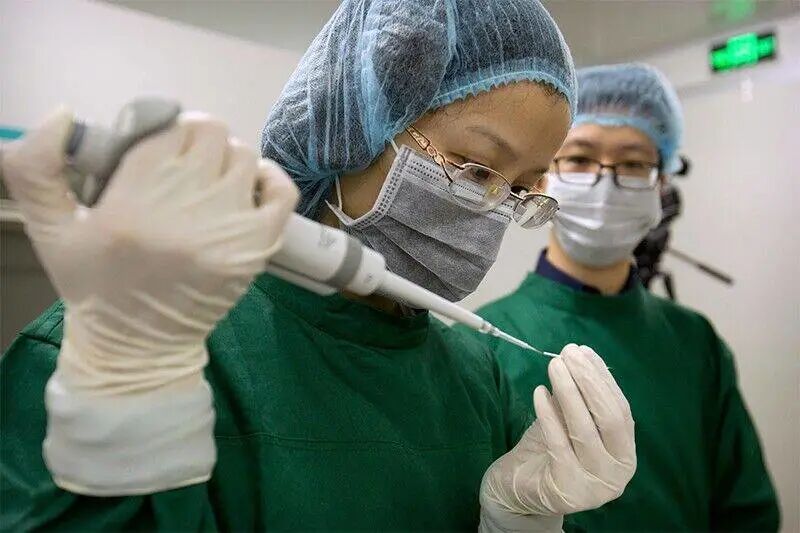
Practical questions that He Jiankui and other genome-editing researchers cannot avoid.
In late November, reports that twin babies had been born after their genes were edited to make them resistant to HIV caused an uproar. The announcement also ignited fierce debate over CRISPR experiments, the laws governing them, and the ethical questions they raise.
Responses ranged from opposition to neutrality and support. At the Second International Summit on Human Genome Editing, held a few days later, the organizing committee described the experiment as “unexpected and deeply disturbing.” Life-science researchers had mixed reactions, but most believed the work had been undertaken prematurely and questioned both its legality and its safety. A recent Nature feature framed the controversy around six questions that remained unresolved. Let us take a closer look at them.
1. Is He Jiankui in trouble?
On November 27, the day before He Jiankui spoke at the Second International Summit on Human Genome Editing, the National Health Commission urged the Guangdong provincial government to investigate him. His institution, Southern University of Science and Technology, is located in the province. Two days later, China’s Ministry of Science and Technology ordered him to halt all scientific research. His actions had violated guidelines issued by the Ministry of Health in 2003, but at the time they were not covered by any explicit law or regulation. A university representative offered no specific response in a telephone interview, saying only that the institution was “waiting for an official statement from the university”—another indication of the case’s complexity. He Jiankui’s personal page was removed from the university website, and several links to information about him on departmental pages and in his profile stopped working.
He Jiankui responded: “I will remain in China, my homeland, and cooperate fully with all inquiries.”
Note: The original article was written in early December 2018. On December 30, 2019, the People’s Court of Nanshan District in Shenzhen handed down its first-instance judgment. The court found He Jiankui and two other defendants guilty of illegal medical practice for jointly performing human-embryo genome editing for reproductive purposes and conducting reproductive medical procedures without authorization. All three were held criminally liable.
2. How can the accuracy and authenticity of He Jiankui’s claims be established?
Many scientists said that verifying He Jiankui’s claims would require detailed comparisons of the babies’ genomes with their parents’ genomes to determine what edits had been made. The identities of the babies and their parents were kept strictly confidential. Combined with China’s stringent rules on human genetic resources, that confidentiality allowed He to withhold the experimental data and made an independent investigation impossible.
He Jiankui said that his team could provide anonymized samples and open its laboratory data, invite other researchers to join the investigation, and submit the raw data for independent review.
3. How did CRISPR alter the twins’ genomes?
CRISPR is a set of repeated sequences in prokaryotic genomes that also provides recognition sites for Cas nucleases. It is an immune defense that evolved through the long-running struggle between bacteria and viruses. Put simply, viruses can integrate their genes into bacteria and use the bacteria’s cellular machinery to replicate. To remove this invading genetic material, bacteria evolved the CRISPR–Cas9 system, which can cut viral DNA out of their own genomes. After discovering this mechanism, researchers adapted it into CRISPR–Cas9 technology for editing human genes.
After analyzing the raw sequencing data discussed in He Jiankui’s presentation, Australian National University geneticist Gaetan Burgio concluded that the babies’ cells contained several differently edited forms of CCR5, one of the main coreceptors HIV uses to enter cells. If CRISPR edited some cells in the early embryos differently from others, or left some cells unedited, the babies would be mosaics: individuals with two or more genetically distinct cell populations.
The rationale for He Jiankui’s experiment was also questioned. In his presentation, he said that his approach to editing CCR5 with CRISPR was based on the Δ32 mutation. Some people naturally carry a 32-base-pair deletion in CCR5, and this mutation can confer resistance to HIV infection. Sean Ryder of the University of Massachusetts Medical School argued, however, that the CCR5 deletions introduced into the babies were not the same as Δ32. The structure and function of Δ32 have been studied extensively since its discovery, but the edits identified in He’s experiment did not match that mutation and had not been tested in animals or other preclinical studies.
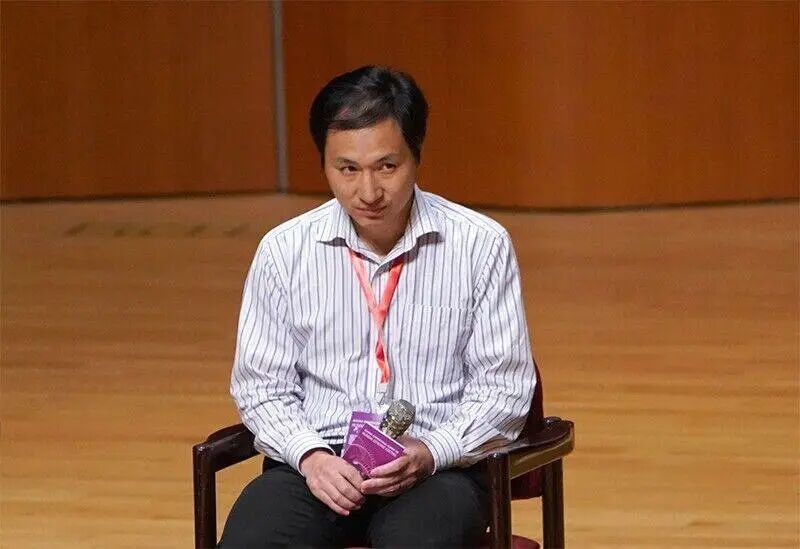
4. When will the next gene-edited person appear?
He Jiankui’s decision to conduct the experiment and announce the results without adequate preparation alarmed many people. If unethical researchers used the technology without restraint, the consequences for science and humanity could be disastrous. Concerns about genome editing in humans predated He’s experiment. In 2016, a physician from New York carried out a procedure in Mexico, without approval from the relevant authorities, that replaced disease-causing mitochondrial DNA in an embryo with healthy mitochondrial DNA. At the summit, scientists discussed the possibility that such work could create a new human germline and agreed that the authorities should be notified of every experiment in this area.
5. Will He Jiankui’s experiment affect the future of genome editing?
The announcement met with strong opposition, and some people called for a complete ban. Such a ban would devastate genome-editing research. An official from the U.S. Food and Drug Administration said that governments had to respond. Whatever happens, the international community must reach a binding consensus that places limits on this research, including restrictions on women donating eggs for experiments. Such rules are a prerequisite for genome editing to gain broad public acceptance.
6. How can we ensure that genome editing leads to a better future?
Most researchers want the parties involved to coordinate their efforts, reach a consensus, and set reasonable limits. The organizing committee of the Hong Kong summit also proposed creating an international forum and a registry for clinical research. Some bioethicists, however, explicitly oppose human trials of this technology and have called for mandatory penalties.
After reading these six questions on Nature’s website, I voted on the one I most wanted answered.
The poll results show that the public is most concerned about whether genome editing will help or harm both the field and society at large. No one can predict its future. With the technology still immature and ethical disputes unresolved, the babies will remain at the center of intense debate and resistance. It may take years or even decades before we understand the effects of the changes He Jiankui made. For now, researchers can conduct extensive animal and preclinical studies to improve the technology and put every necessary safeguard in place before it is used in humans. Until then, researchers must not cross ethical boundaries in pursuit of personal gain, and the public needs better science communication to dispel rumors.
Only then might we be ready to take this step safely.
References
Citation:
First CRISPR babies: six questions that remain
https://www.nature.com/articles/d41586-018-07607-3
 爱发电(点击图片跳转)