The Wok's Remarkable History: From Its Origins to the Tang and Song Dynasties
Author: Lai Yuan
The Wok’s Remarkable History (Part I)
Of all the tools in the kitchen, the wok is king: if it is not frying, it is braising. Three days to master an electric cooker, three years for the ladle, ten years to hone a cleaver, and a lifetime at the iron wok.
Food goes in, wine is poured, and the whole village waits to be served. The fire starts, the spatula rises, and one wok can feed two tables. The dishes arrive, chopsticks are laid out, and friends and family tuck in.
Today, almost every Chinese household has a pitch-black wok. As its Chinese name suggests, its main purpose is stir-frying. Stir-frying is arguably the dominant technique in Chinese cooking today. From ordinary roadside restaurants to five-star hotels, most dishes are prepared either by stir-frying or by some variation on it. The emergence of stir-frying 1,500 years ago laid the foundation for the defining character of later Chinese cuisine, and the technique now satisfies countless hungry diners.
As the saying goes, “A good wok lasts forever, handed down from one generation to the next.” So just how far back does its history go?
We must begin with the wok’s elder brother, the iron pot. Both are made of iron, but one came first: the iron pot was the first-generation product, and the wok appeared only after that product was improved and upgraded. It is therefore only fair to call the iron pot the elder brother. Its own history begins with a distant relative, the bronze pot. Bronze vessels were the first metal objects that humans used on a large scale; only after people made bronze pots did the very idea of a pot take shape.
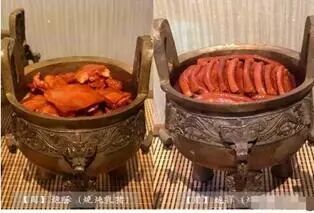
What? You have never heard of a bronze pot? You must at least recognize a ding. Yes, the ding was the earliest piece of slow-motion-suicide cookware, and it too is a kind of pot.
Anyone with a basic knowledge of history probably knows that metal goods in the Zhou dynasty were made of bronze. By the Spring and Autumn and Warring States periods, however, things had changed: anything that could be made of metal was being made of iron.
So perhaps, during the Spring and Autumn and Warring States periods, people were already hammering out iron versions of the old bronze pots. Even a conservative estimate, then, would place the appearance of the iron pot in that period.
After all that, let us return to the real subject. As for the wok’s exact date of birth…
Who knows…
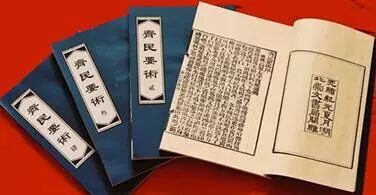
Hey, hey, put down the brick and let us talk this through. I do not know the exact date, but a book from the Northern Wei—commissioned, naturally, by the Northern Wei Publishing House and written by the famous agricultural expert Jia Sixie—contains, somewhere in the Chrysanthemum Treas— sorry, the Qimin Yaoshu, a recipe that has gone down in history, survived to this day, become a household name, earned worldwide fame, and become known to all:
It is!!!
scrambledeggs
The Wok’s Remarkable History—Tang: Steam, Boil, Roast; Song: Anything Goes (Part I)
Last time, we saw that a prototype wok and scrambled eggs cooked in it had already appeared during the Northern and Southern dynasties. Does that mean woks were everywhere by the Tang dynasty?
History says otherwise. In the Tang, cooking still revolved around the same old trio: steaming, boiling, and roasting.
The Shuowen Jiezi records: “A ding, with three legs and two handles, is the precious vessel in which the five flavors are blended.”
It was probably used something like this…⬇
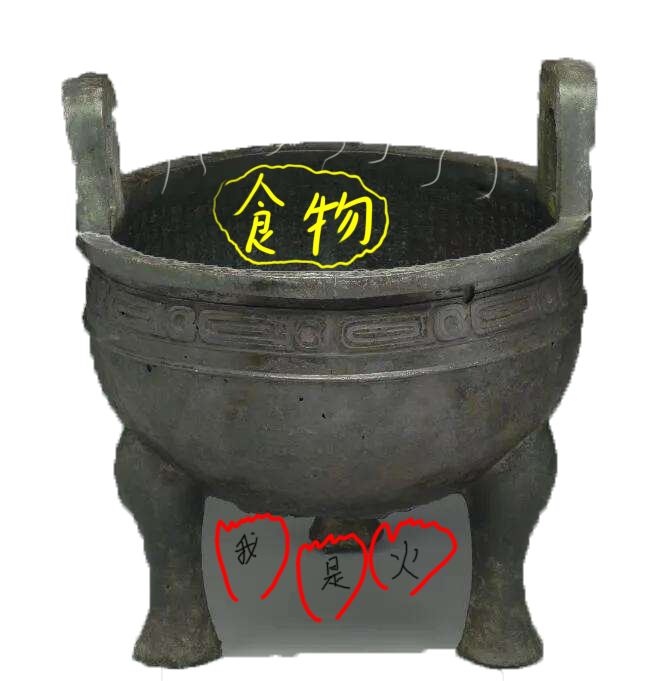
The picture makes it obvious that the ding was a tool for boiling and steaming. The method was essentially “throw it all in one big pot”: toss every ingredient in at once, put on the lid, and let it cook.
① For one thing, it was extremely convenient. Can you light a fire? Can you add water? Can you put food in? Yes? Then you are done. How convenient is that?
② People at the time did not demand much from their food. (You were lucky to have anything to eat; why be picky…?)
As for whether it tasted good… Sorry, that was outside the scope of consideration.
But do not look down on steaming and boiling just because the food did not taste good, you dummy. Even today, Western cooks rarely use “steaming.” Take France, whose cuisine is famous worldwide: some say its chefs do not even have a concept of “steaming.”

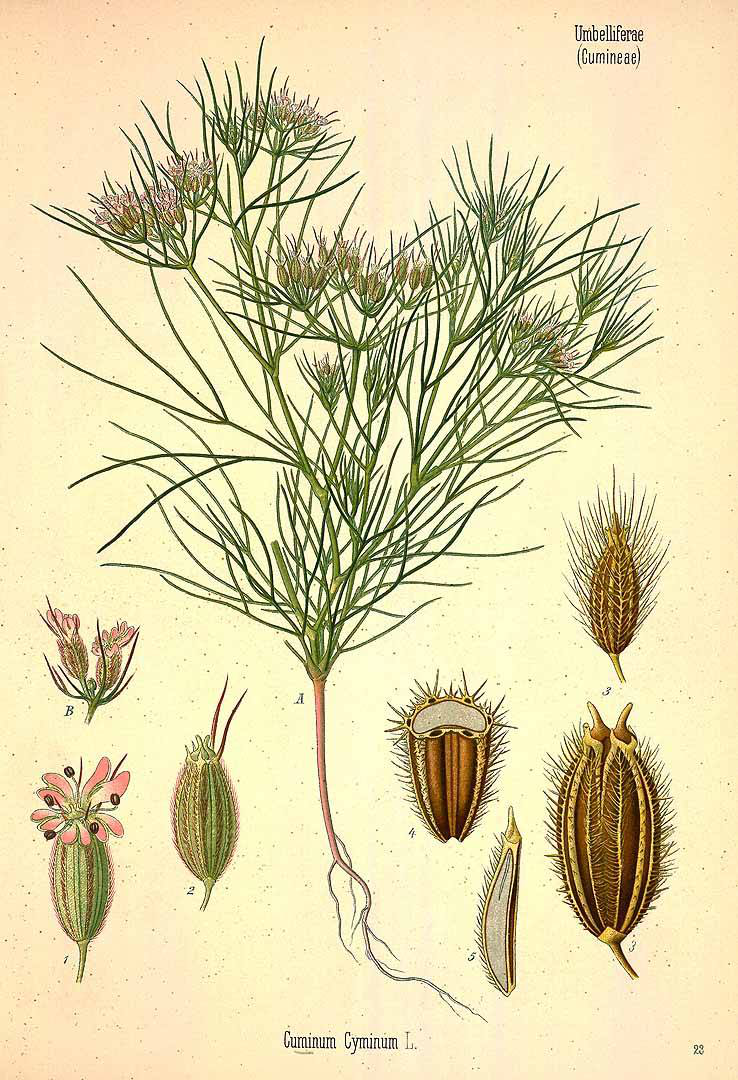
Now let us turn to roasting. The Tang campaigns in the north brought large quantities of northern mutton into the empire, along with the soul of barbecue—cumin—from the Middle East. So people in the Tang could enjoy lamb skewers, and lamb was not the only meat they roasted.
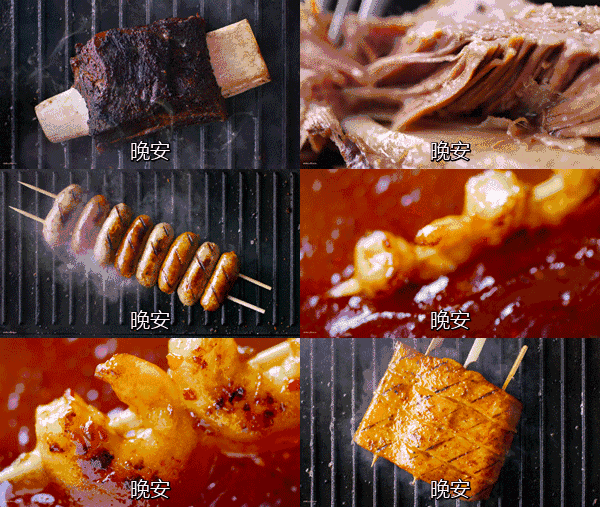
The Tang physician Jiu Yin (who may have spent all day hanging around barbecue stalls) recorded several grilled dishes in the Shiyi Xinjian: mandarin duck, wild boar, eel, myna, and yellow hen.
Thus, even if the Tang had woks, there was little use for them. They existed, but only in very small numbers. Woks did not begin to become more common until the transition from the Tang to the Song.
Salt and iron were often state monopolies in imperial China, and the Song was no exception. The government oversaw mining and iron smelting: local mine owners handled extraction, while a “professional team” took care of smelting.
The “professional team” familiar to us today looks like this:
The professional iron-smelting team of the time looked like this:
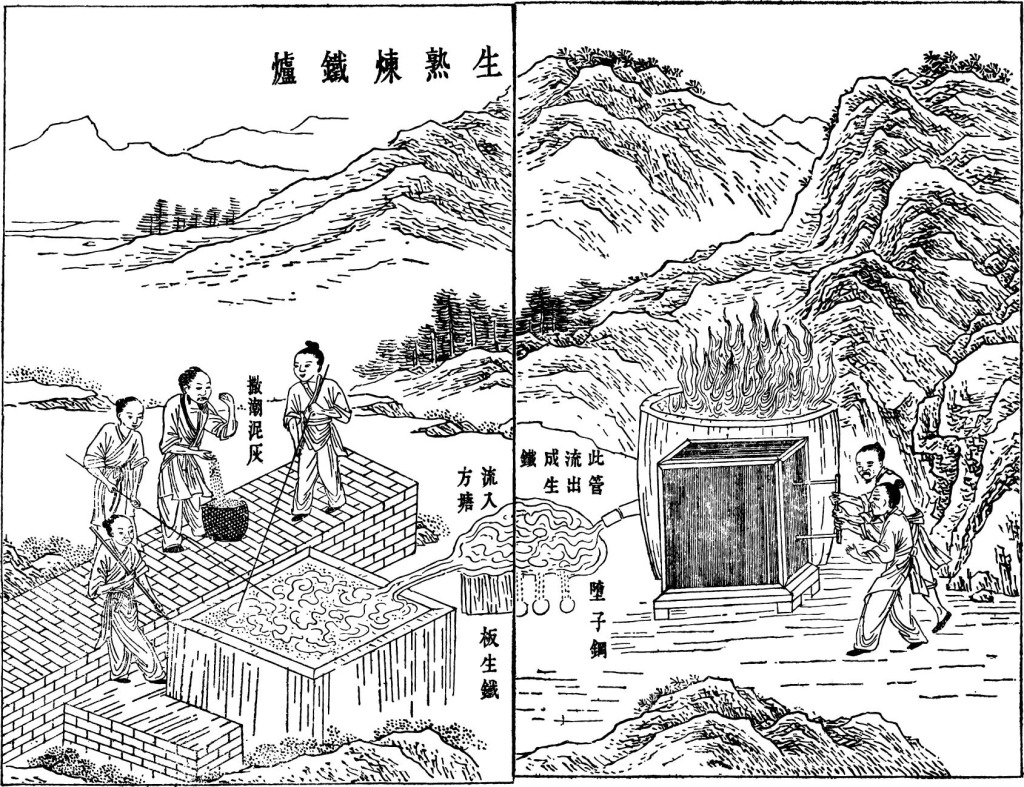
That professional team naturally came under the Salt and Iron administration, one of the Northern Song’s Three Financial Bureaus.
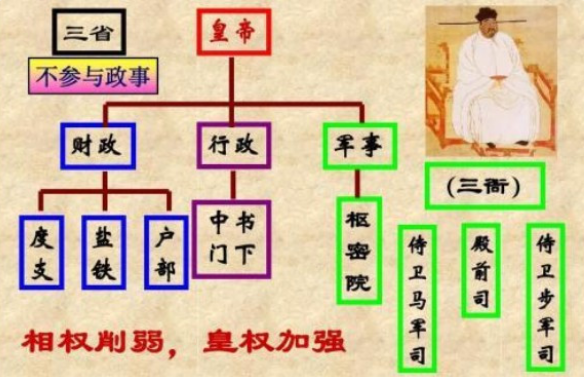
The Baoyuan Bureau was originally a mint, the equivalent of a modern coin factory. Ancient currency was made of metal, but everyday pots, bowls, ladles, basins, hoes, rakes, shovels, and the like also required metal. Rather than trouble a second office, the state mint made these farm tools too. Its directors must have found the situation galling: a dignified national mint, reduced to casting farm implements!?
All right, back to the point. Someone is bound to complain: over the three hundred years between the Tang and Song, were those craftspeople doing nothing but eating? They could not even make something as simple as a wok. Put me in charge and the Tang would be eating stir-fries in minutes. (Doge face.)
Hey, do not complain that this was slow. A wok “midwife” was nagging away the entire time, pushing for woks to be manufactured and used on a large scale and helping bring the new cooking method called “stir-frying” into the world.
There was more than one of these busybodies: there were two. One had been chattering without pause from the Han dynasty all the way to the Song, nearly a thousand years. The other began during the Five Dynasties and Ten Kingdoms period.
As for who these two “busybodies” were…

I will write about that next time…
 爱发电(点击图片跳转)