
Why Do Batteries Swell—and Can EV Batteries Swell Too?
Author: 时光
Reviewed by: 阿氯
It Started with a Bulging Phone Back
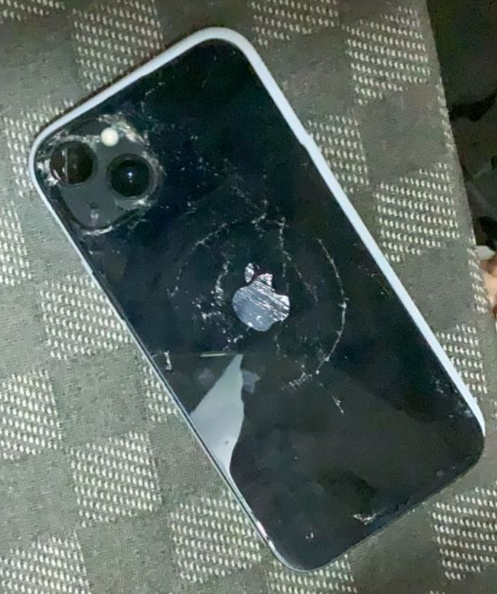
One evening, a friend sent me a photo of their phone. The battery appeared to have swollen, forcing the back cover apart and leaving a truly sorry sight.
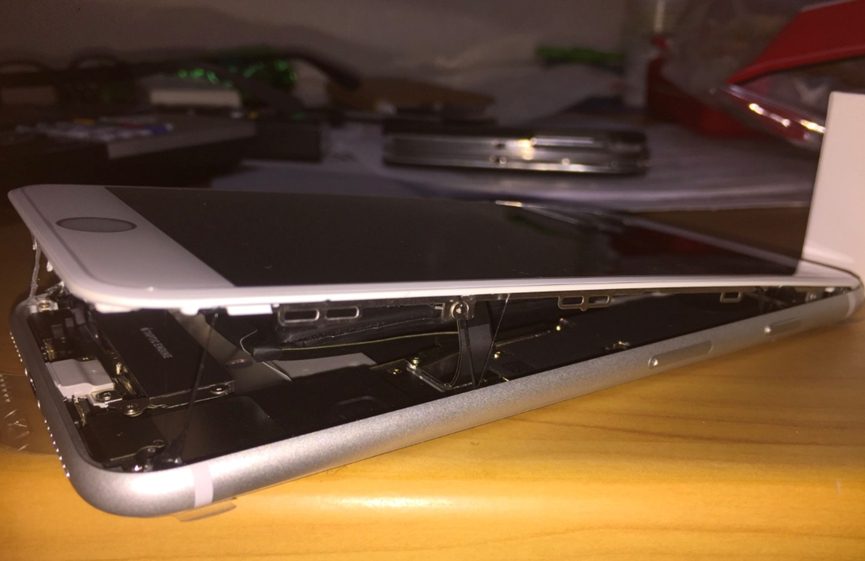
This is hardly an unfamiliar sight. In 2017, barely a week after Apple’s iPhone 8 series went on sale, several incidents were reported around the world in which swollen batteries pushed the screens of newly unboxed or charging phones out of their frames.

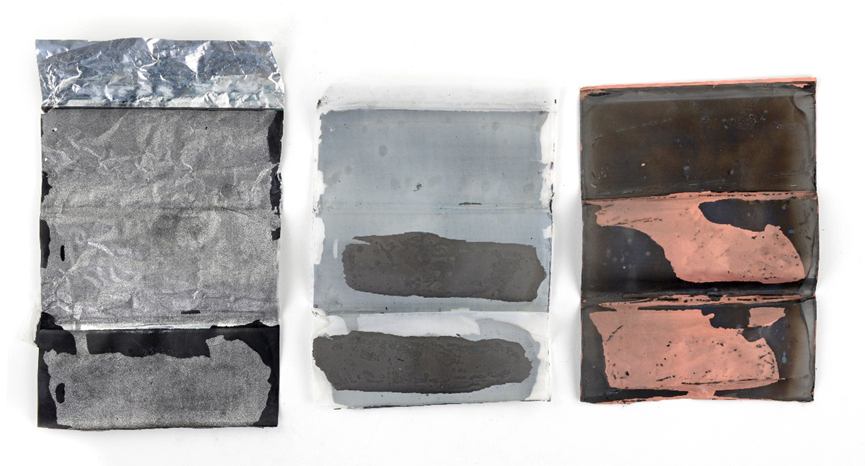
Modern phones, computers, tablets, and similar devices commonly use pouch-type lithium-ion batteries, also known as lithium-polymer batteries. A typical pouch cell has three compactly arranged core components: a cathode, an anode, and a separator. The cathode is aluminum foil coated with a lithium metal oxide, such as lithium cobalt oxide. The anode is copper foil coated with graphite. A microporous separator that allows lithium ions to pass lies between them, and the entire assembly is soaked in electrolyte.
When the battery charges, an external current drives lithium ions out of the cathode’s crystal lattice—a process known in chemistry as deintercalation. They travel through the electrolyte and fit neatly into gaps in the anode’s lattice, a process called intercalation. There, the lithium ions bind closely with carbon atoms to form the stable structure LiC₆. During discharge, the ions leave the anode and re-enter gaps in the cathode lattice. Because the ions shuttle between solid crystal lattices instead of depositing directly as lithium metal, the battery is relatively safe and has a long cycle life.
This reversible intercalation–deintercalation mechanism is the central reason modern lithium-ion batteries can be charged and discharged repeatedly. In 2019, the Royal Swedish Academy of Sciences awarded the Nobel Prize in Chemistry to John B. Goodenough, Stanley Whittingham, and Akira Yoshino for developing commercially viable lithium-ion battery systems. The slim pouch cell in a phone today is, in essence, a continuation of the lines of research pursued by these three scientists.

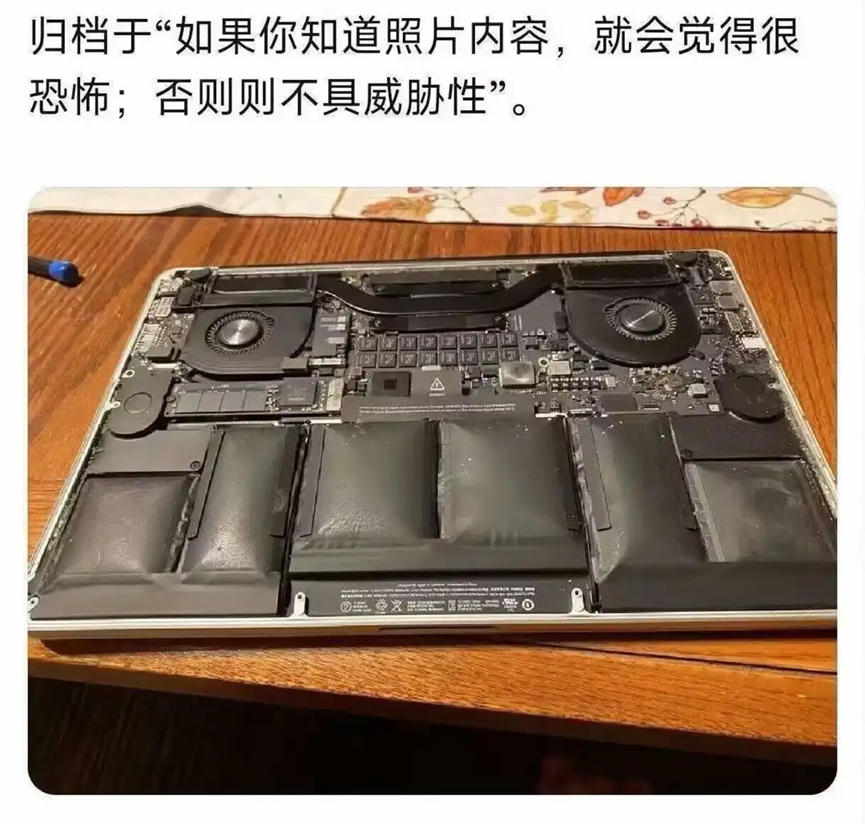
As a battery is repeatedly charged and discharged and begins to age, however, side reactions inside it gradually increase. The electrolyte may decompose when heated and generate gas; the SEI film—the solid electrolyte interphase, a nanoscale passivation film formed when the electrolyte is reduced and decomposes on the anode surface during the battery’s first charge—may repeatedly break down and reform under overcharging or high temperatures; and lithium metal may even be deposited. Because the battery casing is tightly sealed, gases produced by these reactions cannot escape effectively. They accumulate inside the enclosure, causing the cell to expand until it eventually swells.
If repeated charging and discharging can make a battery swell, would it help to leave a device plugged in all the time? Most modern devices have a battery-management system (BMS) that, once an external power source is connected and the battery is full, can switch to powering the hardware directly from that source. This prevents the battery from being physically overcharged, but it does not leave it in an entirely safe state of dormancy. At the microscopic electrochemical level, keeping a battery at 100% charge for long periods means that the potential difference between its electrodes remains at its highest. The lithium ions have moved to the anode, leaving it in a highly lithiated state. This condition is called high-state-of-charge, or high-SoC, stress, and side reactions occur more readily under it. The heat a laptop produces under heavy loads can also travel through the chassis to the battery, further increasing the likelihood of swelling.
From the standpoint of sound battery care, lithium-ion batteries are best kept between 20% and 80% charge. Within this range, lithium ions intercalate into and deintercalate from the electrode lattices most smoothly. Expansion and contraction of the lattices remain within their most stable reversible range, internal voltage stress is moderate, and electrolyte decomposition slows to a minimum. That is why today’s smart devices increasingly include battery-health management features that deliberately cap charging at 80%. This approach sacrifices some apparent runtime in exchange for a longer physical battery life and delays the onset of swelling.

Ambient temperature also matters. Forcing a battery to charge at a high current in extreme cold may prevent lithium ions from entering the anode lattice quickly enough, causing metallic lithium crystals to plate onto its surface. Prolonged storage at high temperatures, meanwhile, can readily cause the electrolyte to decompose.
Why You Should Never Puncture a Swollen Battery
So what should you do if a battery has swollen? A swollen pouch-type lithium-ion battery can look like a plump little pillow. That appearance sometimes creates a dangerous misconception: if you puncture the battery to release the gas, it will go flat and can be used normally again. Please do not try this out of curiosity.
The real danger lies not in “letting out the gas,” but in the internal short circuit that puncturing can cause. When a sharp object pierces the cell, the cathode and anode, normally kept apart by the separator, may come into direct contact and form a short-circuit path. Current then surges. According to Joule’s law:
The heat generated is proportional to the square of the current. The battery releases a large amount of thermal energy, rapidly vaporizing nearby electrolyte and producing a great deal of volatile solvent vapor. Battery electrolytes consist mainly of organic carbonate solvents, which have low autoignition temperatures. Once the internal temperature rapidly exceeds a critical value, the heat can ignite those flammable vapors.
Worse still, the temperature rise does not stop by itself. At about 80–120°C, the SEI film inside the battery begins to decompose. At still higher temperatures, the separator starts to shrink or even melt, and some cathode materials release oxygen. These are all exothermic reactions. The heat they release raises the temperature further, creating a self-accelerating positive-feedback chain that may end in fire or even a deflagration.
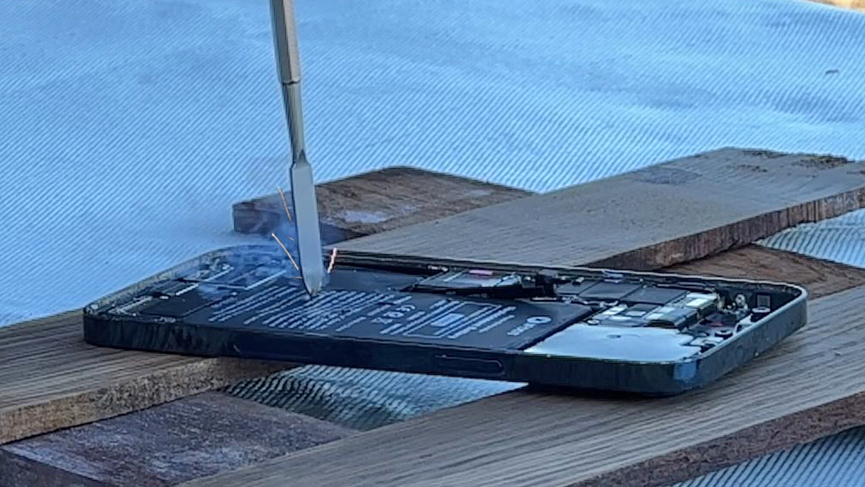

If a battery swells, immediately switch off the device, disconnect its charger, and contact a qualified repair professional to replace the battery as soon as possible. If the battery has already swollen severely enough to split the casing, as it had in my friend’s phone, and professional help is not immediately available, isolate the device in a space free of readily flammable materials—for example, place it on tile and cover it with a stainless-steel basin. Do not squeeze or strike the device.
Can EV Batteries Swell Too?
Electric vehicles are spreading rapidly around the world, and most major manufacturers use lithium-ion batteries. If both are lithium batteries, can an EV battery swell like a phone battery?
Although both are lithium batteries, EV batteries are designed differently from the pouch cells used in phones and computers. An EV battery usually contains hundreds or even thousands of individual cells, each with its own electrolyte, separator, and electrodes. The cells are sealed inside fire-resistant, leak-resistant modules—groups of multiple cells—and a battery pack, the enclosure ultimately mounted beneath the vehicle. Packs typically include a battery-management system, temperature sensors, and a liquid-cooling system. These monitor voltage, temperature, and current in real time and can disconnect the circuit or reduce power when an abnormality occurs.
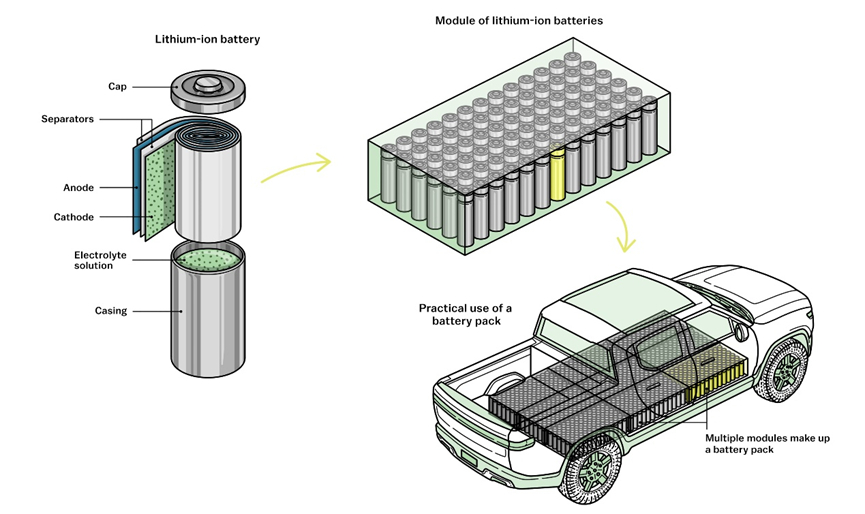
The cells are constrained by metal casings and rigid modules. Even if gas is generated and a single cell expands internally, it cannot easily bulge outward as a phone battery does. More often, excessive internal pressure opens a cell’s safety vent—usually a sign that the cell has already failed—or, in extreme conditions, local thermal runaway leads to smoke and fire. Battery swelling is therefore relatively uncommon in electric vehicles, but that does not mean the risk of internal expansion is absent.
That does not make electric vehicles free of safety risks. On October 23, 2025, a 2024 Li Auto MEGA all-electric SUV caught fire in Shanghai after a design defect in its traction-battery cooling system caused thermal runaway. Market regulators promptly issued a recall notice covering roughly 11,411 affected vehicles. The vehicles’ coolant provided inadequate corrosion protection, which could cause battery thermal runaway under extreme conditions. A battery may also smoke or catch fire if it is overcharged or overheated for a long period or damaged in a collision.

The Road Ahead
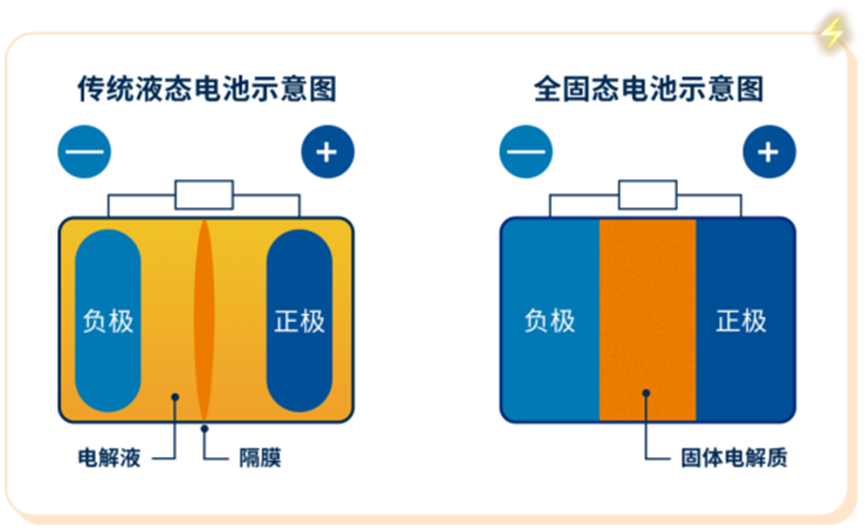
Researchers have long sought a fundamental solution to the risks of swelling and fire in lithium batteries. All-solid-state batteries are one technology on which great hopes have been pinned. They replace the conventional electrolyte, whose main component is a liquid organic solvent, with a solid electrolyte such as a sulfide, oxide, or solid polymer system.
As noted above, the electrolyte in a conventional lithium-ion battery is volatile and flammable. If the battery is punctured or develops an internal short circuit, a rapid temperature rise causes the electrolyte to vaporize and take part in combustion, intensifying thermal runaway. By definition, an all-solid-state battery contains no liquid electrolyte. Lithium ions migrate through a solid electrolyte, eliminating volatile organic solvents—a major source of fuel—at the material level and offering a potential advantage in thermal stability.
Even so, changing the electrolyte from a liquid to a solid does not make the chemical energy stored in a battery disappear. Extreme conditions can still trigger exothermic reactions and develop into thermal runaway. Examples include localized high temperatures caused by an internal short circuit, dendrites formed by lithium-metal deposition at the anode penetrating the electrolyte, cathode materials decomposing and releasing oxygen at high temperatures, or structural damage from a severe mechanical impact. All-solid-state systems reduce some sources of risk, but they do not physically eliminate the possibility of energy release.
All-solid-state battery technology still faces many challenges and needs more time to mature, but its safety advantages undoubtedly offer hope for safer batteries in the future. As new technologies continue to advance, we may eventually put battery swelling behind us and gain safer, more reliable portable power.
References
- Shi, A. One Major Way Smartphone Batteries Can Catch Fire—and How to Prevent It[EB/OL]. iFixit, 2022-11-17 [accessed 2026-03-03]. https://www.ifixit.com/News/69041/how-batteries-can-catch-fire-and-how-to-prevent-it
- Wang, C.; et al. Swelling Mechanisms, Diagnostic Applications, and Mitigation Strategies in Lithium-Ion Batteries[J/OL]. Batteries, 2025, 11(10): 356 [accessed 2026-03-03]. DOI: https://doi.org/10.3390/batteries11100356
- Heilweil, R. How to Build a Better Battery[EB/OL]. Vox (Recode), 2022-04-18 [accessed 2026-03-03]. https://www.vox.com/recode/23027110/solid-state-lithium-battery-tesla-gm-ford
- Xinhua News Agency. Solid State, Liquid, Semisolid: Understanding Lithium Batteries in One Article[EB/OL]. Xinhua, 2025-10-23 [accessed 2026-03-03]. https://www.news.cn/finance/20251023/053b7908c3304ee294f177c53bf0ec97/c.html
 爱发电(点击图片跳转)