
A Community-Curated Popular Science Reading List for World Book Day 2025
This April, with spring in full swing, we celebrated the 30th World Book Day. Books can be beacons when we venture into the unknown. A-kun’s call for popular science book recommendations brought in a trove of excellent titles, and this is the reading list our community put together.

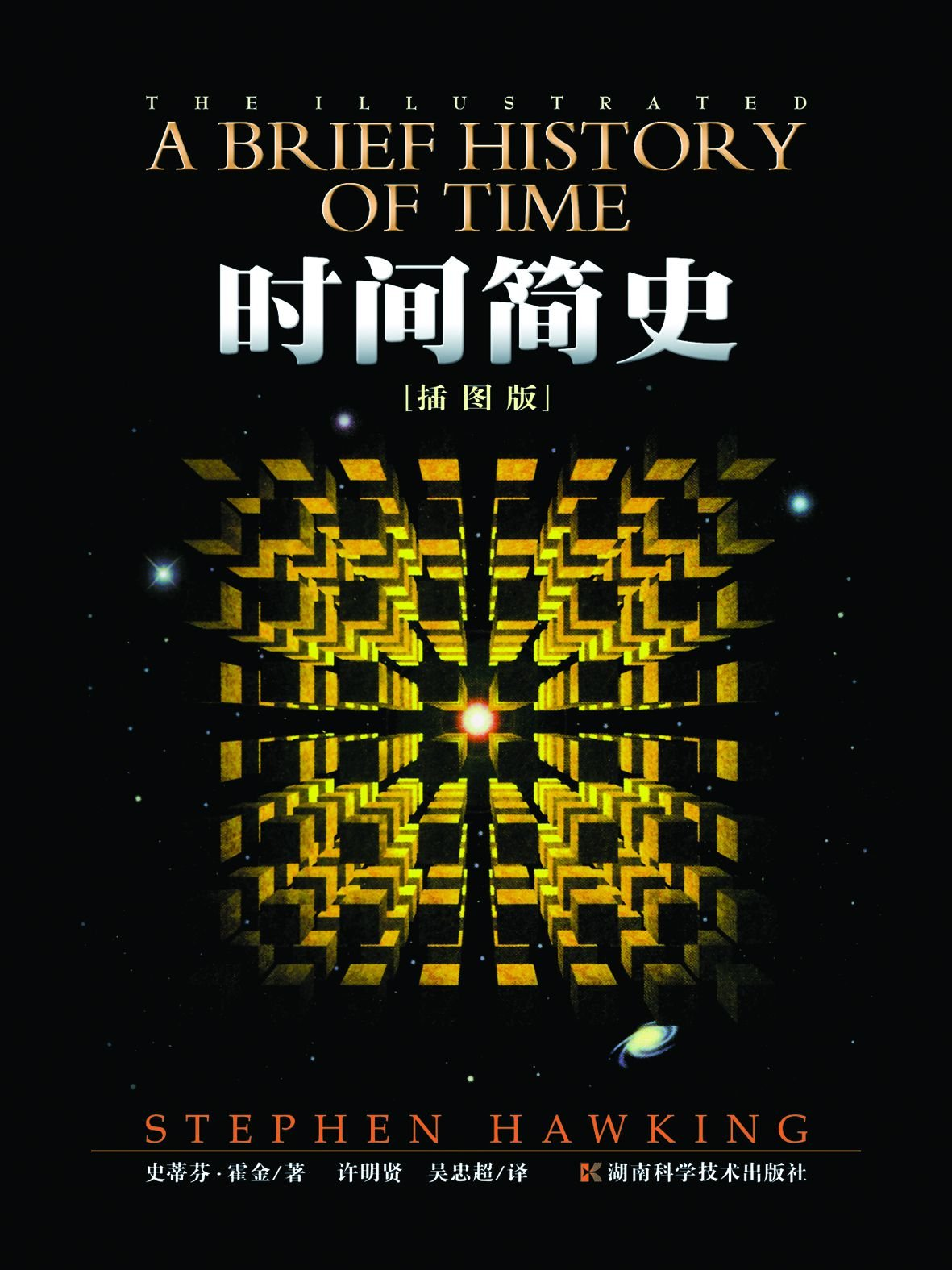
Stephen Hawking
In accessible language, this book introduces cutting-edge ideas about the origin of the universe and humanity’s fate. From black holes and the Big Bang to time travel, Hawking’s vivid prose guides readers through the mysteries of a vast and astonishing cosmos. Both newcomers to science and readers with some background knowledge can find inspiration here. The book does more than explain scientific facts: it stirs curiosity, invites exploration, and asks us to consider humanity’s place and meaning in the universe. It is a deeply rewarding work of popular science.
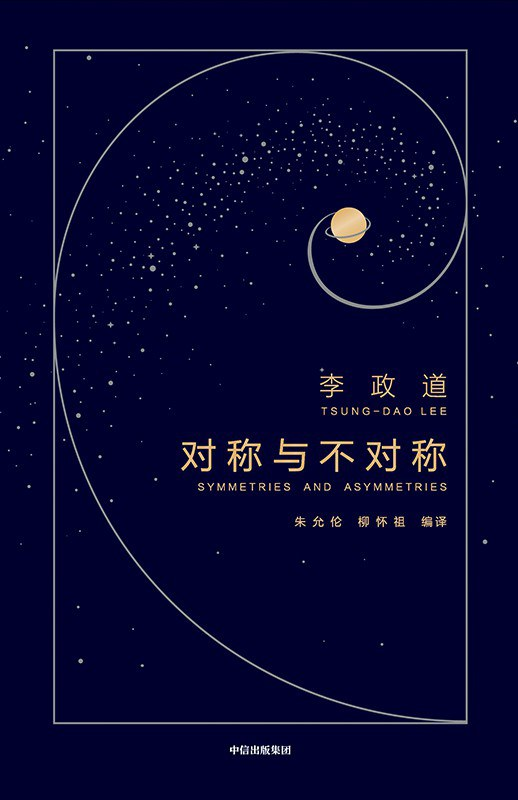
Tsung-Dao Lee
This book explains the central physical concepts of symmetry and asymmetry in plain language, then follows those ideas into art, literature, and Eastern thought. It argues that “symmetry reveals the beauty of the universe, while asymmetry generates its reality.” Symmetry appears here as a fundamental law of nature, and broken symmetry as a key to cosmic evolution and the origin of life.
It also introduces the basics of high-energy particle physics, examines the role of accelerators in scientific discovery, explains how theoretical and experimental physics support each other, and looks ahead to future research on the vacuum.
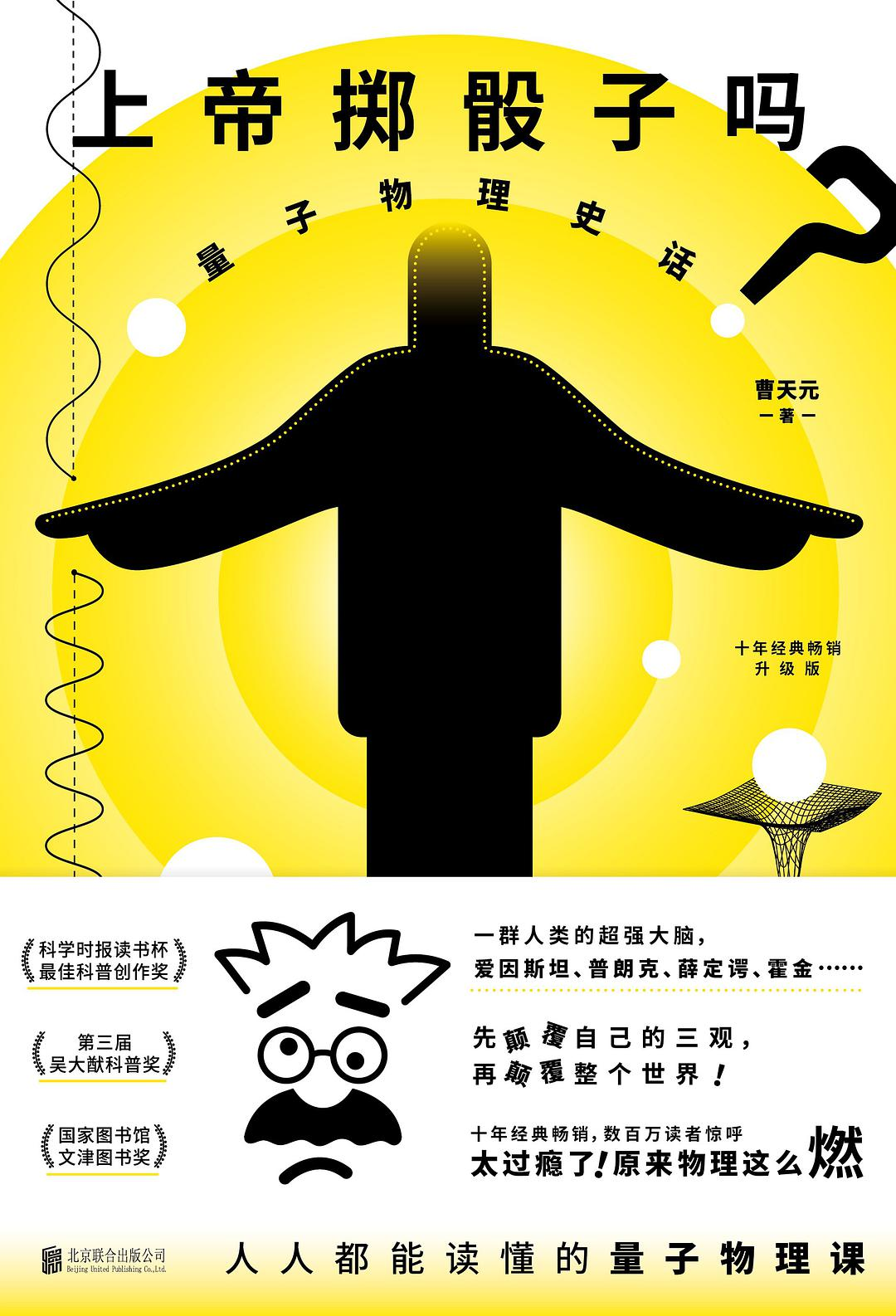
Cao Tianyuan
Cao Tianyuan retells the turbulent, century-long history of quantum theory with the momentum of a martial-arts novel. Vivid metaphors such as the “war between the wave and particle natures of light” turn abstract ideas, including the Schrödinger equation and the uncertainty principle, into thought experiments readers can picture. The book re-creates the thirty-year debate between Einstein and Bohr, traces quantum entanglement from philosophical speculation to experimental verification, and envisions quantum computing rewriting the rules of cryptography. It views a Western scientific revolution through an Eastern intellectual lens, pairing the intellectual depth of The Feynman Lectures on Physics with the epic sweep of Decisive Moments in History. When Wheeler’s delayed-choice experiment raises the possibility that “the present can change the past,” the book asks readers to rethink causality itself.
Jia Yang
This book gives a detailed account of the Yutu-1 and Yutu-2 lunar rovers and the Zhurong Mars rover. It also tells engaging stories from their development and even reproduces original design drawings. For readers interested in China’s deep-space exploration program, it offers a rare popular account from an official source.

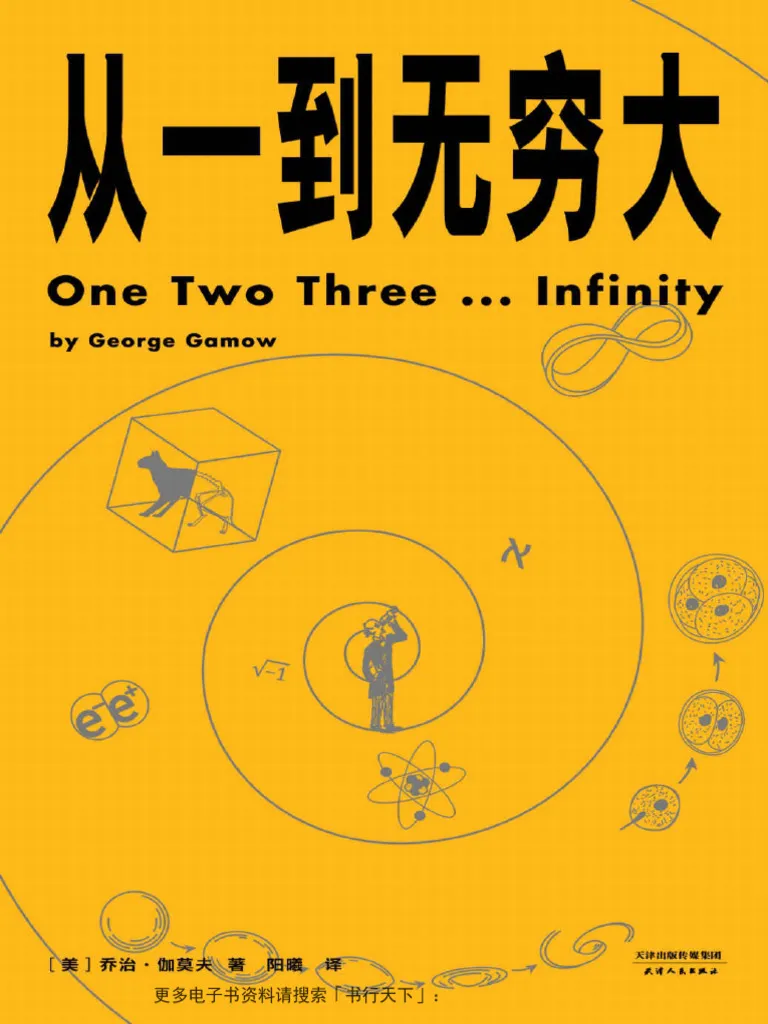
George Gamow
The book covers fundamental mathematics, explains Einstein’s theory of relativity and the structure of four-dimensional spacetime, and explores how we understand both the microscopic and macroscopic worlds.
The renowned physicist George Gamow invites readers to examine the world through scientific reasoning. His prose is elegant without sacrificing humor, making science feel both inviting and within reach.
Terence Tao
This book begins with the natural numbers and takes up questions most of us passed over as children: What is a natural number? What is addition? What is a real number? The opening chapters require almost no background. I recommend them to anyone interested in mathematics; they may reshape your understanding of what mathematics is.

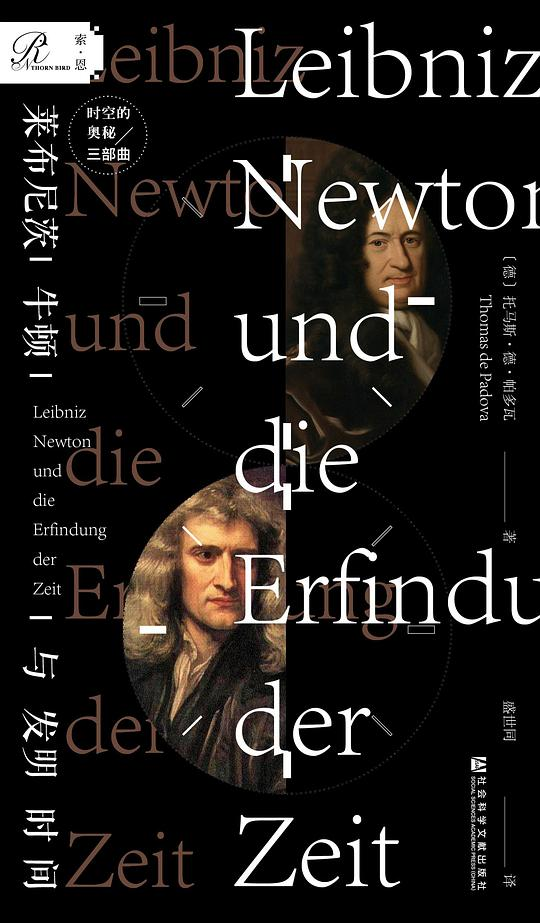
Thomas de Padova
What is “time”? How did our idea of it take shape, and how has it changed? The search for answers leads back to two rival geniuses of the seventeenth century, Newton and Leibniz. This absorbing dual biography lays out and compares their views of space and time. Along the way, it traces the invention and refinement of clocks and shows how those developments changed our understanding of time itself.
DK Publishing
This authoritative botanical encyclopedia uses high-resolution photographs and professional illustrations to present plant form, distribution, ecology, and evolution. It brings taxonomy and ecology together in a volume that is scientifically rigorous as well as visually engaging. The chapters are organized by plant part, with detailed explanations of each part’s form, structure, characteristics, and function.

Benjamin Graham & David Dodd
Coauthor Benjamin Graham has been called the father of modern security analysis, the dean of Wall Street, and the founder of value investing. His philosophy influenced Warren Buffett and many other prominent investors. Since it first appeared in 1934, the book has been revised many times, stayed in print for more than eighty years, and retained its reputation as an investor’s “bible.”
The authors draw a clear line between investment and speculation, examine fixed-income securities and common stocks in depth, and explain how to find sound securities at attractive prices. Detailed cases and careful analysis teach readers to interpret financial statements, uncover a company’s intrinsic value, and identify undervalued assets. Whether you are a beginner building a foundation in investing or a market veteran trying to recover your original discipline, the book offers a reasoned, practical guide to pursuing wealth.

Edward Burkley & Melissa Burkley
Using self-determination theory (SDT) as its central framework, this book traces the development of motivational psychology in a systematic way. It draws on overlapping research in cognition, emotion, neuroscience, and other fields to help readers understand the deeper mechanisms behind behavior.
Through familiar problems such as procrastination and addiction, it offers practical advice on goal setting, action planning, and other ways to put theory to work in daily life. Examples from education, business, health, and other settings show how motivation shapes personal growth and social relationships, keeping the discussion grounded in everyday experience.

S. I. Hayakawa & Alan R. Hayakawa
We must always take a critical view of both other people’s words and our own. We owe this to ourselves and to our responsibilities as citizens, so that we can avoid the traps of language. — Hayakawa
What is the nature of language? How does it shape our ideas and influence our decisions and judgments? What can the language we use teach us about ourselves? What traps does it conceal? How can language create prejudice and division, even becoming a tool for controlling thought? How can we use it well, cultivate tolerance, move beyond prejudice and binary thinking, and become more cooperative and rational? How can language help us leave conflict behind and move toward cooperation and civilization? A master of language takes up these questions one by one.

Gustave Le Bon
Published more than a century ago, this book is often regarded as a founding work of crowd psychology. It describes and analyzes group behavior and the psychological mechanisms behind it, asking how people lose their reason in a crowd, how they can be manipulated, and what role crowds have played in history. In the author’s view, that role was mainly negative. Because the book appeared when industrialization was only beginning, it inevitably has substantial limitations. Even so, many of its ideas remain worth considering and still feel relevant today.

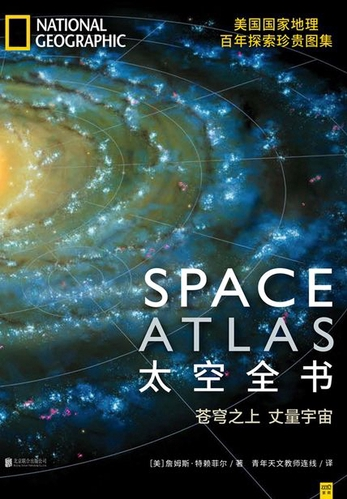
James Trefil
Published by National Geographic, this is a classic guide to exploring the universe. The book approaches the cosmic “atlas” from an unusual angle. Its vivid explanations cover advanced topics from the Big Bang and black holes to dark matter, turning difficult cosmological theories into a visual experience accessible to general readers.
From Mercury’s scorched rock to the frozen worlds of the Kuiper Belt, and from wormholes to the conjectures of string theory, the book gives amateur astronomers and general readers alike a sense of both scientific rigor and the staggering beauty of the universe. It is an encyclopedia of the heavens with intellectual depth and visual force.
Howard Schneider
This engaging stargazing encyclopedia combines expert knowledge with a sense of fun. It has something to offer both complete beginners and enthusiasts looking for a more systematic understanding.
Across ten chapters, the book builds a structured body of knowledge, moving from the motion of planets in the Solar System to the myths behind the constellations, and from basic observing techniques to camera settings for deep-sky photography. The material progresses step by step, helping beginners get started quickly while still serving more experienced observers. For anyone ready to begin exploring the night sky, this is an ideal starting point.

 爱发电(点击图片跳转)